Trump’s War Declaration Sparks Impeachment Storm
Recent military actions in Iran, explicitly called a "war" by the Trump administration, have reignited calls for impeachment. The debate centers on the constitutional authority to declare war, traditionally vested in Congress, and the implications of the AUMF.

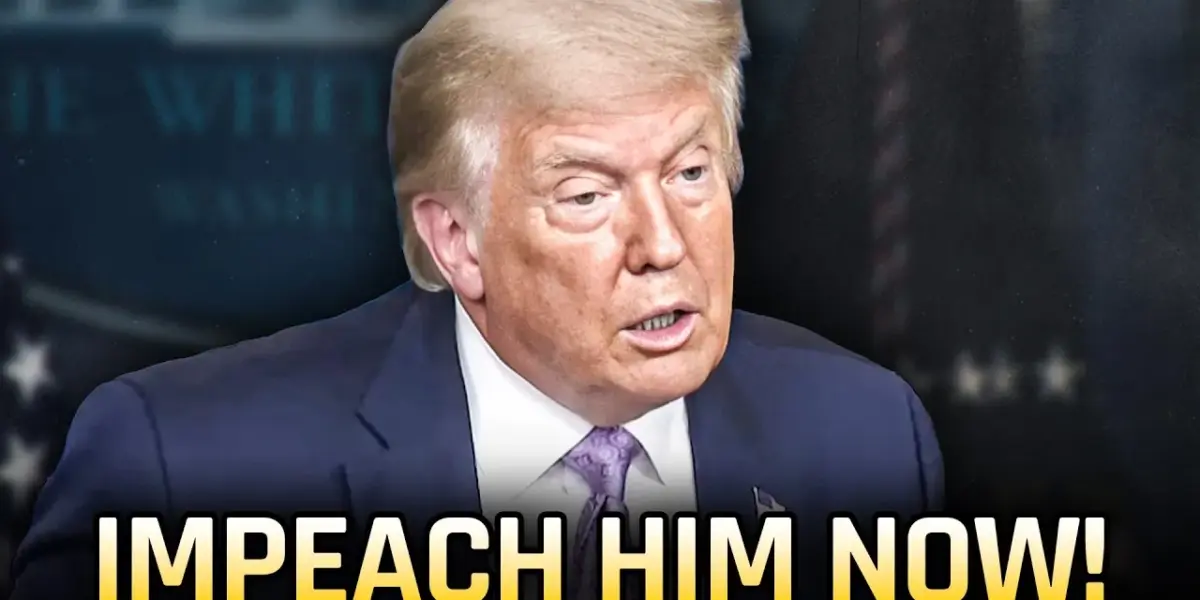
Trump’s War Declaration Sparks Impeachment Storm
In the wake of recent military actions in Iran, the Trump administration’s characterization of these events as a “war” has ignited a firestorm of criticism, propelling calls for President Donald Trump’s impeachment to a new zenith. The debate centers on a fundamental constitutional power: the authority to declare war, a power explicitly vested in Congress, not the President.
The Constitutional Crucible
The crux of the argument against Trump’s actions stems from Article 1, Section 8 of the U.S. Constitution. This foundational document clearly delineates that “only Congress has the power to declare war, as well as to raise and support armies, provide and maintain a navy, and fund and regulate the military.” This has led prominent voices, including author Stephen King, to assert that by initiating actions that his own administration labeled as war, Trump has committed an impeachable offense.
The historical understanding and legal interpretation of this clause have long positioned Congress as the gatekeeper of military engagement. The framers of the Constitution were wary of granting a single executive the unchecked power to plunge the nation into conflict, seeking to ensure a deliberative process before committing American lives and resources to war.
The AUMF Anomaly
However, the legal landscape is complicated by the Authorization for Use of Military Force (AUMF), a piece of legislation enacted in the aftermath of the September 11th attacks. The AUMF, originally intended to grant the President broad authority to combat terrorism, has been repeatedly extended and has arguably provided presidents with more latitude in launching military strikes than the Constitution’s original text might suggest.
This legislation, a product of the Bush era and continued through subsequent administrations, has become a point of contention. Critics argue that the AUMF has been exploited to bypass the congressional prerogative of declaring war. The Trump administration’s explicit labeling of its actions as a “war” has, in the eyes of many, made it difficult to argue that these actions fall within the more flexible interpretations of the AUMF, thereby potentially crossing a constitutional line.
Self-Inflicted Wounds and the Power of Words
The argument is further sharpened by the administration’s own rhetoric. By referring to the actions as a “war,” officials, including President Trump and Secretary of State Mike Pompeo, have, according to critics, inadvertently provided the very evidence needed to support claims of unconstitutional overreach. This self-inflicted linguistic wound, as some see it, makes the case for impeachment more straightforward.
As one observer noted, “We are snared by the words of our own mouths at times… He opens his mouth and he makes things worse by officially declaring this a war.”
The strategy, or lack thereof, behind such explicit declarations is questioned. If the administration sought to operate within the more ambiguous boundaries of the AUMF, avoiding the direct constitutional challenge of declaring war, their choice of words appears to have been counterproductive. The observation that “this administration were not packed with the dumbest people on planet Earth, they would have immediately come out and said, ‘No, this isn’t a war,'” highlights the perceived strategic misstep.
The Moral and Geopolitical Quandary
Beyond the constitutional debate, the underlying justification for the military action itself is scrutinized. While acknowledging the brutal human rights record of the targeted individual, the question of whether this justifies unilateral military intervention is raised. The parallel drawn with figures like Nicolás Maduro in Venezuela underscores this point: does the perceived misdeeds of a leader grant the United States the unilateral authority to engage in military action, including assassinations or kidnappings?
This line of reasoning leads to a broader geopolitical concern: the principle of reciprocity. If the United States asserts the right to intervene militarily in other nations based on its own threat assessments or moral judgments, it opens the door for other countries to apply similar logic to U.S. Actions or domestic situations. The observation that “most countries out there do not like what the United States is doing” and that they witness “murders taking place on the streets of our country at the hands of federal agents” suggests a global perception that can be leveraged against American foreign policy.
The argument posits that if the U.S. Claims the right to act as an arbiter of global conduct, then other nations could similarly justify interventions based on their own interpretations of acceptable international behavior. This creates a dangerous precedent, undermining the very international norms the U.S. Often seeks to uphold. The assertion that “we are not the world police.
We think we are. We act like we are, but we have no authority to do this” encapsulates this critique of American exceptionalism and its potential consequences.
Public Opinion and Future Outlook
The transcript notes that “not even 25% of the American public supports this,” suggesting a significant disconnect between the administration’s actions and public sentiment. This lack of broad public backing for the specific military action, coupled with the constitutional and geopolitical concerns, fuels the impeachment calls. The expectation is that these calls will “escalate” as the debate intensifies.
The future outlook hinges on how these legal, constitutional, and political arguments unfold. The impeachment process, while initiated by the House of Representatives, requires conviction by the Senate.
The political realities of the Senate’s composition will undoubtedly play a significant role in the ultimate outcome. However, the debate itself forces a national conversation about the limits of executive power, the role of Congress in matters of war and peace, and the ethical considerations of American foreign policy in an increasingly interconnected world.
Why This Matters
The calls for Trump’s impeachment following the Iran incident are more than just a reaction to a single military action. They represent a critical juncture in the ongoing debate about executive authority versus congressional oversight, particularly concerning the initiation of military conflict. The interpretation and application of the AUMF, a legislative tool born out of a specific historical context, are being tested.
The administration’s own words have seemingly provided ammunition for those arguing a clear violation of constitutional principles. The incident prompts a broader reflection on America’s role in the world, the justifications for military intervention, and the potential for a dangerous cycle of reciprocal actions if foundational principles of sovereignty and non-intervention are perceived to be disregarded.
Historical Context
The U.S. Constitution was designed with a deliberate separation of powers, particularly regarding war. The framers, having experienced the abuses of monarchical power, were keen to prevent any single branch from unilaterally engaging the nation in conflict. The AUMF, passed in 2001, represented a significant shift, granting broad authority to the President in the context of combating terrorism.
Its subsequent renewals and broad interpretations have led to a gradual expansion of presidential war-making powers, a trend that has concerned many constitutional scholars and lawmakers for years. This current debate is not new, but the specific framing of the recent actions as “war” by the administration has brought these long-standing tensions to a head.
Implications and Trends
The implications of this situation are far-reaching. If impeachment proceedings gain significant traction, it could set a precedent for how future presidential actions involving military force are scrutinized. The debate highlights a growing public and political unease with prolonged military engagements and the perceived overreach of executive power.
It also highlights the challenge of navigating complex geopolitical situations with a framework established over two centuries ago, especially when amplified by modern legislation like the AUMF. The trend towards increased congressional assertiveness in foreign policy, or at least the demand for greater accountability, may be a significant outcome.
Future Outlook
The immediate future will likely see continued debate and political maneuvering surrounding the impeachment calls. The long-term outlook depends on how the U.S. Re-evaluates the balance of power between the executive and legislative branches in matters of war.
It may lead to renewed efforts to clarify or reform the AUMF, or to a more robust assertion of congressional oversight. The incident also is a clear reminder of the power of language in politics and the potential for carefully chosen words to have profound legal and constitutional consequences.
Source: Calls For Trump's Impeachment Are Becoming Deafening (YouTube)

Related Articles

Trump’s Troop Gambit: A Risky Mideast Play?
Reports of thousands of U.S. troops heading to the Middle East clash with President Trump's claims of an impending end to the war. This analysis explores the potential risks and high price of using ground forces as leverage, questioning if the President is prepared for the potential human and political costs.
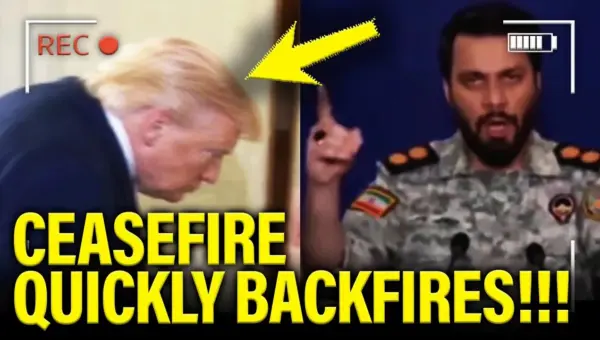
Iran Calls Trump’s Bluff on Ceasefire
Iran is refusing to back down on a ceasefire deal, calling President Trump's bluff. They insist on their own 10-point framework and appear to be exploiting perceived weaknesses in Trump's domestic political standing. This standoff highlights complex international relations and potential shifts in global power dynamics.
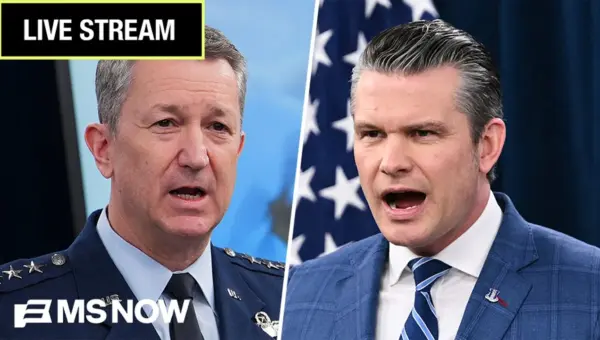
Pentagon Briefs on Iran Port Blockade Amid Ceasefire Deal
The Pentagon briefed reporters on Operation Epic Fury, a U.S. naval blockade of Iranian ports, following a two-week ceasefire agreement. Defense Secretary Pete Hegseth and Gen. Dan Caine detailed the operation's goals, which include preventing the transfer of materials that destabilize the region. The military action aims to support diplomatic efforts and counter Iranian influence.