Middle East Tensions Escalate: Iran Launches New Strikes, US Urges Evacuations
The Middle East is on high alert as Iran escalates its retaliatory strikes, targeting U.S. infrastructure and prompting embassy closures and urgent evacuation advisories for American citizens. The U.S. and Israel are intensifying their own operations amidst the growing regional instability. The conflict has also led to the identification of U.S. service members killed in action and significant repercussions in global markets.


Middle East on High Alert as Iran Escalates Retaliatory Strikes
The Middle East is on high alert this morning as Iran continues its campaign of retaliatory strikes across the region. The escalating tensions follow recent actions, with a drone attack near the American consulate in Dubai engulfing parts of the building in flames, though authorities reported no injuries. In response to the growing threat, the U.S. has taken the significant step of closing its embassies in Saudi Arabia, Beirut, and Kuwait, while the State Department has issued urgent advisories for U.S. citizens to leave the region immediately.
U.S. and Israel Intensify Operations Amidst Regional Instability
Simultaneously, the United States and Israel are continuing their own offensive operations. The Israeli military announced it is now operating on the ground inside Lebanon following new airstrikes on Beirut and Tehran.
U.S. Central Command reported that nearly 2,000 targets have been struck in Iran thus far, with hundreds of casualties reported across the Middle East. Iran’s Red Crescent indicated that over 800 people have been killed, predominantly within Iran.
U.S. Service Members Identified After Fatal Drone Strike
Tragically, the conflict has claimed the lives of U.S. Service members. The U.S. Confirmed that six service members have been killed in the operation. Four of the fallen have been publicly identified as U.S. Army Reservists: Captain Cody, Sergeant First Class Noah Al Karins, Sergeant First Class Nichole M.
Amour, and Specialist Declan J. Cody.
All four were assigned to the 103rd Sustainment Command, based in Des Moines, Iowa, and were killed in a drone strike on a port in Kuwait. The identities of the remaining two service members have not yet been released.
Evacuation Challenges and U.S. Diplomatic Efforts
The U.S. State Department is actively working to facilitate the evacuation of American citizens from the increasingly volatile region. Initial guidance for Americans to evacuate via commercial flights has been complicated by widespread airspace closures and canceled airline services. Secretary of State Marco Rubio emphasized that while the U.S. is arranging evacuation flights, the primary hurdle remains securing open airspace from host countries.
Reports indicate that approximately 9,000 Americans have been evacuated so far, with efforts underway for an additional 1,500 to 1,600 individuals. The State Department continues to appeal for any unregistered Americans in the region to make their presence known to receive assistance.
Presidential Response and Shifting Narratives
President Trump, in a statement on Truth Social, addressed the unfolding situation, suggesting that the U.S. Navy could escort tankers through the Strait of Hormuz. He also acknowledged uncertainty about future developments, stating, “I might have forced their hand” regarding the timing of the strikes, implying the U.S. Acted preemptively due to anticipated Iranian aggression.
This statement appeared to walk back previous remarks by Secretary of State Rubio, who had suggested Israel’s imminent strike plans were a key factor in the U.S. Decision. The administration’s messaging has seen some shifts, with officials now stating that regime change in Iran is not the ultimate goal, despite the President’s earlier call for Iranians to topple their government.
Economic Repercussions and Market Reactions
The escalating conflict has sent ripples through global markets. U.S. Stocks experienced a tumble, though futures indicated a higher open on Wednesday. Overseas, exchanges in the UAE, particularly Dubai, saw significant drops.
Asian markets also experienced sell-offs. While President Trump’s assurance of U.S. Naval escorts for tankers has somewhat tempered fears, market analysts caution that ongoing uncertainty continues to weigh on investor sentiment. Financial experts advise individuals to maintain a long-term perspective on their investments, urging them to “stay the course” amidst the volatility.
Broader Implications and Future Outlook
The current events highlight the precarious geopolitical landscape and the potential for wider conflict. The U.S. military is preparing for an “overwhelming barrage of strikes” in the coming days, with potential targets including Iran’s nuclear sites and naval assets.
Military analysts suggest the U.S. Strategy may involve intensifying current operations to create confusion and disrupt Iranian leadership, or focusing resources on eliminating specific capabilities. The situation remains fluid, with international attention focused on diplomatic efforts, military responses, and the potential for further escalation in the region.
Source: LIVE: NBC News NOW – March 4 (YouTube)

Related Articles

Trump’s Troop Gambit: A Risky Mideast Play?
Reports of thousands of U.S. troops heading to the Middle East clash with President Trump's claims of an impending end to the war. This analysis explores the potential risks and high price of using ground forces as leverage, questioning if the President is prepared for the potential human and political costs.


US Blockades Iranian Ports Amid Escalating Tensions
The United States has initiated a naval blockade on Iranian ports and coastline, escalating tensions in the Middle East. Iran has responded with threats of retaliation and accusations of violating ceasefire agreements. The operation, termed 'Operation Epic Fury,' involves a significant U.S. military presence and aims to cut off vital resources to Iran.
Iran Calls Trump’s Bluff on Ceasefire
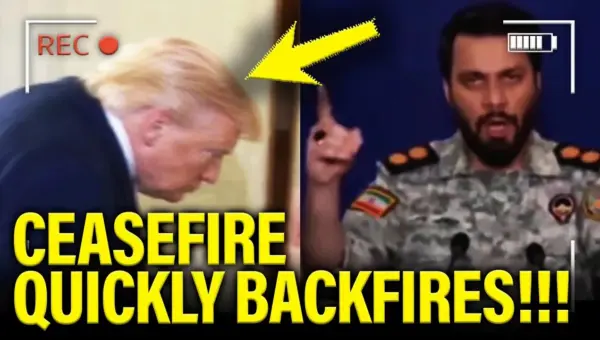
Iran is refusing to back down on a ceasefire deal, calling President Trump's bluff. They insist on their own 10-point framework and appear to be exploiting perceived weaknesses in Trump's domestic political standing. This standoff highlights complex international relations and potential shifts in global power dynamics.