Marines Seize Iranian Ship With Naval Gun Attack
The U.S. Navy recently disabled an Iranian container ship, the Tuska, with precise gunfire from the USS Spruance. U.S. Marines then boarded and seized the vessel. This operation highlights advanced naval capabilities and enforcement tactics.

Marines Seize Iranian Ship With Naval Gun Attack
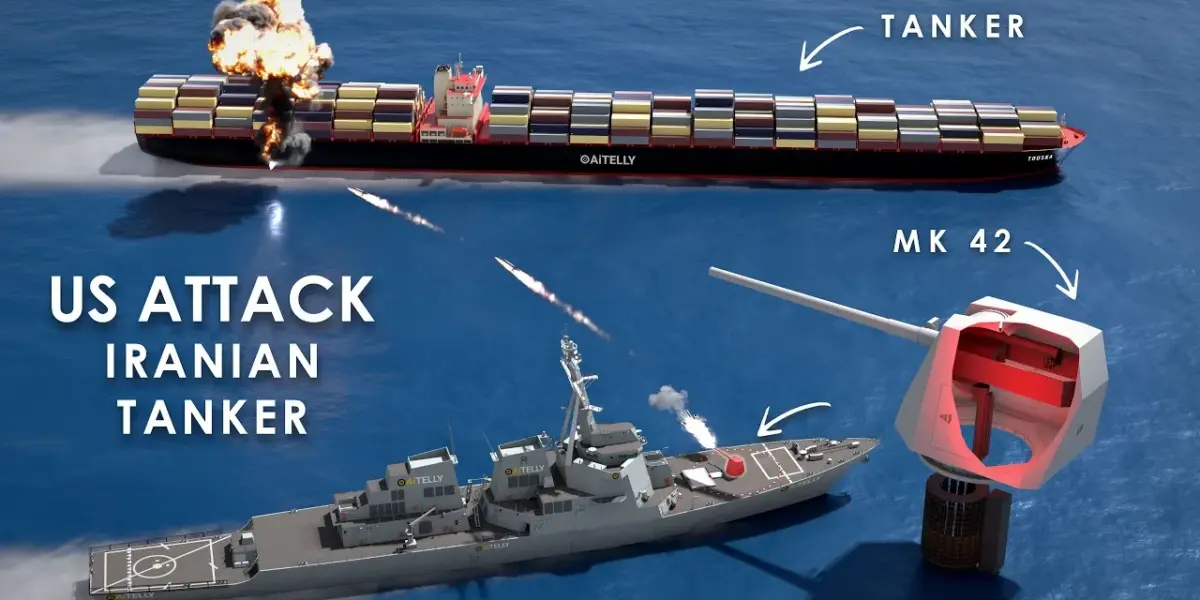
The U.S. Navy recently fired on and disabled a 900-foot Iranian container ship, the Tuska, in the Gulf of Oman. This action led to a boarding operation by U.S. Marines to seize the vessel. The confrontation began with repeated warnings from the Navy, which went unheeded by the ship’s crew for several hours.
The escalation culminated when the U.S. Navy destroyer USS Spruance fired multiple rounds into the Tuska’s engine room. This precise disabling fire, delivered by the ship’s 5-inch Mark 45 naval gun, instantly stopped the ship’s engines and started a fire. The attack aimed to disable the vessel without causing it to sink.
Advanced Autoloader Powers Naval Gun
The Mark 45 gun system is capable of firing three explosive rounds in mere seconds. This rapid firing capability is supported by an advanced autoloader system connected to a large ammunition supply. The system automatically loads artillery shells and ejects spent casings, allowing for sustained fire.
The Mark 45 gun is divided into four main parts. At the base is the automated ammunition shuttle, followed by the automated ammunition handling system.
Above these is a 20-round loader drum, and the gun shield protects the top of the setup. This integrated system can fire between 10 and 16 rounds per minute.
Marines Board and Secure Vessel
Once the Tuska was disabled and adrift, U.S. Marines from the 31st Marine Expeditionary Unit were deployed. They arrived via MH-60 Seahawk helicopters launched from the amphibious assault ship USS Tripoli. The Marines executed a precision tactical drop, rappelling from hovering helicopters onto the container ship.
Elite teams systematically secured and cleared the decks of the vessel. A second helicopter provided armed overwatch to protect the boarding team.
The Marines successfully took full custody of the ship, its crew, and its cargo. This operation highlights a complex maritime strategy involving disabling fire followed by a direct seizure.
Why This Matters
This incident demonstrates a significant escalation in maritime enforcement tactics. The ability to disable a large vessel with precise naval gunfire and then conduct a swift boarding operation showcases advanced military capabilities. It signals a readiness to enforce blockades and seize vessels engaged in activities deemed illicit or threatening to international shipping lanes.
The operation also highlights the critical role of sophisticated naval weaponry and well-trained boarding teams. Such actions are part of a broader strategy to maintain security and enforce sanctions in key geopolitical regions. The precise targeting of the engine room suggests a focus on minimizing damage to the vessel while achieving the objective of disabling it.
Other Defensive Systems
The U.S. Navy employs various defensive systems to protect its vessels. Vertical Launching Systems (VLS) house missiles that can be launched rapidly from below deck. These systems are designed to engage threats at various ranges.
For close-in defense, systems like the Phalanx and SeaRAM are utilized. The Phalanx is a rapid-fire Gatling gun system that uses radar to track and destroy incoming threats like drones or missiles. The SeaRAM combines the Phalanx’s targeting system with a missile launcher, offering a potent defense against smaller, fast-moving targets within a limited radius.
These layered defense systems ensure that naval ships are equipped to handle a wide array of threats, from long-range missile attacks to close-quarters drone assaults. The integration of these technologies provides a robust shield for naval operations.
Future Scenarios
The transcript also speculates on future scenarios involving the blockade of oil tankers. It suggests that in a geopolitical conflict, the U.S. Navy might intercept vessels involved in transporting illicit oil, bypassing global sanctions. Such an operation could involve a lengthy pursuit and a vertical assault by special operations teams if seas are too rough for smaller boats.
These hypothetical scenarios emphasize the complex challenges of enforcing maritime blockades, especially when involving multiple nations or clandestine shipping networks. The potential for escalating tensions with other global powers is also a significant consideration.
The article concludes by mentioning a military-grade VPN service as a tool for digital defense, suggesting a broader view of security in both physical and digital domains.
Source: How US Marines Seized a 900-Foot Iranian Container Ship (YouTube)

Related Articles


Trump Threatens Iran as Peace Talks Face New Hurdles
President Trump has renewed threats against Iran, demanding a deal by Wednesday amid escalating tensions and a looming ceasefire deadline. Peace talks in Islamabad face uncertainty as Iran's participation remains undecided. The conflict is impacting energy prices and public opinion, with a new poll showing declining approval for President Trump and growing concerns about inflation and the war.


Iran Ceasefire Hangs in Balance Amid US Naval Action
A fragile ceasefire between the U.S. and Iran faces an uncertain future as tensions rise in the Strait of Hormuz. U.S. Marines seized an Iranian-flagged ship, while prospects for peace talks remain dim amid conflicting statements and internal divisions. Meanwhile, other global events include a new investigation into Jeffrey Epstein's Zorro Ranch and a significant leadership change at Apple.


US-Iran Peace Talks Stall Amid Escalating Threats, Ceasefire Deadline
US-Iran peace talks face significant hurdles as escalating threats and a looming ceasefire deadline create uncertainty. While U.S. officials prepare for potential negotiations in Islamabad, Iran's Foreign Ministry remains non-committal. The situation is further complicated by a recent naval incident and economic concerns over rising energy prices.