Webb Telescope Spots Mysterious Red Dots: Giant Stars or Early Galaxies?
The James Webb Space Telescope has detected mysterious 'little red dots' that defy easy explanation. New research suggests these could be incredibly massive, supermassive stars, potentially linked to the formation of ancient globular clusters, offering a novel solution to long-standing astronomical puzzles.

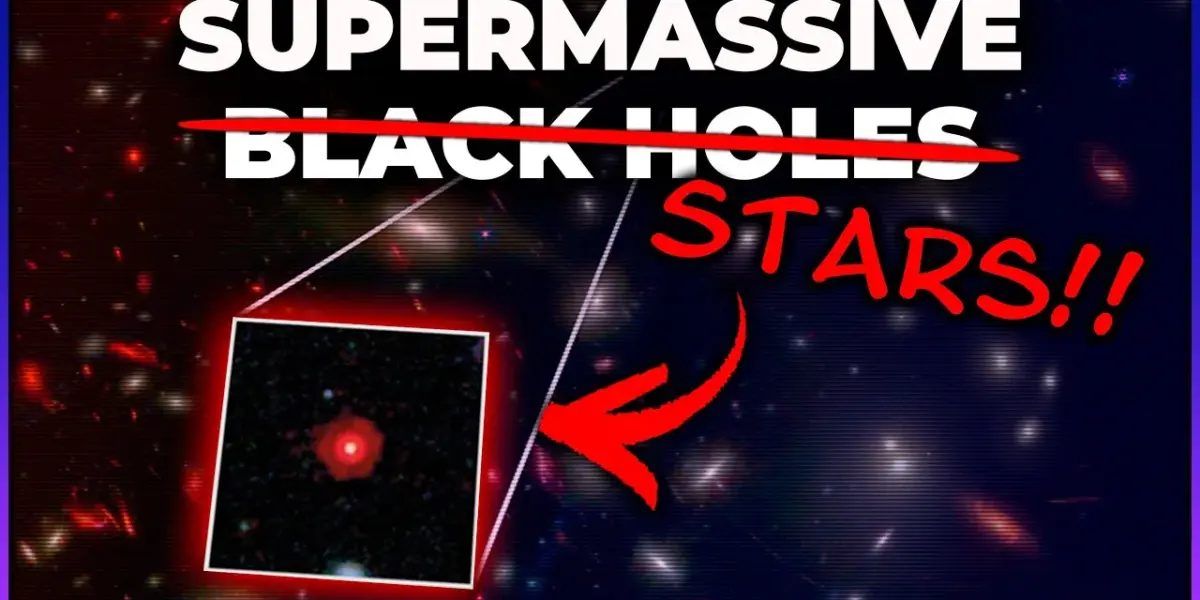
Webb Telescope Uncovers Enigmatic ‘Little Red Dots’
The James Webb Space Telescope (JWST), since its operational debut, has been a prolific discoverer, unveiling celestial wonders that challenge our understanding of the cosmos. Among its most perplexing findings are the ‘little red dots’ – tiny, intensely red sources of light that have astronomers buzzing with theories. These enigmatic objects, first detected in JWST’s inaugural images, appear with remarkable frequency, prompting a deep dive into their true nature.
Cracking the Code: Size, Color, and Spectra
The very name ‘little red dots’ hints at their defining characteristics. Astronomers have been able to constrain their apparent size, revealing them to be incredibly compact. Early speculation considered them to be massive, evolved galaxies, but this idea was quickly dismissed. The sheer density of stars required to form such an object within such a small volume would defy the laws of gravity. Many of these sources are estimated to be no larger than 60 light-years across, and some are even smaller.
Their ‘redness’ is another crucial clue. In JWST’s observational bands, these dots appear red, indicating a strong emission in the mid-infrared (around 5 microns) and a lack of emission in the bluer, shorter wavelengths. In astronomy, redness often signifies an older stellar population (lacking hot, blue stars), a dusty environment obscuring blue light, or cooler temperatures. Initial spectral analysis revealed broad emission lines with velocity widths of thousands of kilometers per second. This observation strongly suggested the presence of actively accreting supermassive black holes, where gas funneled towards the black hole heats up and moves at extreme speeds. This explanation neatly aligned with other puzzling observations of surprisingly massive black holes in the early universe.
A Twist in the Tale: Challenging the Black Hole Hypothesis
However, as is often the case in science, more data led to more questions. Recent observations of different classes of ‘little red dots’ have revealed a surprising diversity in their properties. Some are not as small as initially thought, and some exhibit a distinct upturn in their blue (ultraviolet) spectrum, contradicting the uniform redness. This spectral diversity has led to a significant re-evaluation of the black hole hypothesis.
Further spectral analysis of the red component of these objects revealed a compelling fit with a blackbody spectrum. This is the characteristic thermal radiation emitted by any dense object. Crucially, the derived temperatures for these objects are relatively cool, ranging from 2,000 to 5,000 Kelvin – comparable to the surface temperature of our Sun (around 5,500 Kelvin). Yet, these ‘cool’ objects are observed to be astonishingly luminous, up to 10 billion times brighter than the Sun. This combination of cool temperatures and extreme luminosity is highly unusual and difficult to explain with conventional models, including dust-shrouded black holes, as strong infrared emission expected from heated dust is largely absent.
A Bold New Theory: Supermassive Stars and Globular Cluster Formation
This is where Dr. John Chisel and his team at the University of Texas at Austin propose a radical alternative. They hypothesize that these ‘little red dots’ are not accreting black holes but are, in fact, nascent globular clusters, and the red dots themselves are extremely massive stars – potentially 10,000 to 100,000 times the mass of our Sun.
This theory is rooted in a long-standing mystery: the formation of globular clusters. These ancient, dense collections of stars, some of the oldest structures in the universe, exhibit peculiar chemical abundance patterns, particularly an overabundance of elements with an odd number of protons, such as nitrogen, aluminum, and sodium. These elements are not readily produced by typical stellar nucleosynthesis. However, extremely massive stars are theorized to produce these ‘odd-even’ elements in significant quantities.
Chisel’s team suggests that in the dense environments of the early universe, where globular clusters were forming, stars could have merged repeatedly. Through a process of gravitational mergers in a densely packed stellar environment, smaller stars could coalesce to form a ‘supermassive star’. These behemoths, with masses potentially reaching 10,000 solar masses or more, would be incredibly luminous due to rapid fusion and possess vast radii, making them appear relatively cool and red. Their immense size, potentially thousands of Astronomical Units (AU) across, would fit the observed characteristics of the ‘little red dots’.
The Cosmic Connection: Unifying Two Mysteries
This theory offers an elegant solution to two cosmic puzzles simultaneously. The ‘little red dots’ could be the supermassive stars at the heart of forming globular clusters, and their explosive deaths (or direct collapse into black holes) could seed the surrounding gas with the ‘odd-even’ elements observed in mature globular clusters. The predicted extreme luminosity and cool temperatures align with the observed properties of the ‘little red dots’, and the absence of strong dust emission fits the lack of expected infrared signatures from accreting black holes.
What Lies Ahead? Predictions and Future Observations
The scientific process demands testable predictions. Chisel’s hypothesis predicts that detailed spectroscopic analysis of these ‘little red dots’ will reveal the characteristic overabundances of nitrogen, aluminum, and sodium. While these signatures have not yet been definitively observed, upcoming JWST observations are poised to provide the exquisite data quality needed to confirm or refute this theory.
The implications of this discovery, if confirmed, are profound. It would provide a direct link between the extreme conditions of the early universe and the formation of structures like globular clusters, which are crucial ‘fossils’ for understanding cosmic evolution. It also highlights the power of JWST to uncover phenomena far beyond our initial expectations, pushing the boundaries of astrophysics and our understanding of stellar evolution in the most extreme environments.
A Universe of Unfolding Mysteries
The quest to understand the ‘little red dots’ is a prime example of the scientific method in action. It involves observation, hypothesis generation, rigorous testing, and the willingness to revise theories in the face of new evidence. Whether these enigmatic objects are colossal stars or something else entirely, they underscore that the universe, even in its seemingly small details, holds boundless surprises, continually challenging us to look deeper and question further.
Source: Little Red Dots Could Be Something Completely Unexpected (YouTube)

Related Articles
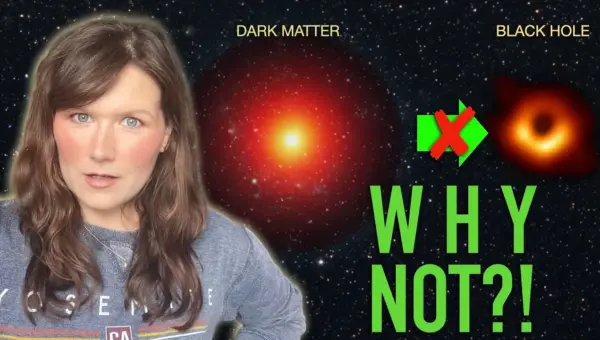
Dark Matter’s Mystery: Why It Resists Collapse Into Black Holes
Dark matter, unlike normal matter, does not collapse into stars or black holes because it cannot radiate energy away as heat. Its inability to interact with the electromagnetic force prevents the cooling necessary for gravity to overcome particle pressure. This unique property leads to the formation of vast, diffuse structures like galactic halos and the cosmic web.
Cosmic Rays Reveal Universe’s Most Powerful Accelerators
Scientists have discovered incredibly powerful cosmic accelerators, dubbed PeVatrons, within our Milky Way galaxy. These sources are responsible for the highest-energy cosmic rays ever detected, some reaching energies of 10 peta-electron-volts. The discovery, driven by observatories like LHAASO, is revolutionizing our understanding of our galaxy's violent and energetic nature.


Ryan Gosling Explores Real Science Behind ‘Project Hail Mary’
Actor Ryan Gosling and an astrophysicist discuss the real science behind 'Project Hail Mary.' They explore concepts like time dilation, the speed of light, and the search for extraterrestrial life, highlighting the film's commitment to scientific accuracy.