Project Hail Mary’s Science: Is It Real?
The movie Project Hail Mary dives deep into real astrophysics and biology. It explores concepts like solar dimming, relativity, and alien life. While much is fiction, the film grounds its narrative in actual scientific principles, sparking curiosity about the universe.


Could the Science in Project Hail Mary Actually Work?
The movie Project Hail Mary, starring Ryan Gosling, is packed with real science. This story pushes the boundaries of what we know about space. It blends complex astrophysics, orbital mechanics, and even biology into a thrilling adventure.
Making Fake Space Math Real
Author Andy Weir, known for The Martian, insisted that the science in Project Hail Mary be as accurate as possible. The film tackles topics like alien life, traveling between stars, Einstein’s theory of relativity, and molecular biology. Dr. Becky, an astrophysicist from the University of Oxford, breaks down the science. She separates what’s based on real physics from the fictional elements needed for the story.
Why Is the Sun Dimming?
One of the central mysteries in the movie involves the dimming of our sun. This phenomenon is linked to something called Astrophage. Astrophage is a fictional microorganism that consumes solar energy. In the real universe, stars do change over time, but not usually by being eaten by tiny organisms. However, the concept touches on real astrophysical processes. Stars have life cycles, and their brightness can change due to nuclear fusion rates or other internal processes. The idea of a life form affecting a star, while fictional, highlights our understanding of stars as dynamic objects.
Relativity and Time Dilation Explained
The movie also explores Einstein’s theory of relativity, particularly time dilation. This is the idea that time passes differently for observers who are moving at different speeds or are in different gravitational fields. Imagine two twins: one stays on Earth, and the other travels near the speed of light. When the traveling twin returns, they will have aged less than the twin who stayed home. This effect is real and has been proven. For example, atomic clocks on high-speed aircraft or satellites run slightly slower than those on the ground, a tiny effect we need to account for in GPS technology.
Real Stars, Real Planets?
Project Hail Mary features real star systems, specifically Tau Ceti and 40 Eridani. These are stars that scientists have studied. Tau Ceti is a relatively nearby star, about 12 light-years away. Scientists have found evidence of planets orbiting it, though their exact nature is still debated. 40 Eridani is also a known star system, about 16 light-years from Earth. It is known to have at least one planet, 40 Eridani b, a gas giant. The movie uses these real locations as a basis for its fictional story, adding a layer of realism to the interstellar journey.
The Science of Alien Life
The film presents alien life, the Eridians, in a way that is not like us. This is a common theme in science fiction, but it’s also a serious consideration for astrobiologists. Scientists looking for extraterrestrial life don’t just expect to find creatures that look like humans or even Earth animals. Life could evolve in vastly different ways depending on the environment. The Eridians’ unique biology and communication methods are a creative exploration of what alien life might truly be like, moving beyond familiar forms.
Visualizing Complex Science
Directors Phil Lord and Christopher Miller faced the challenge of showing abstract scientific concepts, like relativity, visually. They aimed to make these ideas understandable and engaging for the audience. Translating complex physics into compelling imagery requires creativity. It involves finding ways to represent things like the warping of spacetime or the effects of high speeds in a way that makes sense on screen without being overly technical or losing the story’s emotional core.
Looking Ahead
Project Hail Mary uses real scientific principles as a springboard for its imaginative narrative. It encourages us to think about the possibilities of space exploration, the nature of life beyond Earth, and the vastness of the universe. By grounding its fiction in actual science, the movie sparks curiosity and wonder about our place in the cosmos. It reminds us of the ongoing quest to understand the universe and the potential for discovery that lies ahead.
Source: The astrophysics of Project Hail Mary #shorts (YouTube)

Related Articles

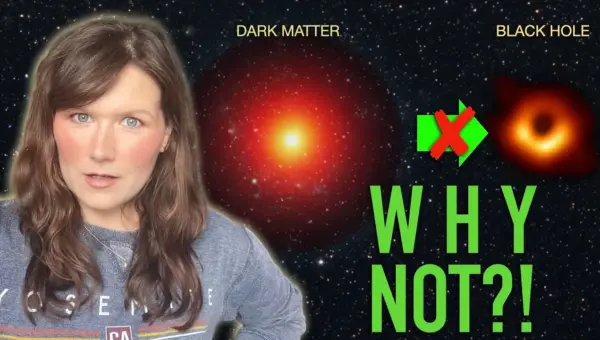
Dark Matter’s Mystery: Why It Resists Collapse Into Black Holes
Dark matter, unlike normal matter, does not collapse into stars or black holes because it cannot radiate energy away as heat. Its inability to interact with the electromagnetic force prevents the cooling necessary for gravity to overcome particle pressure. This unique property leads to the formation of vast, diffuse structures like galactic halos and the cosmic web.
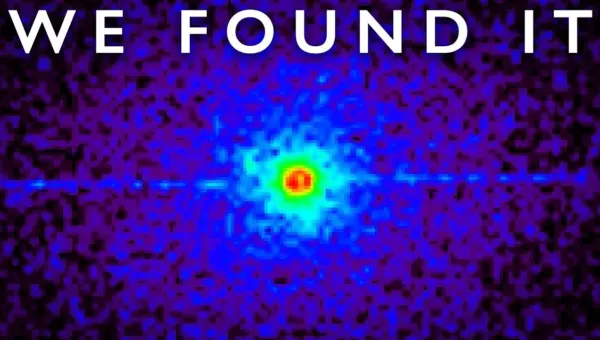
Cosmic Rays Reveal Universe’s Most Powerful Accelerators
Scientists have discovered incredibly powerful cosmic accelerators, dubbed PeVatrons, within our Milky Way galaxy. These sources are responsible for the highest-energy cosmic rays ever detected, some reaching energies of 10 peta-electron-volts. The discovery, driven by observatories like LHAASO, is revolutionizing our understanding of our galaxy's violent and energetic nature.


Project Hail Mary Astounds With Cosmic Wonder
The cinematic adaptation of Andy Weir's novel, Project Hail Mary, starring Ryan Gosling, has landed to critical acclaim. Directed by Lord and Miller, the film immerses audiences in a cosmic journey to save Earth, blending stunning visuals with a heartwarming story of unlikely friendship.