Porsche’s Profit Plunge: A Business Model in Crisis
Porsche's operating profit has plummeted by 99%, signaling a crisis for its long-standing business model. The luxury automaker faces challenges from shifting market demands, intense EV competition, and the high costs of electrification, forcing a strategic recalibration.

Porsche’s Profit Plunge: A Business Model in Crisis
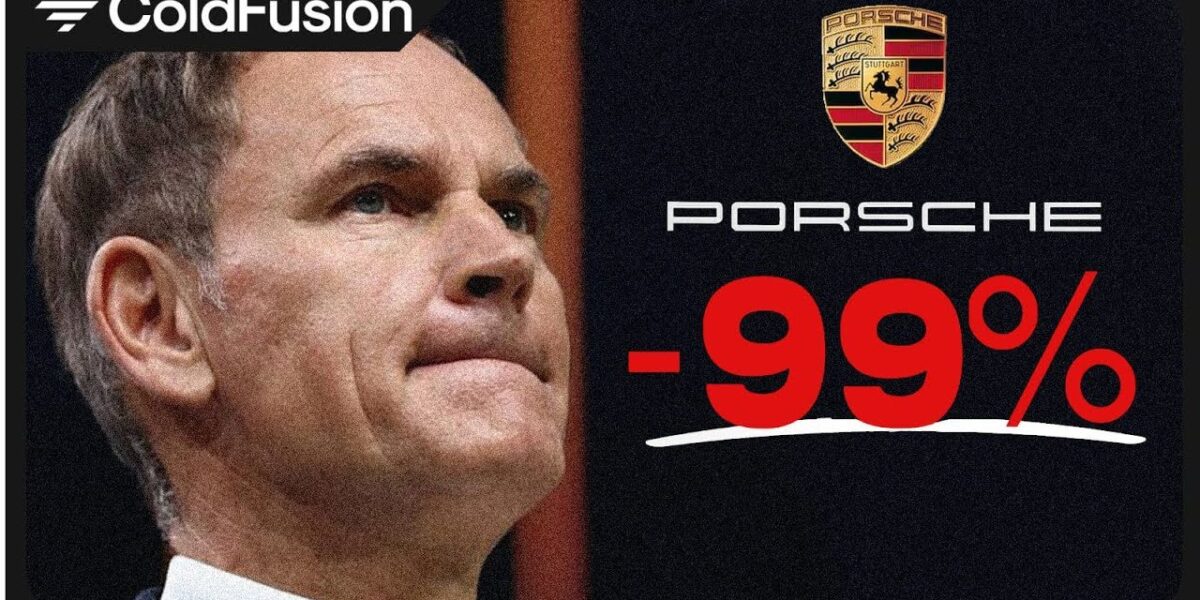
In a stark turnaround for a brand synonymous with precision and financial stability, Porsche has experienced a dramatic 99% collapse in its operating profit for the first nine months of 2025. The iconic German automaker, once a bastion of consistent profitability, is now in what its CEO Oliver Blume describes as a “crisis mode,” acknowledging that its long-standing business model is no longer viable in its current form.
A Legacy of Performance and Profit
For decades, Porsche built its success on a seemingly foolproof formula: crafting high-performance, luxurious sports cars that resonated with affluent buyers. From the legendary 911 to the more recent hybrid-electric innovations, the brand cultivated an image of ambition, engineering excellence, and exclusivity. This dedication to quality and performance translated into robust financial health, making Porsche one of the most consistently profitable automakers globally. Its cars, like the iconic 911, commanded high prices, often holding their value exceptionally well, a testament to the brand’s desirability and perceived permanence.
The brand’s appeal was further broadened by its successful foray into the SUV market with models like the Cayenne and Macan, which brought Porsche into the everyday lives of many and significantly boosted commercial success. Coupled with a storied racing heritage boasting around 30,000 victories, Porsche’s performance reputation felt genuinely earned. This, combined with high customer satisfaction scores and strong owner loyalty, created a powerful, recognizable, and aspirational brand image.
The Unforeseen Collapse
The recent financial figures paint a drastically different picture. Porsche’s operating profit plummeted from €4.04 billion to approximately €40 million in the first nine months of 2025. This staggering 99% drop coincides with a slowdown in demand in key markets and escalating costs associated with the transition to electric vehicles (EVs). Global revenue and deliveries have also seen a decline, with sales falling by 6%, equating to a loss of roughly €1.7 billion in revenue and approximately 13,000 fewer vehicles delivered.
Shifting Market Dynamics and Fierce Competition
Several converging factors have contributed to this crisis. One of the most significant challenges stems from China, historically one of Porsche’s strongest markets. In early 2025, deliveries in China saw a sharp 42% decrease. This decline is attributed to a combination of weaker luxury spending and the emergence of formidable domestic competition. Chinese brands such as Zeekr, Nio, and even tech giant Xiaomi, with its SU7, are now producing vehicles that offer advanced software, impressive performance, and competitive pricing. These new entrants are challenging the traditional dominance of established luxury brands by appealing to a new generation of buyers who prioritize technology and value alongside heritage and performance.
The Electric Vehicle Transition: A Costly Hurdle
Porsche’s ambitious transition to electric mobility has also proven more complex and expensive than anticipated. While the Taycan initially garnered momentum, interest has since waned, with global deliveries falling by 49% in 2024. The company has consequently softened its once-aggressive target of achieving 80% EV sales by 2030, with CEO Oliver Blume admitting the goal is “not realistic anymore.” The luxury EV market has proven volatile, with unpredictable shifts in consumer interest. Meanwhile, the costs associated with developing new EV platforms, including battery technology, advanced cooling systems, and sophisticated software, remain exceptionally high.
Porsche has been investing heavily in new production capabilities and factory upgrades to support a diverse model mix, with approximately €2.7 billion allocated to facility enhancements alone. While crucial for long-term strategy, this significant expenditure has placed a considerable strain on the company’s short-term financial health. Furthermore, global economic pressures, including tariff impositions, have added to the financial burden. Porsche noted that recent trade measures have increased its costs by hundreds of millions, a hit that landed precisely when the company was already channeling vast sums into new production and EV development. Porsche anticipates investing €3.1 billion in 2025, and even with cautious planning, the projected revenue margin is slim, especially when considering potential import tariffs.
Why This Matters: A Bellwether for the Luxury Auto Industry
Porsche’s predicament is more than just the financial struggle of a single luxury automaker; it serves as a critical indicator for the broader high-end automotive sector. The brand’s reputation for discipline, engineering prowess, and financial consistency makes its current situation particularly telling. When a company like Porsche declares its business model is broken, it signals a fundamental shift in the automotive landscape. It suggests that heritage and brand prestige alone are no longer sufficient guarantees of success. The next era of luxury performance vehicles will likely be defined by technological innovation, substantial investment capacity, and the ability to adapt rapidly to evolving consumer priorities.
The challenges faced by Porsche echo those confronting other luxury manufacturers like Ferrari, Bentley, Mercedes-AMG, and BMW. All are grappling with the immense research and development costs required for modern electric platforms and are attempting to forecast future consumer demand in a rapidly changing market. The delicate balance between maintaining brand exclusivity and scaling production, particularly in the EV space, has become increasingly difficult. Pricing EVs too high deters buyers, while pricing them too low erodes already tight margins. The success Porsche once found in expanding its model range with SUVs is now hampered by a saturated market where nearly every luxury brand competes.
Recalibration or Decline?
Porsche finds itself at a crossroads, needing substantial sales to fund its engineering ambitions but risking dilution of its exclusive image if it scales too aggressively. The path forward is debated. Some believe the brand is drifting from its core strengths, while others see this as a strategic recalibration for a new era. A more cautious perspective suggests that Porsche’s challenges are deep-seated, with declining demand in previously strong markets and an emotional brand appeal that doesn’t automatically transfer to its electric offerings.
However, an optimistic view highlights Porsche’s history of adaptation and reinvention. The recent focus on hybrid technology and continued strong demand for limited-run performance models suggest a more measured approach to electrification and a potential prioritization of brand identity over sheer volume. If this strategy holds, Porsche’s future may involve fewer models, a greater emphasis on exclusivity, and a return to the core values that established its iconic status. This moment could represent less of a decline and more of a strategic recalibration to define what a luxury performance brand means in a world of rapid technological advancement and shifting consumer desires.
Ultimately, Porsche’s response to this crisis will not only shape its own future but may also influence the evolution of the entire luxury automotive segment and our understanding of consumer aspirations in the coming years.
Source: Porsche Profits Fall 99% as CEO in Crisis Mode (YouTube)

Related Articles

Smart Marketing Budgets: A 4-Step Strategy
A four-step framework emphasizes anchoring marketing spend on proven revenue drivers, building flexibility for performance-based shifts, separating experimental budgets from core investments, and reallocating resources faster than competitors. This strategic approach optimizes ROI and enhances competitive advantage.


Used EVs Offer Strong Value Proposition for Consumers
Consumers are finding significant value in the used electric vehicle market, with some models like older Teslas retaining their value remarkably well. This trend offers a compelling alternative to purchasing new vehicles, highlighting the long-term cost-effectiveness of pre-owned EVs.


Tesla Slashes Prices, Making Model 3 More Accessible
Tesla has introduced a more affordable rear-wheel-drive Model 3, significantly lowering the barrier to entry for its popular EV. This move comes as European EV sales surge, highlighting the growing demand for electric mobility.