Ferrari 849 Testarossa: A Hybrid Masterpiece
Ferrari's new 849 Testarossa hypercar redefines hybrid performance with 1,036 horsepower and advanced electromechanical integration. Despite its $700,000+ price tag, engineers focused on delivering a transparent and intuitive driving experience.

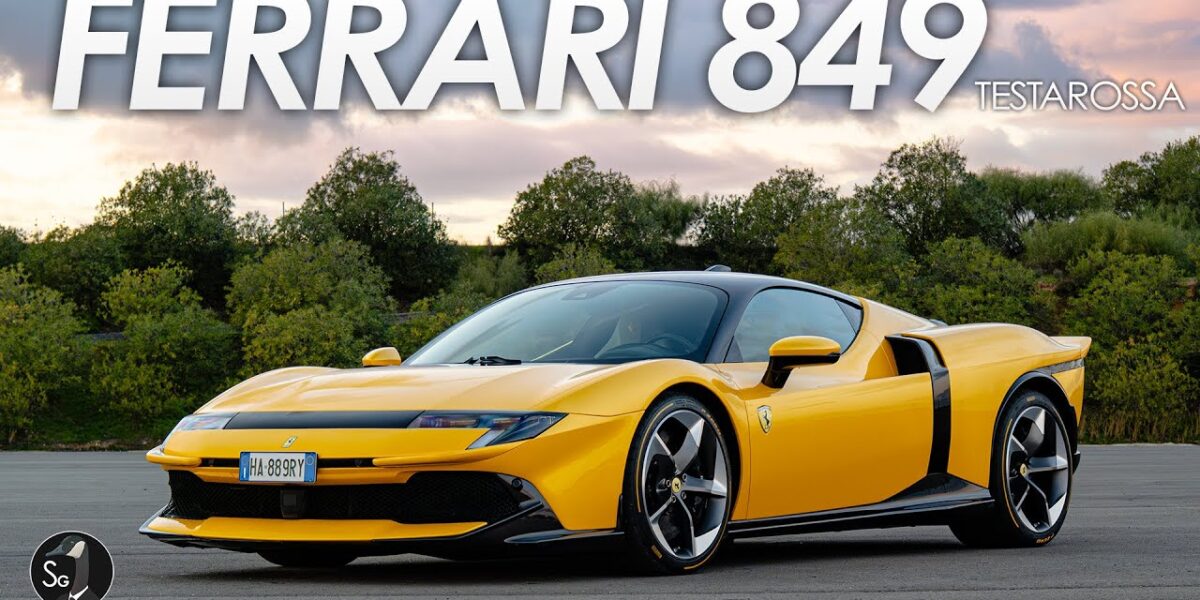
Ferrari Unveils the 849 Testarossa: A New Era of Hybrid Hypercar Performance
Ferrari has once again pushed the boundaries of automotive engineering with the launch of its latest pilot supercar, the 849 Testarossa. This machine represents a significant technological leap, showcasing Ferrari’s mastery in integrating cutting-edge motorsports technology into a road-legal hypercar. While the substantial price tag places it far beyond the reach of the average consumer, Ferrari’s approach with the 849 is to demonstrate its engineering prowess and meticulous attention to detail in electromechanical systems integration.
A Deep Dive with the Engineers
Unlike the often-perceived closed-door policy of Ferrari, this launch offered unprecedented access to the very engineers who designed the 849. This small, passionate team, many with decades of experience at Ferrari, shared their insights into the complex systems that make this hypercar tick. Their focus was clear: to create a car that, despite its immense complexity, delivers a transparent and intuitive driving experience. This philosophy aims to address criticisms of previous hybrid Ferraris where the advanced systems felt disconnected from the driver.
Powertrain: Electrification Meets V8 Fury
At the heart of the 849 Testarossa lies a formidable powertrain. It boasts a staggering 1,036 horsepower, delivered by a potent combination of a 4.0-liter twin-turbo V8 engine and three electric motors. The V8 alone produces over 800 horsepower, while the electric motors contribute more than 200 horsepower. The front axle features two independent electric motors capable of true torque vectoring, enhancing cornering agility. A third electric motor is situated between the engine and gearbox, assisting with torque fill, stability control, and initial acceleration.
Ferrari engineers have made significant revisions to the V8 compared to its predecessor in the SF90 Stradale. These include a completely new turbocharging group with ball bearings derived from the F80, and heat shields inspired by the 296 GT3 for improved thermal management. The engine’s combustion chambers feature updated designs for enhanced efficiency, and new alloy materials have been employed to reduce the carbon footprint. Weight reduction measures, including extensive machining of castings inspired by the 499P Le Mans racer, help the engine rev more quickly. The engineers emphasize a seamless integration of the electric and combustion elements, virtually eliminating turbo lag through clever ‘torque fill’ and innovative manifold design using Inconel for high-temperature resistance.
Performance Figures That Astonish
The 849 Testarossa is not just about technological sophistication; it delivers blistering performance. It achieves 0-60 mph in under two seconds and covers the quarter-mile in just over nine seconds. Crucially, it meets stringent European emissions regulations, a feat not all competitors can claim. The car also generates over 900 lbs of downforce at 150 mph, ensuring stability at extreme speeds without the need for large, overt aerodynamic appendages.
Chassis and Aerodynamics: A Symphony of Engineering
The chassis has seen geometry and stiffness improvements over the outgoing SF90. It features a double-wishbone suspension setup, with options for BWI Magnaride adaptive dampers or Multimatic spool valve dampers for enhanced track performance. The body styling, while polarizing for some, is a deliberate blend of retro-futurism, evoking a spaceship-like presence. This design is not just for show; it contributes significantly to the car’s aerodynamic efficiency, producing substantial downforce with minimal drag.
The Driver Interface: Complexity Made Simple
A key focus for Ferrari was to make the 849 Testarossa not complicated to drive, despite its intricate systems. The vehicle dynamics department has developed a sophisticated integration of the hybrid powertrain, torque vectoring, and advanced electronic stability control (ESC). The Ferrari Integrated Vehicle Estimator (FIVE) uses data from a six-degree-of-freedom G-meter, wheel speed sensors, and virtual car models to predict and react to driver inputs and road conditions. This system allows for precise control of traction, braking, and cornering, providing a natural and confidence-inspiring driving experience, even at the limit.
One of the most challenging aspects of modern performance cars is brake-by-wire systems, which can often feel disconnected. Ferrari claims to have overcome this hurdle through extensive tuning of the pedal feel and stroke, and by optimizing the ABS and electronic brake distribution (EBD) systems. The goal is to allow drivers to brake later and harder without feeling the intrusive intervention of the ABS, a common complaint in many other high-performance vehicles.
Pricing and Availability
The Ferrari 849 Testarossa is an ultra-exclusive hypercar. Pricing starts in the mid-$500,000s, but as tested, the models on display and for driving were well over $700,000. Availability is expected to be highly limited, reflecting its status as a halo product for the brand.
Verdict: A Glimpse into the Future of Performance
The Ferrari 849 Testarossa is more than just a fast car; it’s a technological statement. It represents Ferrari’s vision for the future of the hypercar, seamlessly blending extreme performance with sophisticated hybrid technology and advanced driver aids. While its astronomical price means it’s a dream for most, its engineering innovations and the refined driving experience it offers set a new benchmark. For the discerning collector and driving enthusiast with the means, the 849 Testarossa is an unparalleled expression of automotive passion and engineering excellence.
Source: Ferrari 849 Testarossa | How The Game is Played (YouTube)

Related Articles

Turbochargers: Insane G-Forces and Engineering Marvels
Discover the astonishing world inside a turbocharger, where components spin at over 300,000 RPM, generating forces of 1.7 million Gs. This article delves into the extreme engineering required to harness such power.

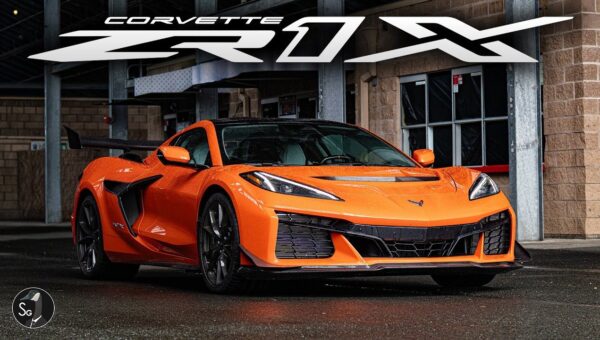
Corvette ZR1X: A Hybrid Hypercar Masterpiece
The Chevrolet Corvette C8 generation reaches its zenith with the ZR1X, a 1,250 horsepower hybrid hypercar. Boasting a 1.68-second 0-60 mph time and a bespoke Alcon braking system, it redefines supercar performance. This machine represents the culmination of meticulous planning and advanced engineering.

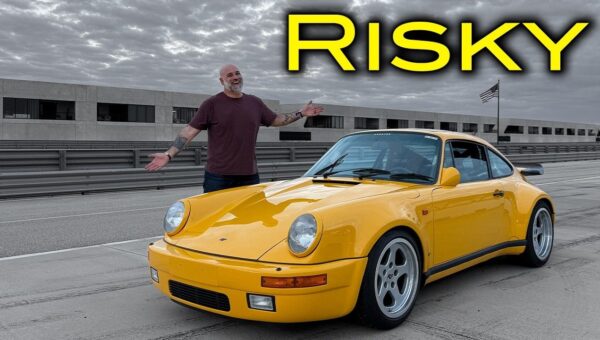
RUF Yellowbird: A Legend Reborn on Track
Experience the raw power and legendary status of the RUF Yellowbird. This 1991 widebody example offers a thrilling twin-turbo, six-speed driving experience, representing a pinnacle of 80s and 90s supercar engineering. A true multi-million dollar icon.