Dark Matter’s Mystery: Why It Resists Collapse Into Black Holes
Dark matter, unlike normal matter, does not collapse into stars or black holes because it cannot radiate energy away as heat. Its inability to interact with the electromagnetic force prevents the cooling necessary for gravity to overcome particle pressure. This unique property leads to the formation of vast, diffuse structures like galactic halos and the cosmic web.

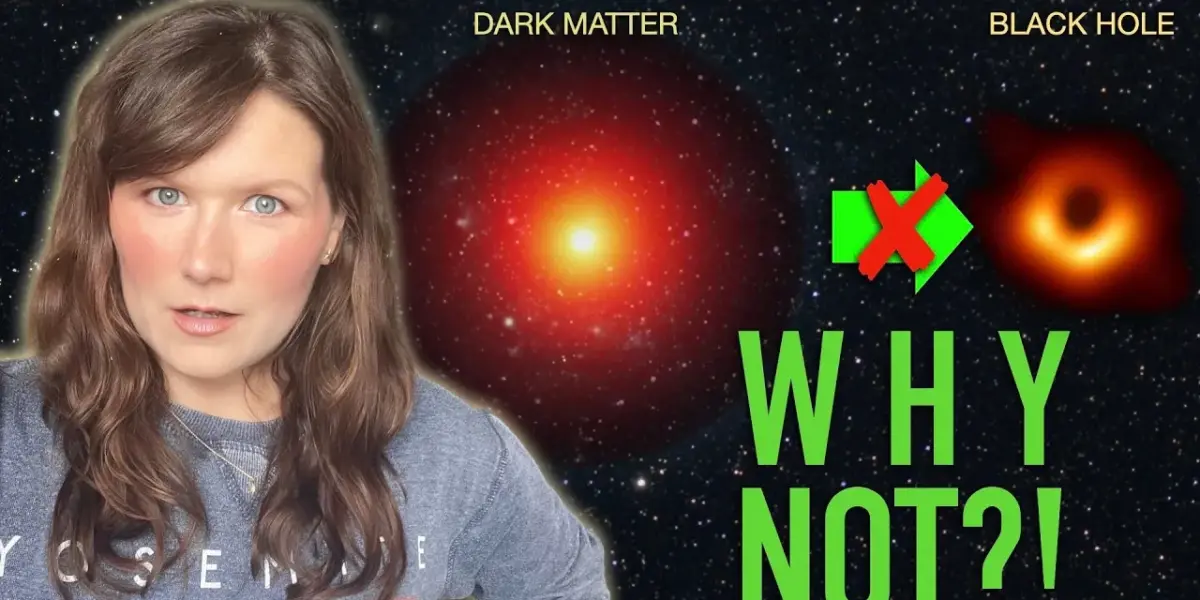
Imagine a universe where gravity pulls everything together. Normal matter, like the stuff that makes up stars, planets, and us, readily collapses under this pull. It forms dense objects, from tiny planets to massive stars, and even the ultimate cosmic drain: black holes. But there’s another kind of matter out there, called dark matter, and it behaves very differently. Despite making up a huge chunk of the universe’s mass, it doesn’t seem to collapse into these compact forms. Instead, it drifts in vast, fuzzy clouds. This raises a fundamental question: why doesn’t dark matter, with all its gravitational might, form dark stars or even dark black holes?
The Collapse of Normal Matter
To understand why dark matter doesn’t collapse, we first need to grasp why normal matter does. At its simplest, gravity pulls all particles in a cloud towards each other. If this were the only force, a cloud of normal matter would indeed become denser and denser until it forms a black hole. However, this simple model misses two crucial points.
Firstly, particles aren’t stationary; they possess inherent energy, meaning they’re already moving. As gravity starts to compress a cloud of normal matter, particles collide more frequently. These collisions increase the particles’ energy, raising the cloud’s temperature and pressure. This outward pressure from the energetic particles then pushes back against gravity, resisting collapse. Think of it like trying to squeeze a balloon; the air inside pushes back.
Secondly, other forces are at play. The electromagnetic force, for instance, governs how charged particles interact. Opposite charges attract, while like charges repel. More importantly for collapse, particles in a normal matter cloud can lose energy by radiating it away as light or heat. When particles collide and convert their movement energy into heat, they can then emit this energy as electromagnetic waves. This cooling process allows gravity to overcome the particles’ outward pressure, enabling the cloud to continue collapsing and eventually form stars or planets.
Dark Matter’s Unique Behavior
Dark matter, by definition, doesn’t interact with light. It neither emits, reflects, nor absorbs it. We only know it exists because of its gravitational effects on the visible matter around it, much like we can’t see the wind but observe its effect on trees.
When scientists map out dark matter, they find it forms enormous, diffuse structures. These include vast halos surrounding galaxies and long, interconnected filaments spanning the universe, creating a cosmic web. This structure is a direct consequence of dark matter’s inability to cool down effectively.
Since dark matter particles do not interact with the electromagnetic force, they cannot radiate away energy as heat. This means a cloud of dark matter, as it tries to collapse under gravity, cannot cool down sufficiently for gravity to win out over the particles’ inherent energy. The outward pressure remains too strong for a complete collapse.
Cosmic Expansion as a Cooling Mechanism
So, if dark matter can’t radiate heat like normal matter, how does it cool at all? The universe itself provides a mechanism: expansion. As space expands, the wavelengths of dark matter particles are stretched, similar to how light waves are stretched, causing a phenomenon called redshift. This stretching reduces the energy of the dark matter particles, allowing them to cool, albeit very slowly.
This slight cooling is just enough to allow for some clumping, but not the extreme collapse seen with normal matter. This explains why dark matter forms those large, fuzzy halos and filaments instead of dense stars or black holes. It’s a gradual accumulation, not a rapid implosion.
Historical Context and Future Implications
The idea of a cosmic web formed by dark matter was first predicted by computer simulations in the 1980s and 1990s. However, it wasn’t until the late 2010s that astronomers observed this vast structure with telescopes, providing compelling evidence for dark matter’s existence and its unique behavior.
The fact that dark matter doesn’t collapse like normal matter is crucial to the universe as we know it. If dark matter could form black holes and stars, the cosmos would look vastly different. Galaxies might not have formed in the stable, extended halos we observe today, potentially altering the evolution of stars and planetary systems.
Future research will continue to probe the nature of dark matter. Scientists are designing experiments to directly detect dark matter particles and better understand their interactions. Unraveling this mystery is key to a complete picture of the universe’s structure, evolution, and ultimate fate.
Source: Why doesn’t dark matter collapse into black holes? (YouTube)

Related Articles


Dark Matter Defies Gravity, Forming Fuzzy Clouds Instead of Stars
Dark matter, which outweighs all visible matter, surprisingly does not collapse under gravity to form stars or black holes. Instead, it forms vast, diffuse clouds around galaxies, baffling scientists with its unique behavior. Understanding this cosmic enigma is key to comprehending the universe's structure and evolution.


Dark Venus Nights & Interstellar Dreams: Unpacking Cosmic Mysteries
Explore the surprising darkness of Venusian nights, ponder the possibility of ancient stellar flybys shaping our solar system, and delve into the cutting-edge technologies needed for interstellar travel. This article unpacks complex cosmic phenomena and highlights the importance of direct creator-fan connections.
Cosmic Rays Reveal Universe’s Most Powerful Accelerators
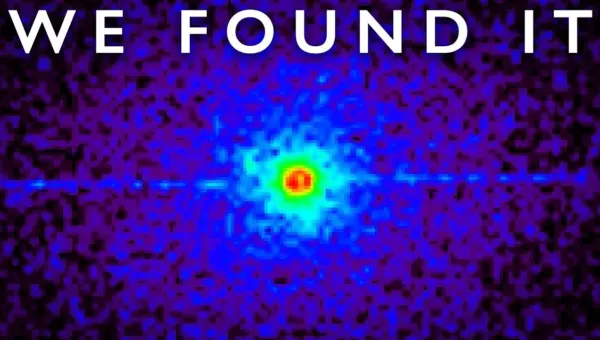
Scientists have discovered incredibly powerful cosmic accelerators, dubbed PeVatrons, within our Milky Way galaxy. These sources are responsible for the highest-energy cosmic rays ever detected, some reaching energies of 10 peta-electron-volts. The discovery, driven by observatories like LHAASO, is revolutionizing our understanding of our galaxy's violent and energetic nature.