Cosmic Rays Reveal Universe’s Most Powerful Accelerators
Scientists have discovered incredibly powerful cosmic accelerators, dubbed PeVatrons, within our Milky Way galaxy. These sources are responsible for the highest-energy cosmic rays ever detected, some reaching energies of 10 peta-electron-volts. The discovery, driven by observatories like LHAASO, is revolutionizing our understanding of our galaxy's violent and energetic nature.

Cosmic Rays Reveal Universe’s Most Powerful Accelerators
For over a century, scientists have puzzled over the origin of cosmic rays. These high-energy particles bombard Earth, posing a threat to our satellites and electronics. Now, new research points to incredibly powerful cosmic engines, far exceeding our wildest imaginations.
The Mystery of Cosmic Rays
Imagine looking up at a peaceful night sky. It seems so distant, so calm. But we are constantly under a silent barrage from space. These are cosmic rays, tiny particles traveling near the speed of light. When they hit our atmosphere, they create a shower of other particles. This can interfere with satellites and even pose a risk to life on Earth over long periods.
In 1912, physicist Victor Hess made a balloon flight to over 5,000 meters. He expected to find less radiation the higher he went. Instead, he found the opposite: radiation levels were three times higher than at sea level. This discovery revealed that the radiation, the cosmic rays, came from outer space. For over 100 years, finding their source has been a major challenge for astrophysicists. Magnetic fields in space scramble their paths, making them impossible to trace directly back to their origin.
A New Observatory, A New Era
The key to understanding cosmic rays lies in their energy. Scientists noticed a point in their energy spectrum, called the “knee.” Beyond this point, around 4 peta-electron-volts, the most energetic cosmic rays become very rare. For a long time, it was unclear if these extreme particles came from within our Milky Way galaxy or from far beyond.
This mystery began to unravel with the construction of the Large High Altitude Air Shower Observatory (LHAASO) in China. Located nearly 4,500 meters high in the mountains, LHAASO is designed specifically to detect the highest energy particles in the universe. To catch these rare particles, LHAASO covers an area equivalent to 190 football fields. It uses sophisticated detectors to analyze the “air showers” created when cosmic rays hit Earth’s atmosphere. By piecing together the debris from these showers, scientists can learn about the original particle.
Discovering PeVatrons
LHAASO’s impressive capabilities quickly led to a groundbreaking discovery. By 2021, the observatory detected gamma-ray photons with energies exceeding 1 peta-electron-volt (PeV), with one reaching 1.4 PeV. This is over 100 times more energy than the fastest particles accelerated by the Large Hadron Collider on Earth. These incredibly energetic particles couldn’t just appear from nowhere; they needed an incredibly powerful source.
Scientists theorized about such sources for decades, and LHAASO’s findings confirmed their existence. These sources are called “PeVatrons” – objects capable of accelerating particles to peta-electron-volt energies. The detection of these gamma rays, which travel in straight lines, allowed scientists to trace their origins. LHAASO identified 12 distinct sources in our galaxy capable of producing these ultra-high-energy gamma rays. The fact that these gamma rays were detected meant they couldn’t have traveled vast cosmic distances, as they would have vanished by colliding with background photons. This strongly suggested these PeVatrons are located within our own Milky Way galaxy.
The Suspects: Supernova Remnants, Pulsars, and Black Holes
With the PeVatrons located within our galaxy, the search intensified for the specific objects responsible. For years, supernova remnants – the expanding shells left behind after a star explodes – were considered prime candidates. These remnants create shock waves that can accelerate particles. However, theoretical models suggest they might not reach PeV energies on their own, especially if the remnant is old. Yet, some might still contribute by interacting with dense gas clouds.
Pulsars, the rapidly spinning, highly magnetized remains of dead stars, emerged as another strong contender. Their powerful magnetic fields can accelerate charged particles, creating a wind that, when it slows down at a “termination shock,” can boost particles to extremely high energies. LHAASO data suggests that over 30% of candidate PeVatrons could be associated with pulsars.
A surprising candidate also emerged: black holes. The Bañados-Silk-West effect suggests that particles colliding near a black hole’s event horizon could gain immense energy. While previously thought to be lost forever, newer models indicate some particles can be ejected, becoming cosmic rays. While black holes are less common in our relatively quiet Milky Way compared to other galaxies, they are now considered potential PeVatron sources.
Confirmed PeVatrons: The Crab Nebula and Cygnus X-3
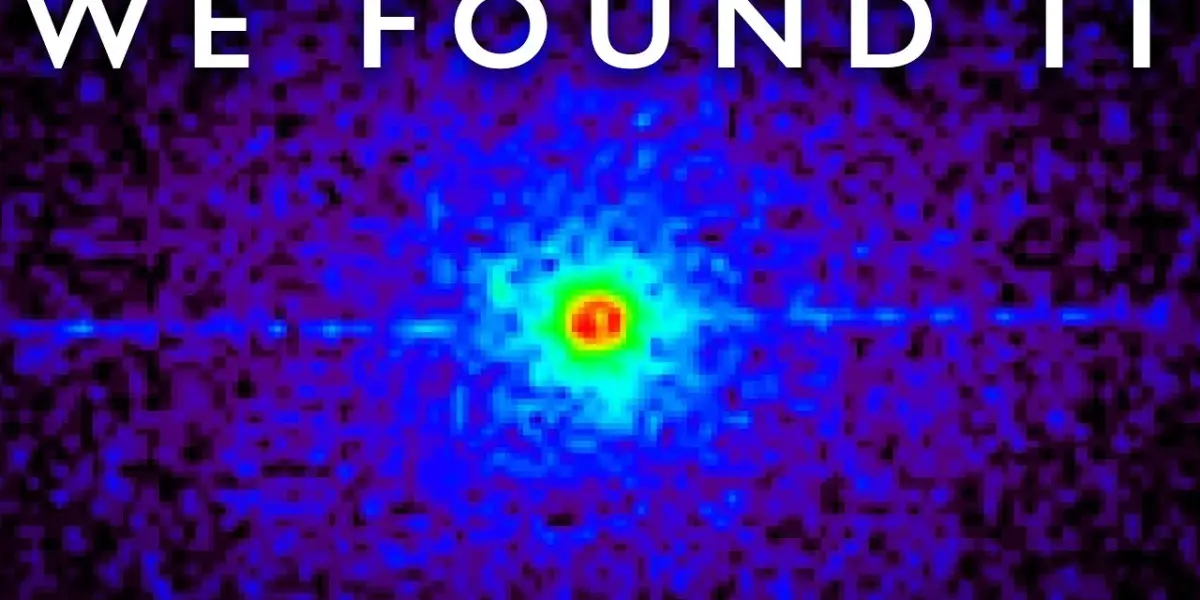
The hunt for specific PeVatrons has yielded exciting results. The Crab Nebula, a famous supernova remnant about 6,500 light-years away, has been confirmed as a PeVatron. It’s known to accelerate electrons to extreme energies, producing intense gamma-ray flares. This makes it a “leptonic accelerator,” meaning it accelerates electrons.
However, cosmic rays are mostly protons, so scientists are particularly interested in “hadronic accelerators” that can accelerate protons. One of the most powerful sources identified is Cygnus X-3, an X-ray binary system located in the Cygnus constellation. LHAASO detected photons from this system with energies up to 3.7 PeV. Since these photons are produced by accelerated protons, the protons themselves must have energies several times higher. This suggests Cygnus X-3 is a “Super PeVatron,” capable of accelerating protons to at least 10 PeV – making it one of the most powerful particle accelerators known in the universe.
The Future of Cosmic Ray Research
The number of identified candidate PeVatrons has exploded since LHAASO’s initial findings. In 2023, a catalog listed 43 sources, and now that number exceeds 75. This vast network of powerful accelerators within our own galaxy is forcing scientists to rethink our Milky Way, revealing it to be a far more energetic and dynamic place than previously believed.
This research is a global effort, with observatories worldwide collaborating to build a comprehensive picture of high-energy phenomena. Studying PeVatrons is a rapidly evolving field, pushing the boundaries of physics. These cosmic accelerators are far more powerful than anything humans can build on Earth. While we are still under attack from cosmic rays, we are now much closer to understanding their origins and the incredible forces that create them.
Source: We Found the Most Powerful Object In the Universe (YouTube)

Related Articles

Dark Matter’s Mystery: Why It Resists Collapse Into Black Holes
Dark matter, unlike normal matter, does not collapse into stars or black holes because it cannot radiate energy away as heat. Its inability to interact with the electromagnetic force prevents the cooling necessary for gravity to overcome particle pressure. This unique property leads to the formation of vast, diffuse structures like galactic halos and the cosmic web.


Ryan Gosling Explores Real Science Behind ‘Project Hail Mary’
Actor Ryan Gosling and an astrophysicist discuss the real science behind 'Project Hail Mary.' They explore concepts like time dilation, the speed of light, and the search for extraterrestrial life, highlighting the film's commitment to scientific accuracy.


Project Hail Mary’s Science: Is It Real?
The movie Project Hail Mary dives deep into real astrophysics and biology. It explores concepts like solar dimming, relativity, and alien life. While much is fiction, the film grounds its narrative in actual scientific principles, sparking curiosity about the universe.