Canada Eases Tariffs on Chinese EVs, Eyes Auto Sector Revival
Canada is reducing tariffs on Chinese electric vehicles to 6.1% from 106%, allowing up to 49,000 units annually. This move aims to boost the struggling auto sector and diversify trade, but raises concerns about U.S. trade relations and the viability of domestic manufacturing.


Canada Reverses Stance on Chinese EVs, Seeks Auto Sector Growth
In a significant policy shift, Canada is lowering its tariffs on electric vehicles (EVs) imported from China, a move aimed at bolstering its struggling auto manufacturing sector and diversifying its trade relationships. This decision reverses a policy implemented in 2024 that had imposed a 106% duty on Chinese EVs, effectively mirroring U.S. tariffs. Under the new agreement, Canada will allow approximately 49,000 Chinese EVs into the country at a reduced tariff rate of 6.1%. This rate was previously applied to all Chinese vehicles until 2024.
Trade-Offs and Strategic Alliances
The reduction in tariffs is reportedly linked to China’s commitment to lowering its own tariffs on Canadian canola oil. Beyond agricultural goods, the agreement intends to foster joint ventures between Canadian and Chinese entities. These collaborations are designed to create jobs for Canadian workers and contribute to the development of the nation’s EV supply chain. This strategic pivot comes as Canada’s auto manufacturing sector has faced a prolonged period of decline. From a peak of around 3 million units produced in 2000, output has fallen to an estimated 1.3 million units by 2025. The recent imposition of U.S. tariffs has reportedly exacerbated this downward trend.
Canada is not solely focusing on China for its automotive future. The government has also signed a memorandum of understanding with South Korea concerning clean vehicle manufacturing. Furthermore, in early February, Canada unveiled a new national automotive strategy. Key components of this strategy include the reinstatement of a C$5,000 federal tax credit for new electric vehicles, which had been depleted of funds in 2025, and planned tax credits for domestic EV manufacturers. However, a critical factor for attracting international investment remains Canada’s relationship with the United States. Experts caution that without strong ties to the U.S. market, international automakers may hesitate to invest in Canada, given the latter’s heavy reliance on exports to its southern neighbor.
Market Dynamics and Production Realities
The Canadian automotive market is characterized by its relatively small domestic sales volume, estimated at 1.8 to 2 million units annually. This contrasts sharply with the U.S. market, where new car sales are approximately eight times larger. Canada’s auto industry is heavily export-oriented, with roughly 90% of manufactured vehicles destined for the U.S. market. Conversely, imports constitute a similar proportion of vehicles sold within Canada.
The current agreement permits up to 49,000 Chinese EVs, with a potential increase to 70,000 within five years. However, the scale of this quota presents challenges for establishing large-scale manufacturing operations in Canada. Industry analysts suggest that even a single dominant Chinese automaker would likely not reach the production volumes necessary to justify building a new, cost-effective factory. Profitable manufacturing typically requires an output of 200,000 to 250,000 vehicles per year due to high fixed costs. With the allocated quota likely to be distributed among multiple manufacturers, individual companies might only be permitted to sell around 15,000 vehicles. This limited volume could leave automakers with surplus inventory, forcing them to seek markets beyond Canada, potentially in Europe, the UK, or Mexico, or to pursue a global production mandate.
Trade Tensions and Future Outlook
The U.S. officially imposes a 25% tariff on non-U.S. content in vehicles imported from Canada, which translates to an effective duty of approximately 10% to 12% per vehicle. Historically, the North American automotive supply chain has been highly integrated, with components frequently crossing U.S., Canadian, and Mexican borders multiple times. This integration was significantly disrupted by trade disputes initiated under the Trump administration.
Canada’s decision to ease restrictions on Chinese EVs has reportedly drawn a strong reaction from the U.S., with former President Trump threatening a 100% tariff on all Canadian goods and services. The head of the organization representing Detroit automakers in Canada described the deal with China as a “vehicle-sized irritant” that could complicate trade discussions with the U.S. It is noteworthy that American manufacturers account for only about 23% of Canada’s auto production, while Japanese automakers like Toyota and Honda represent the remaining 77%.
Canada’s Strengths and Challenges
Brian Kingston, leader of the industry group for GM, Ford, and Stellantis in Canada, cited cyclical industry trends, trade disruptions, and the costly retooling process for EVs as reasons for the sector’s decline. Despite these challenges, Kingston highlighted Canada’s potential advantages, including abundant critical minerals essential for next-generation EVs and a strong base of clean energy sources like hydroelectric and nuclear power, which could support manufacturing operations and help pivot away from reliance on China.
Market Impact
The Canadian government’s move to lower tariffs on Chinese EVs signals an attempt to stimulate domestic demand and potentially attract foreign investment in EV manufacturing. However, the limited quota for Chinese vehicles suggests that the primary goal may be to offer more affordable EV options to Canadian consumers rather than to establish large-scale Chinese manufacturing plants within the country. The policy’s success will likely hinge on its ability to balance trade relations with key partners, particularly the U.S., and its effectiveness in revitalizing Canada’s own auto production capabilities. The potential for increased trade friction with the U.S. remains a significant overhang.
What Investors Should Know
Investors in the automotive sector should monitor the evolving trade dynamics between Canada and the U.S., as well as Canada’s success in attracting investment for its domestic EV supply chain. The strategy aims to leverage Canada’s natural resources and clean energy infrastructure. However, the critical dependence on the U.S. market for exports means that any deterioration in bilateral trade relations could have substantial negative implications for Canadian auto manufacturers and related industries. The long-term viability of Canada as an automotive manufacturing hub will depend on its ability to secure stable market access and attract sufficient investment to compete globally.
Source: Why Canada Is Allowing Chinese EVs (YouTube)

Related Articles


Trump’s Tariffs Linked to Stagnant Job Growth in First Year Back
The U.S. economy saw minimal job growth in 2025, adding just 181,000 jobs, a figure attributed to business uncertainty fueled by Donald Trump's volatile tariff policies. While January 2026 showed gains, they were heavily concentrated in healthcare, masking broader economic weakness and significant layoffs.

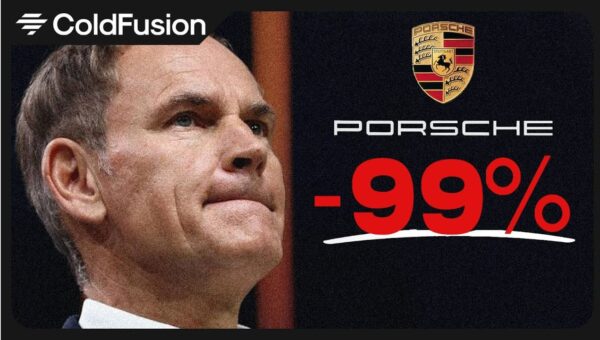
Porsche’s Profit Plunge: A Business Model in Crisis
Porsche's operating profit has plummeted by 99%, signaling a crisis for its long-standing business model. The luxury automaker faces challenges from shifting market demands, intense EV competition, and the high costs of electrification, forcing a strategic recalibration.


Supreme Court Reins In Presidential Tariff Power
The U.S. Supreme Court has ruled that the President cannot use emergency powers to impose tariffs, potentially requiring billions in collected revenue to be repaid to corporations. This decision limits executive authority in trade policy.