Bondi Faces Reckoning: Legal Avenues for Epstein Files Cover-Up
An analysis explores potential legal avenues to hold Florida Attorney General Pam Bondi accountable for alleged false testimony regarding the Jeffrey Epstein files. The discussion centers on navigating conflicts of interest within the Department of Justice and the possibility of court-appointed special prosecutors.

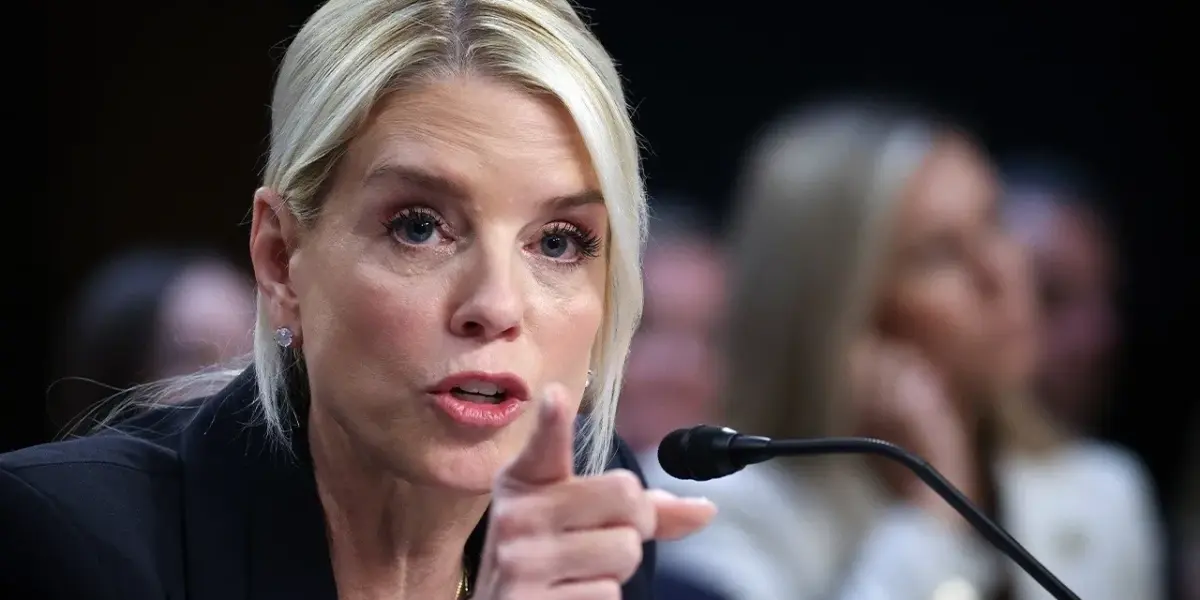
Bondi Faces Reckoning: Legal Avenues for Epstein Files Cover-Up
The legal landscape surrounding the Jeffrey Epstein files and the alleged cover-up has intensified, with attention now focusing on Florida Attorney General Pam Bondi. A recent legal analysis suggests that Bondi may have provided false testimony to Congress, potentially obstructing justice and necessitating a thorough investigation. However, the very institution tasked with such investigations – the Department of Justice (DOJ) – presents a significant conflict of interest, given its leadership’s ties to the Trump administration.
The Allegation of Lying to Congress
The core of the accusation against Pam Bondi stems from her sworn testimony before a congressional committee. She stated unequivocally that there was no evidence within the Epstein files indicating that Donald Trump committed any crimes. This assertion is directly contradicted by documents that reportedly show a teenage girl accusing Trump of criminal conduct. The analysis posits that this statement constitutes a lie to Congress, a violation of federal statute 18 U.S. Code § 1001, which deals with false statements to federal agencies. This statute is often likened to perjury and can carry significant penalties.
Beyond a false statement, the alleged lie to Congress could also be construed as obstructing a congressional proceeding. This charge, similar to obstructing justice, aims to prevent interference with legislative investigations. The analysis draws parallels to past cases, such as that of Roger Stone, who was convicted of lying to Congress and obstructing a congressional investigation. Even in the case of James Comey, an indictment, though contested, included charges of lying to Congress and obstructing a congressional proceeding based on those alleged falsehoods.
Navigating the Conflict of Interest at the DOJ
The primary challenge in holding an Attorney General accountable for alleged crimes lies in the DOJ’s mandate to investigate and prosecute such offenses. When the Attorney General is at the helm of the DOJ, as was the case under the Trump administration, a direct conflict of interest arises. The analysis highlights that the current Attorney General is unlikely to initiate an investigation into their own alleged wrongdoing or appoint an unbiased special counsel, especially if that counsel would be perceived as independent of political influence.
Historically, the role of independent counsel was established to address such conflicts. However, the lapse of the independent counsel statute and the current special counsel procedures place more control in the hands of the Attorney General, potentially exacerbating the conflict. This situation leaves a void where accountability mechanisms seem insufficient.
Potential Pathways to Accountability
Despite the apparent roadblocks, the analysis outlines several potential avenues for pursuing accountability for Pam Bondi:
- Congressional Contempt and Referral: If Democrats gain control of the House of Representatives, they could vote to hold Bondi in contempt for lying to Congress. This would likely be followed by a criminal referral to the DOJ for investigation and potential prosecution.
- Court-Appointed Special Prosecutor: A more novel approach involves petitioning a court to appoint a special prosecutor. This precedent is more established when a government entity, like the DOJ, refuses to investigate a violation of a court order. Congress, having a history of litigating to enforce its subpoenas, could argue that the DOJ’s conflict of interest necessitates a court-appointed prosecutor to vindicate Congress’s rights and ensure justice is served. This would be a “maiden voyage” in legal terms, potentially creating new case law.
The Role of the DC Court System
The discussion emphasizes the significance of the DC court system in adjudicating such matters. Judges in this jurisdiction, even those appointed by Republican presidents, have historically demonstrated a commitment to upholding the law, often ruling against the Trump administration when facts and legal principles warranted it. This track record suggests that legal challenges brought forth in DC courts would be decided on their merits rather than political considerations.
Timing and the Ongoing Nature of the “Crime”
A critical question is whether to initiate legal action while Bondi is in office or to wait until she is out of office. The analysis argues that the “crime” of covering up the Epstein files is ongoing, as the files were legally mandated to be released by a specific date, which has passed. This ongoing nature means the statute of limitations may not have fully commenced for certain aspects of the alleged cover-up.
The sentiment expressed is that “the time is always now” for accountability. While practicalities dictate that congressional action might be delayed until a Democratic majority is in place, the underlying offenses, such as lying to Congress, remain chargeable offenses. The ideal scenario for robust criminal accountability would likely occur when the DOJ is free from political influence, potentially under a future administration that prioritizes the rule of law.
Why This Matters
The allegations against Pam Bondi and the proposed legal strategies highlight a crucial tension in American governance: how to ensure accountability when powerful individuals are shielded by the very institutions meant to enforce the law. The Epstein files controversy touches upon issues of child exploitation, the potential for high-profile cover-ups, and the integrity of congressional investigations. The discussion underscores the importance of independent judicial oversight and the potential for novel legal approaches when existing mechanisms prove inadequate. Furthermore, it reiterates the significance of electoral outcomes in shaping the potential for holding public officials accountable, emphasizing that control of legislative bodies can directly impact the tools available for oversight and justice.
Implications, Trends, and Future Outlook
This situation brings to the forefront the ongoing debate about the independence of the Department of Justice and the efficacy of its special counsel regulations. The potential for a court to appoint an independent prosecutor, while unprecedented in this specific context, signals a possible evolution in legal remedies for governmental conflicts of interest. The analysis suggests a trend towards more aggressive use of judicial power to ensure accountability when political branches falter.
The future outlook depends heavily on political developments, particularly the composition of Congress. However, the legal groundwork being laid, even through theoretical discussion, could empower future legal challenges. The precedent set by judges in the DC circuit, consistently ruling based on law rather than political deference, offers a beacon of hope for the impartial application of justice.
Historical Context and Background
The Jeffrey Epstein scandal itself has a long and disturbing history, involving allegations of sex trafficking and abuse of minors by a wealthy and influential financier, and the subsequent controversy surrounding the handling of associated documents. The involvement of public figures and the perceived lack of transparency have fueled public demand for accountability. This case is situated within a broader context of discussions about prosecutorial discretion, the limitations of statutory law in addressing complex ethical and political conflicts, and the enduring struggle to ensure that no one is above the law, regardless of their political connections or position.
Source: Prosecutor drops BOMB on Pam Bondi amid Epstein coverup (YouTube)

Related Articles

DOJ Official’s Remarks Spark Outrage Over Political Allegations
A top Trump DOJ official's speech at CPAC has sparked controversy, with claims of incriminating admissions regarding fears of prosecution and alleged political motivations. The remarks have raised serious questions about impartiality within the Department of Justice.


Bondi’s Citizenship Claim Stirs Debate on American Identity
Pam Bondi's assertion that U.S. citizenship is a "privilege, not a right" has ignited a significant debate, challenging the established understanding of the 14th Amendment. This statement reflects broader concerns about who defines American identity and raises questions about the direction of national values and governance.


DOJ Pays Millions to Ally: Is This Legal?
A $1.2 million payout from the DOJ to Mike Flynn, a former Trump ally, has sparked outrage and questions about legality and oversight. Critics fear a pattern of "grift and corruption," while calls for accountability echo historical precedents.