Black Holes: Cosmic Laboratories of Reality
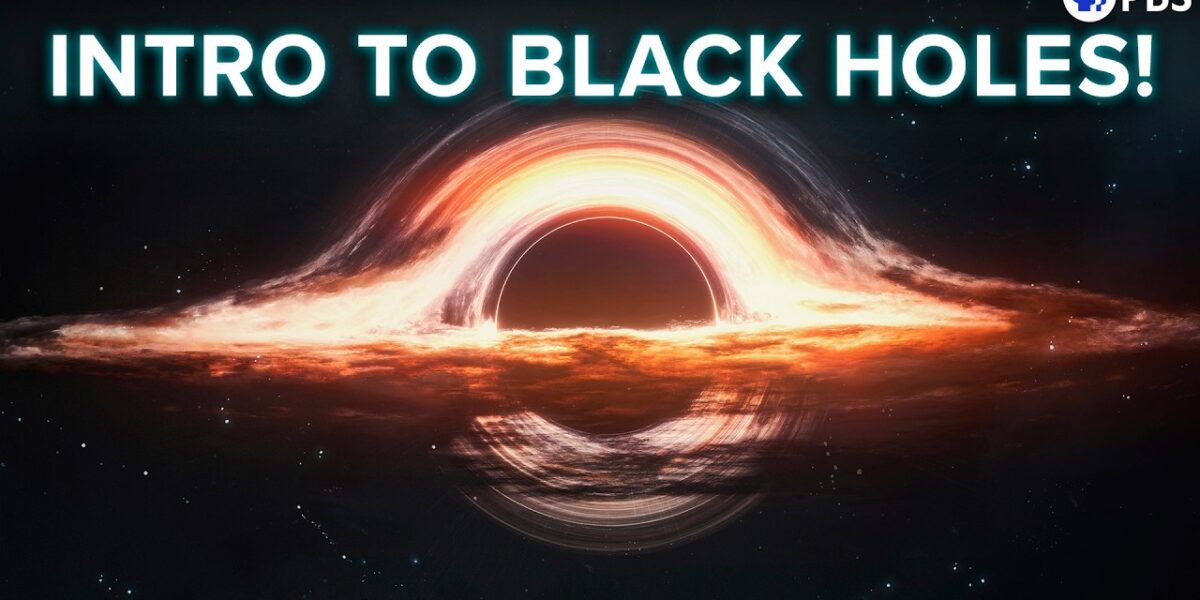
Black holes, formed from the collapse of massive stars or potentially from the early universe, serve as extreme cosmic laboratories. They challenge our understanding of physics, pushing general relativity and quantum mechanics to their limits, especially concerning the nature of singularities.

Black Holes: Cosmic Laboratories of Reality
Black holes, once mere theoretical curiosities born from the elegant mathematics of general relativity, are now firmly established as astrophysical realities. These enigmatic objects represent not only the most extreme environments in the cosmos but also the ultimate testing grounds for our fundamental understanding of physics, pushing Einstein’s theory of gravity and quantum mechanics to their absolute limits.
The Birth of a Black Hole: From Star’s Death to Quantum Collapse
The formation of a black hole is a dramatic cosmic event, typically beginning with the demise of a massive star. As a star exhausts its nuclear fuel, fusion processes cease, and the star’s core can no longer withstand the inward pull of its own gravity. For stars significantly more massive than our Sun, this collapse is catastrophic. In its final moments, a star undergoes frantic fusion, creating heavier and heavier elements in concentric shells, culminating in an iron core. Iron fusion, unlike earlier stages, consumes energy rather than releasing it, starving the core of its support.
This leads to a rapid gravitational collapse. Protons and electrons within the core are crushed together to form neutrons, creating an incredibly dense object known as a neutron star. The outer layers of the star rebound off this ultra-dense core in a spectacular supernova explosion, scattering newly forged elements across the galaxy. The remnant core, a neutron star, is a city-sized sphere packing at least 1.4 times the mass of our Sun into a volume with the density of an atomic nucleus. These neutron stars are quantum mechanical entities, their stability momentarily preserved by the quantum principle that prevents neutrons from occupying the same quantum state—a concept known as degenerate matter and the resulting degeneracy pressure.
However, to transform a neutron star into a black hole, another quantum mechanical principle comes into play: the Heisenberg uncertainty principle. This principle states that certain pairs of properties, like position and momentum, cannot be known with perfect accuracy simultaneously. For neutrons packed incredibly tightly within a neutron star, their position is highly constrained. Consequently, their momentum must become highly uncertain, implying very high velocities. This quantum effect leads to an expansion in “momentum space” for the neutrons. As more mass is added to a neutron star, this momentum expansion allows the star to shrink in physical size, rather than expand.
When the mass of the neutron star reaches approximately three times the mass of the Sun, its radius shrinks to a critical point where it becomes equal to the radius of its own event horizon—the boundary beyond which nothing, not even light, can escape. At this threshold, the neutron star effectively submerges beneath its event horizon, and a black hole is born. The mass of the original stellar core becomes the mass of the black hole, with only its mass, electric charge, and spin being retained.
Primordial Black Holes: Echoes from the Big Bang
While stellar collapse is the primary mechanism for black hole formation in the modern universe, the earliest moments after the Big Bang present another fascinating possibility: primordial black holes (PBHs). In the universe’s infancy, the density of matter was extraordinarily high, potentially dense enough for black holes to form spontaneously. Unlike stellar black holes, PBHs could have arisen from density fluctuations in the nascent universe.
These fluctuations, amplified by cosmic inflation, might have been intense enough in certain regions to overcome the universe’s expansion and collapse into black holes. The masses of these hypothetical PBHs could range from a few grams to thousands of times the mass of the Sun, depending on the specific formation models. If they exist, PBHs could offer profound insights into the physics of the very early universe.
Scientists are actively searching for evidence of PBHs. Those with masses less than about a billion tons would have likely evaporated by now due to Hawking radiation—a quantum process where black holes slowly lose mass over time. Larger PBHs, however, might still be present. Their existence could potentially explain dark matter, the mysterious substance that makes up about 85% of the universe’s mass. However, observations of gravitational lensing, the bending of light by massive objects, and their effects on star clusters and binary systems have significantly constrained the possible mass ranges for PBHs as dark matter candidates. Current research is narrowing down these possibilities, with ongoing observations from telescopes and gravitational wave detectors like LIGO playing a crucial role.
Singularities: Where Physics Breaks Down
At the heart of every black hole lies a singularity—a point of theoretically infinite density and spacetime curvature. This concept, first hinted at by Newton’s law of gravity, where the force becomes infinite as distance approaches zero, is further developed and complicated within Einstein’s theory of general relativity.
The Schwarzschild metric, a solution to Einstein’s field equations for a non-rotating, uncharged black hole, reveals two types of singularities. The first is the central gravitational singularity, similar to Newton’s prediction, where density and curvature become infinite. The second is the event horizon, which, while appearing as an infinite boundary from certain perspectives, is understood as a coordinate singularity—a mathematical artifact that can be resolved with a change in coordinate systems. This means that crossing the event horizon is not the physically catastrophic event it might seem; light rays can travel across it, albeit with peculiar time dilation effects.
However, the central singularity remains a profound challenge. Its inevitability in Einstein’s theory suggests that general relativity may be incomplete. At the singularity, spacetime itself is thought to break down, and our current understanding of physics, both general relativity and quantum mechanics, fails to describe what happens. Reconciling these two pillars of modern physics is one of the greatest challenges in theoretical physics, and black holes, with their extreme conditions and enigmatic singularities, are at the forefront of this quest.
The Future of Black Hole Research
The study of black holes continues to evolve rapidly. Future observations, particularly from advanced gravitational wave detectors and next-generation telescopes, promise to unveil more about these cosmic enigmas. Detecting primordial black holes, understanding the nature of the singularity, and potentially unifying general relativity with quantum mechanics are among the grand challenges that lie ahead. Black holes are not just astronomical oddities; they are cosmic laboratories that hold the keys to unlocking the deepest secrets of the universe and our place within it.
Source: Black Holes. Explained. For 1.5 Hours. (YouTube)

Related Articles


Earth’s Planetary Status Questioned, Figure-8 Orbits Debunked
Exploring Earth's planetary status, the impossibility of figure-8 orbits, the ongoing debate about dark matter's composition, and the future of human spaceflight.
Heisenberg’s 1925 Quantum Leap Still Puzzles
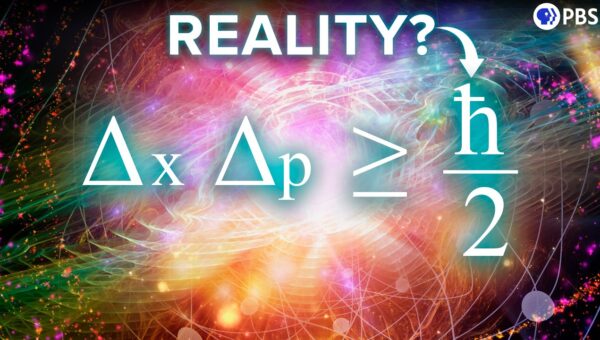
In 1925, Werner Heisenberg's groundbreaking work laid the foundation for quantum mechanics, a theory that revolutionized physics but whose fundamental implications remain a profound mystery 100 years later. This exploration delves into the birth of this strange new physics.


Dirac’s Equation: The Accidental Discovery of Antimatter
In 1928, Paul Dirac's relativistic electron equation unexpectedly predicted the existence of antimatter. Initially met with skepticism, the discovery of the positron in 1932 confirmed this groundbreaking concept, revolutionizing our understanding of the universe.