Author Andy Weir Builds Worlds with Spreadsheets and Science
Author Andy Weir discusses how science fuels his fiction, detailing his use of extensive spreadsheets for complex calculations and his choice of real stars for 'Project Hail Mary.' He reflects on the iterative nature of writing and how scientific discoveries can both inspire and be superseded by new knowledge.


Author Andy Weir Builds Worlds with Spreadsheets and Science
Science fiction author Andy Weir, known for his meticulously researched novels like “The Martian” and “Project Hail Mary,” revealed his unique writing process: it all starts with the science.
“I usually start with some There’s usually something that interests me in science that I like, oo, this is neat or what if this or what if that,” Weir explained in a recent chat. “And then I start to build a plot around it. And then I grudgingly acknowledge that there have to be characters in the story.”
This approach means Weir dives deep into complex scientific concepts, often using extensive spreadsheets to track the intricate details of his fictional universes. He shared a glimpse of his digital workspace, showing spreadsheets filled with calculations for fuel, insulation, centrifuge mechanics, engine performance, and even biological mass and propellant rates for fictional spacecraft.
From Code to Cosmos
Weir’s background in computer science and software engineering for 25 years significantly influences his writing. While coding can seem solitary, Weir emphasized that professional software development is a team effort. However, his experience with the iterative process of fixing bugs and improving code translates directly to his writing.
“My experience as a software engineer translated very well into the business of being a writer,” he said. “It’s like getting bug reports about my software. I’m used to that system of like I make a thing then somebody tells me a thousand places where it sucks, I fix those, send it back.” This iterative approach, he believes, makes him an easy author to work with during the editing process.
The Math Behind the Magic
For Weir, the mathematical and scientific underpinnings of his stories are not just a backdrop; they are the foundation. He uses detailed spreadsheets to work out everything from orbital mechanics to the physics of hypothetical technologies. These calculations help ensure that the incredible scenarios in his books have a plausible scientific basis.
When crafting “Project Hail Mary,” Weir utilized full general relativistic rocket equations, acknowledging he found them online rather than deriving them himself. This dedication to scientific accuracy, even when dealing with theoretical concepts, is a hallmark of his work.
Choosing Real Stars for Fictional Journeys
Weir deliberately chose real stars, Tau Ceti and 40 Eridani, for “Project Hail Mary.” The primary reason was their relative proximity, avoiding the need for faster-than-light travel, a common trope he wished to bypass.
“I wanted everything to stay like if I’m going to have somebody go to another star and they’re not going to go faster than light, it’s got to be pretty close,” Weir stated. This constraint dictated the distances and travel times within his narrative.
Furthermore, Weir introduced the concept of panspermia, suggesting that life on the planets in his story originated from a single event in the Tau Ceti system billions of years ago. This scientific idea explains why life forms on different worlds could be related and why he didn’t need to invent vastly different cellular structures.
He also selected these stars because they are solar analogs – stars similar to our own Sun. This similarity makes it more scientifically plausible that life, if it originated from Tau Ceti, could adapt and thrive in nearby systems like 40 Eridani.
Science Fact vs. Science Fiction
Weir acknowledges that science is constantly evolving, and his fictional accounts are products of their time. He noted that one of the stars featured in “Project Hail Mary,” 40 Eridani AB, was believed to exist when he wrote the book but has since been disproven by new astronomical observations.
“My books are a product of their time,” Weir explained. “I’m not gonna what am I going to do a re-release every time like something happens that invalidates it.” He treats these changes as natural consequences of scientific progress, rather than failures of his storytelling.
Similarly, for “The Martian,” Weir described the landing site with specific coordinates. Later, NASA’s Mars Reconnaissance Orbiter captured high-resolution images of the exact location, revealing that the actual Martian landscape didn’t precisely match his fictional descriptions. Weir finds these discrepancies amusing, seeing them as a testament to the ongoing exploration of space.
Inspiring Future Scientists
Weir is often told that his books have inspired people to pursue careers in science and astrophysics. While he is pleased to hear this, he remains humble about his impact.
“I believe those people were probably destined for science anyway,” Weir said. “I think people have their interests. You can foster those interests, but you’re not going to change them.” He sees himself primarily as an entertainer, happy if his work helps to foster enthusiasm for subjects people already love.
However, the detailed and engaging way Weir weaves scientific principles into compelling narratives undoubtedly sparks curiosity. His ability to make complex astrophysics and engineering accessible and exciting demonstrates the power of science fiction to not only entertain but also to inspire the next generation of explorers and scientists.
Source: Andy Weir chats to an astrophysicist | Project Hail Mary (YouTube)

Related Articles

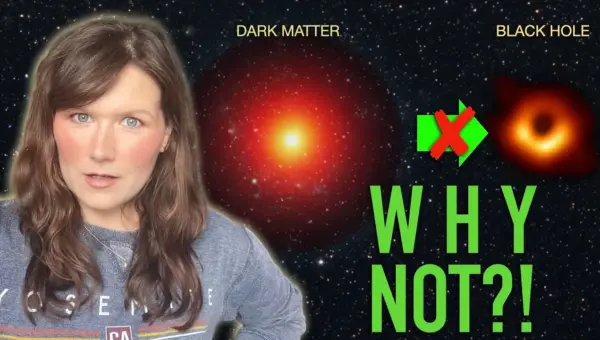
Dark Matter’s Mystery: Why It Resists Collapse Into Black Holes
Dark matter, unlike normal matter, does not collapse into stars or black holes because it cannot radiate energy away as heat. Its inability to interact with the electromagnetic force prevents the cooling necessary for gravity to overcome particle pressure. This unique property leads to the formation of vast, diffuse structures like galactic halos and the cosmic web.
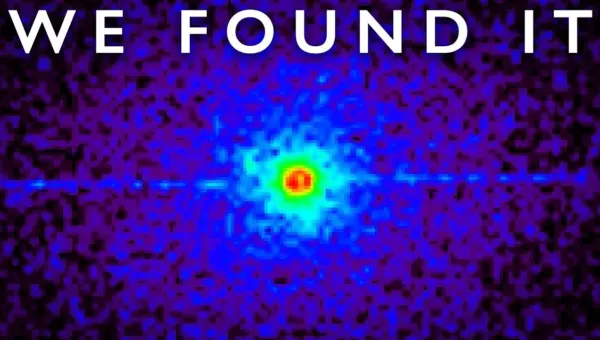
Cosmic Rays Reveal Universe’s Most Powerful Accelerators
Scientists have discovered incredibly powerful cosmic accelerators, dubbed PeVatrons, within our Milky Way galaxy. These sources are responsible for the highest-energy cosmic rays ever detected, some reaching energies of 10 peta-electron-volts. The discovery, driven by observatories like LHAASO, is revolutionizing our understanding of our galaxy's violent and energetic nature.

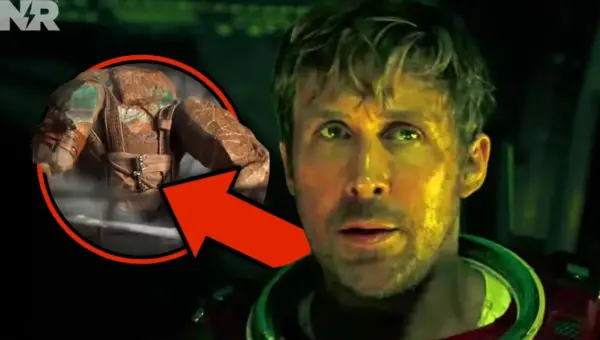
Project Hail Mary Astounds With Cosmic Wonder
The cinematic adaptation of Andy Weir's novel, Project Hail Mary, starring Ryan Gosling, has landed to critical acclaim. Directed by Lord and Miller, the film immerses audiences in a cosmic journey to save Earth, blending stunning visuals with a heartwarming story of unlikely friendship.