Subscription Creep: When Access Replaces Ownership
The subscription model has expanded beyond entertainment to nearly every consumer product, raising concerns about ownership and control. From car features to printers, companies are increasingly prioritizing recurring access over outright ownership, leading to consumer frustration and regulatory scrutiny.

Subscription Creep: When Access Replaces Ownership
At a time when convenience often comes at a premium, the subscription model has woven itself into the fabric of modern life. Once a straightforward arrangement for services like music and movies, it has now expanded into nearly every facet of consumer goods and technology, raising questions about ownership, control, and the true cost of convenience. From car features locked behind monthly fees to software that downgrades itself upon cancellation, the trend is undeniable: companies are increasingly prioritizing recurring revenue over outright ownership.
The Rise of the Subscription Economy
The concept of paying for regular deliveries or access is not new, with historical examples dating back to 17th-century coffee subscriptions and 19th-century milk deliveries. However, the modern subscription economy truly began to take shape in the early 2000s with the advent of the internet and the shift from physical media to digital services.
Software as a Service (SaaS) emerged, offering lower upfront costs and convenience to users, while providing businesses with predictable, recurring revenue streams. This stability was highly attractive to investors, leading to significant growth for subscription-based companies compared to traditional businesses.
This model proved so successful that it began to permeate various industries. Entertainment was an early adopter. Apple’s iTunes in 2003 normalized paying for digital music, gradually shifting focus from physical ownership to digital access.
Netflix followed suit, transitioning from DVD rentals to streaming in 2007, making monthly payments for unlimited content a common practice. Spotify, launched in 2008, cemented the idea of music as an accessible service rather than a purchased product. This trend extended to gaming with season passes and live services, and to essential software like Microsoft’s Office 365, which moved from one-time licenses to a subscription model in 2011.
When Subscriptions Go Too Far
While subscriptions can offer genuine value, a growing number of companies appear to be pushing the boundaries, leading to what some term “inchidification” – a phase where products and services prioritize control and monetary extraction over inherent value. Examples of this trend are becoming increasingly common and, at times, absurd.
- Automotive Features: BMW faced backlash for considering an $18 monthly subscription for heated seats, a feature whose hardware was already installed in the car. Tesla has also moved towards a subscription model for its Full Self-Driving capabilities, removing the one-time purchase option.
- Printers and Ink: HP’s Instant Ink program, while offering convenience, has faced criticism for printers ceasing to function if the subscription is canceled, even with ink remaining in the cartridges. HP has also been accused of blocking third-party ink cartridges through firmware updates, further locking users into their ecosystem.
- Consumer Goods: The $700 Juicero smart juicer, which required a subscription for juice packets and an internet connection to operate, was revealed to be redundant as the packets could be squeezed by hand, yielding the same result. The company eventually shut down.
- Clothing as a Service: Rent the Runway pioneered the idea of clothing subscriptions, allowing users to rent outfits. However, the model faced scrutiny, and its founder was later charged with a $300 million fraud scheme, highlighting the potential for financial opacity in such models.
- Other Devices: Even sewing machines and garage door openers (via MyQ) have seen features locked behind subscription fees, prompting users to point out that simpler, non-subscription alternatives often exist.
Dark Patterns and Consumer Frustration
A significant concern is the difficulty consumers face when trying to cancel subscriptions. Studies indicate that many subscription services employ automatic renewal tactics, obscure cancellation processes, and fail to clearly disclose terms, leading to frustration and unintended recurring charges. These “dark patterns” – interface designs that subtly steer users toward decisions beneficial to the business – often involve tactics like price framing, urgency, and guilt-based language, making it easier to sign up than to opt out.
The Department of Justice and FTC have taken action against companies like Adobe, alleging deceptive practices around their subscription models. Adobe has been accused of enrolling customers in lucrative plans without clear disclosure of terms, particularly regarding early termination fees that can be substantial and are often only revealed during the cancellation process. This practice effectively traps consumers in subscriptions they no longer want.
Why This Matters
The proliferation of subscription models, especially when coupled with restrictive practices, erodes the fundamental concept of ownership. Consumers are increasingly paying for access that can be altered, revoked, or repriced at any time, leading to a sense of disempowerment. This shift from ownership to access fundamentally changes the relationship between consumers and the products and services they use.
It raises ethical questions about corporate responsibility and the balance between generating revenue and respecting consumer rights. As the subscription model continues to expand, vigilance and consumer advocacy become crucial in ensuring that convenience does not come at the cost of true ownership and control.
The Path Forward
Regulatory efforts, such as the proposed “click to cancel” rule in the US, aim to simplify the cancellation process, though they face challenges. Consumers are also pushing back through various means, including increased piracy, account sharing, and vocal criticism on online platforms.
This collective resistance, while not always making headlines, influences consumer behavior and may pressure companies to adopt fairer practices. The conversation around subscriptions is evolving, pushing for a return to a model where convenience and value are balanced with transparency and respect for consumer ownership.
Source: Subscriptions Are Getting Out of Control (YouTube)

Related Articles

Council Tax Debt Rules Eased After Martin Lewis Campaign
New rules from April 2027 will give people more time to pay council tax if they fall behind, following a campaign by Martin Lewis. The changes include waiting at least 63 days before demanding full annual payment and capping admin costs. Additionally, council tax payment plans will default to 12 monthly installments, and standardized forms will simplify claims for severe cognitive impairment discounts.

Airlines Pocket Millions From Strict Baggage Rules
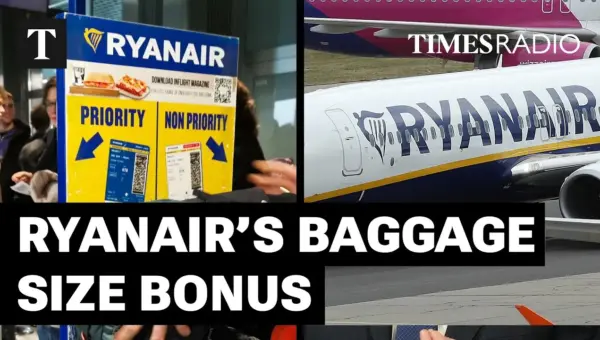
Airlines are earning millions daily from strict baggage rules, charging extra for larger bags or fining passengers who don't comply. Staff may receive bonuses for catching oversized items, leading to concerns about inconsistent enforcement and high fees for travelers. However, new European Parliament proposals could mandate larger free cabin baggage sizes, potentially altering the industry's revenue model.


Auto Makers Void Warranties Over Third-Party Repairs
Automotive manufacturers are increasingly using warranty clauses to compel owners into using dealership services, threatening to void coverage for third-party repairs. This practice, notably seen with high-end brands like Ferrari, raises concerns about consumer choice and impacts the independent repair market.