Trump’s War Crime Threat: Targeting Iran’s Water Plants
Former President Donald Trump's threats to target Iran's water desalination plants are drawing sharp criticism from legal and military experts, who warn of potential war crimes. While U.S. forces have degraded Iran's military, a clear path to victory remains uncertain, highlighting the need for diplomacy alongside continued military pressure.

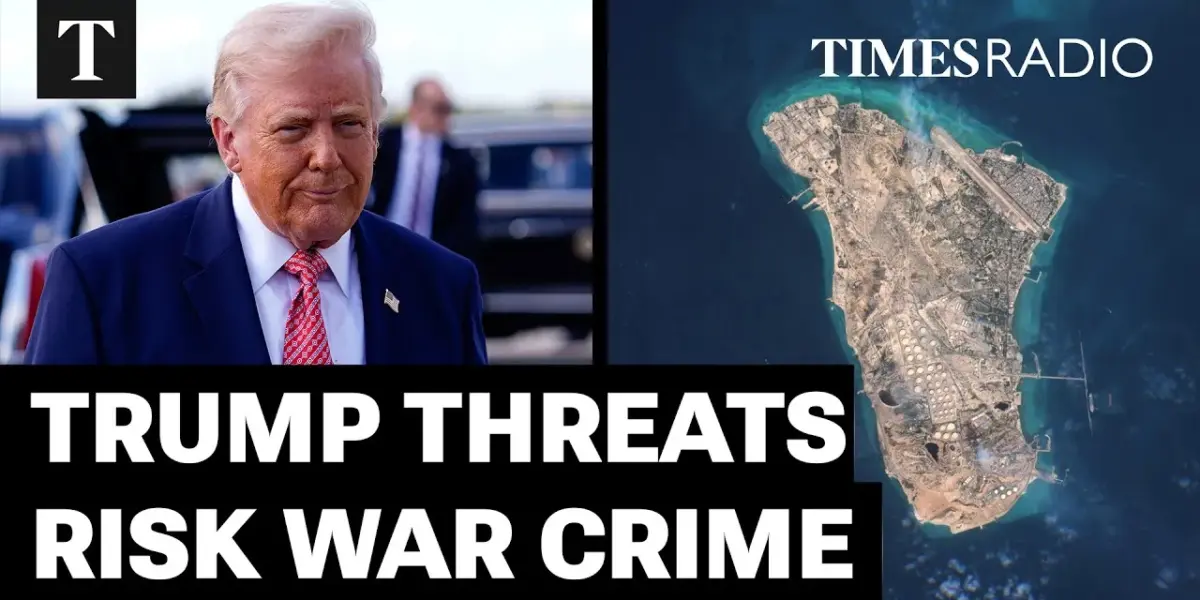
Trump Threatens Civilian Targets in Iran Conflict
Former President Donald Trump has sparked international alarm with recent threats to target Iran’s civilian infrastructure, including its water desalination plants. These statements, made on social media, raise serious concerns about potential war crimes and the escalation of the ongoing conflict.
Legal and Ethical Concerns Over Civilian Infrastructure
Legal experts and former military officials are strongly condemning the idea of attacking desalination plants. James Jeffrey, former U.S. Deputy National Security Adviser, stated unequivocally, “Attacking desalination plants is not a good idea.” He explained that such an action would not only be a violation of international law, potentially constituting a war crime, but also breaches the Uniform Code of Military Justice (UCMJ) because these are clearly civilian targets. Jeffrey contrasted this with attacking electrical generation facilities, which he noted are dual-use and could be temporarily crippled without destroying basic infrastructure, making such actions potentially legitimate.
“Attacking desalination plants is not a good idea… not only under international law a war crime. What’s more relevant is probably it violates a UCMJ because it is a clearly civilian target.”
Military Objectives vs. Political Reality
The U.S. Secretary of State has outlined clear military objectives for the war, including the destruction of Iran’s air force, navy, missile capabilities, and drone manufacturing facilities. The goal, he stated, is to prevent Iran from acquiring nuclear weapons. According to a former U.S. Marine Colonel, the U.S. and its coalition have significantly degraded Iran’s military capabilities, destroying much of its navy, air force, and missile forces. However, Iran still possesses reserve military capabilities and refuses to surrender, believing they can outlast U.S. resolve.
This disconnect between military destruction and Iran’s continued resistance is frustrating for President Trump. He appears to measure progress by the level of destruction inflicted, failing to grasp why Iran continues to resist despite significant damage to its military. Experts suggest the military provides accurate updates on destroyed targets but not necessarily on progress toward a political settlement, which falls to the State Department or the White House.
Potential Military Operations and Casualties
The possibility of seizing Kharg Island, Iran’s oil depot, has been discussed as a significant military operation. This would likely involve a large coalition of forces, including Marines, paratroopers, Navy, Air Force, Army, and Gulf States. While considered “doable,” it would entail substantial casualties on the American side.
Colonel Mark Cancian, a former U.S. Marine Colonel, noted that while defenses on Kharg Island might be weak, they exist. He also pointed out that Iran could retaliate by attacking desalination plants in Arab states. Cancian suggested that if U.S. forces secured the island, placing troops within oil facilities could deter Iranian attacks, forcing them to destroy their own infrastructure to target American soldiers.
Defining Victory and Diplomatic Solutions
James Jeffrey expressed doubt that the conflict is close to an American victory. He believes a true victory requires Iran to emerge weaker, necessitating a resolution to its nuclear program and its ability to produce long-range missiles. He stressed that opening shipping lanes in the Strait of Hormuz is a separate issue that would likely involve a cessation of bombing and lifting sanctions, contingent on resolving the nuclear and missile programs.
Jeffrey argued that diplomacy is essential, alongside continued military pressure. He also noted that President Trump often uses anecdotal information to support his arguments, and the reality of the situation may differ from his public statements. Despite potential rhetoric, Jeffrey believes Trump understands the need to degrade Iran’s missile capabilities and nuclear program to achieve a genuine victory.
The Path Forward
The conflict remains in a stalemate, with time potentially not on the United States’ side due to public opinion. For progress, clear objectives and a decisive plan are needed. The effectiveness of military actions versus the necessity of diplomatic solutions, especially concerning Iran’s nuclear ambitions and missile programs, will be critical. The international community watches closely to see if de-escalation or further military engagement will define the next phase of this complex geopolitical situation.
Source: Trump’s Threat To Target Civilian Infrastructure On Kharg Island Risks War Crime (YouTube)

Related Articles

Trump Signs Order: What Does It Mean Now?
President Donald Trump signed an executive order on March 31st, a significant act that directs federal agencies. Executive orders are powerful tools, acting like directives from the President that carry the force of law. Their impact can be wide-ranging, affecting policy, the economy, and citizens' lives.

Trump’s ‘On Your Own’ World: Allies Abandoned, Economy Suffers
As gas prices surge and global tensions rise, the U.S. under Trump is telling allies they are "on their own." This shift leaves nations to fend for themselves, impacts the American economy, and raises serious questions about U.S. foreign policy and leadership.


Trump’s Iran Gamble: A Leader Lost in the Bluster?
Critics claim Donald Trump lacks understanding of foreign policy, particularly regarding Iran, leading to a dangerous situation. Falling poll numbers and a base questioning his actions suggest he's in a political bind.