Filmmakers Unveil Secrets Behind ‘Project Hail Mary’ Science
Directors Phil Lord and Christopher Miller reveal how they tackled complex science in 'Project Hail Mary,' from visualizing alien life to depicting exoplanets. They discuss collaborating with scientists and Andy Weir to make intricate concepts accessible and entertaining for audiences.

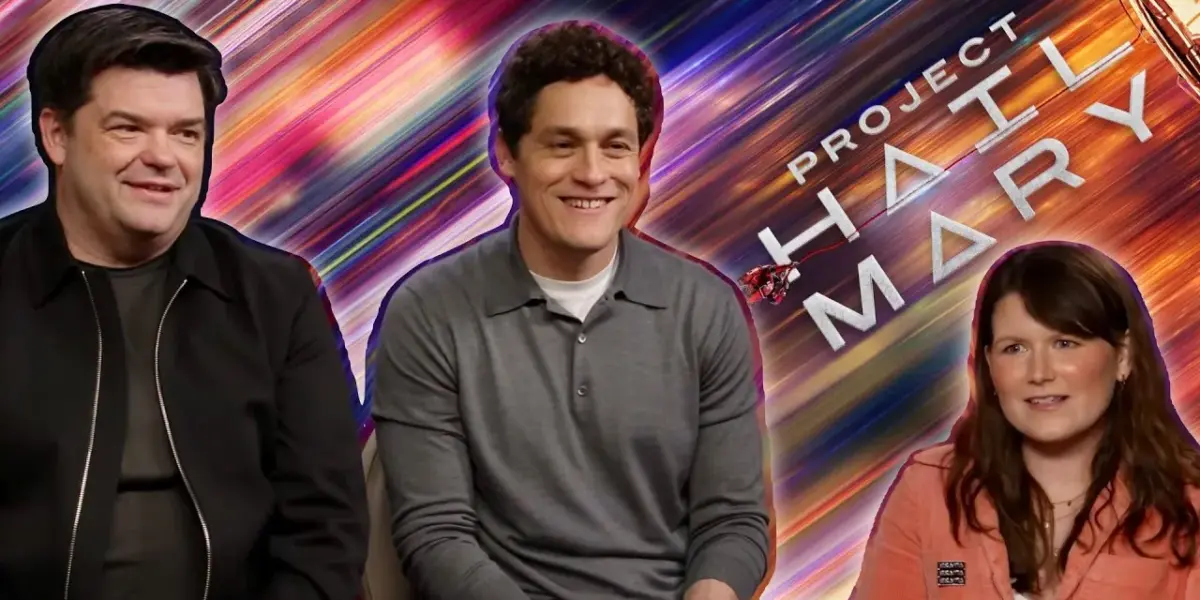
Filmmakers Unveil Secrets Behind ‘Project Hail Mary’ Science
Bringing the complex science of Andy Weir’s novel “Project Hail Mary” to the big screen was a monumental task for directors Phil Lord and Christopher Miller. They recently shared insights into how they translated intricate astrophysical concepts and biological wonders into a visually stunning and entertaining cinematic experience.
Translating Science for the Screen
The core challenge, according to Lord and Miller, was making complicated scientific ideas accessible without turning the movie into a lecture. “We did the exact same thing,” Lord explained, referring to the art of science communication. They aimed to tell the story visually, using dialogue sparingly. “Ideally, it’s visual, and you use as few words as possible,” Miller added. The team often recorded extensive dialogue only to cut it later, relying on powerful imagery to convey information. When confusion arose, they provided just enough explanation to keep the audience engaged and informed, often using humor to soften the scientific delivery.
Consulting the Experts
To ensure scientific accuracy and plausibility, the filmmakers enlisted a team of consultants. This included specialists for the chemistry and lab work depicted in the film. Crucially, Andy Weir himself, the author of the novel, was a constant resource, often on set or available by phone. “He makes a living at making complicated science digestible,” Miller noted. A physicist also joined the visual effects team, providing essential support during post-production. A significant effort was made to ensure that any scientific dialogue felt natural to the character, Ryan Gosling, rather than simply serving the plot. “That was a big trick, and something Ryan was very keen on perfecting,” Lord said about making the explanations sound authentic.
Imagining Planet Adrian
The fictional planet Adrian, a key setting in the film, sparked considerable discussion. While the book was written seven years ago, scientific understanding of exoplanets has evolved. Initially, theories suggested a planet capable of sustaining life might exist in a certain region of space. However, current prevailing thought leans toward such celestial bodies being barren. “At the time that the book was written, there was a theory that there was a planet that could sustain life,” Miller explained. “Now, the more prevailing thinking is that it doesn’t. It’s just a dead rock.” Despite this, the filmmakers strove to ground their depiction in plausible science. They collaborated with an astroclimatologist friend, Alejandro Sto, to theorize about Adrian’s appearance. Weir’s initial idea of a “green Venus” served as a starting point, with atmospheric composition and chemical elements influencing the planet’s color and auroras.
Visualizing Astrophage
The depiction of Astrophage, the microscopic alien life form, presented another creative hurdle. The filmmakers explained that Astrophage moves using infrared light, invisible to the naked eye. To show this, they employed a real infrared camera by removing a filter, making the phenomenon visible as a pink glow. “The idea that when we just remove this sort of mental block that assumes that the only things that exist are what we can see, suddenly, the whole world becomes that much more vibrant,” Lord mused. For close-up shots of the Astrophage’s movement, they built a cage wrapped in infrared lights, which blinked randomly. To the naked eye, it appeared to be nothing, but on the monitor, it created a beautiful, bokeh-like effect of red and pink lights. While this practical effect was later enhanced with visual effects for wider shots, it provided a tangible foundation for the alien’s portrayal.
Nebulae and Real-World Inspiration
The breathtaking nebulae featured in the film’s background were inspired by real astronomical photography. The filmmakers discovered an astrophotographer who shared incredibly high-resolution images captured through various filters and layers. “They’re all real,” Miller confirmed, noting that these images were the basis for the stunning cosmic vistas seen on screen. This commitment to drawing from actual scientific imagery reinforced the film’s dedication to scientific wonder.
The Future of Space Exploration in Film
The success of “Project Hail Mary” highlights a growing audience appetite for science-accurate and thought-provoking science fiction. Lord and Miller’s approach demonstrates that complex scientific concepts can be woven into compelling narratives, captivating audiences while educating them. As technology advances and our understanding of the universe expands, filmmakers have an ever-richer palette of real-world science to draw from. The film serves as a testament to the power of collaboration between storytellers and scientists, pushing the boundaries of what’s possible both in space and on screen. The journey to bring such stories to life inspires continued exploration, both of the cosmos and of our own capacity for understanding.
Source: Phil Lord and Christopher Miller chat to an astrophysicist | Project Hail Mary (YouTube)

Related Articles
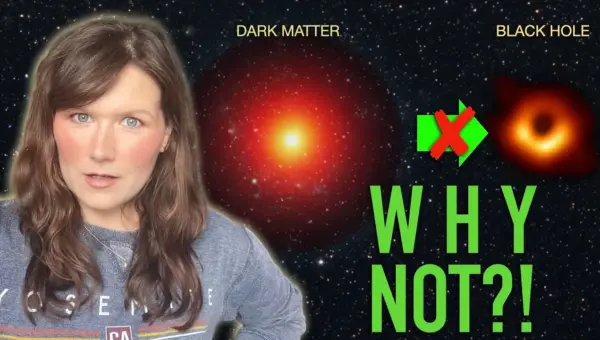
Dark Matter’s Mystery: Why It Resists Collapse Into Black Holes
Dark matter, unlike normal matter, does not collapse into stars or black holes because it cannot radiate energy away as heat. Its inability to interact with the electromagnetic force prevents the cooling necessary for gravity to overcome particle pressure. This unique property leads to the formation of vast, diffuse structures like galactic halos and the cosmic web.
Cosmic Rays Reveal Universe’s Most Powerful Accelerators
Scientists have discovered incredibly powerful cosmic accelerators, dubbed PeVatrons, within our Milky Way galaxy. These sources are responsible for the highest-energy cosmic rays ever detected, some reaching energies of 10 peta-electron-volts. The discovery, driven by observatories like LHAASO, is revolutionizing our understanding of our galaxy's violent and energetic nature.

Project Hail Mary Astounds With Cosmic Wonder
The cinematic adaptation of Andy Weir's novel, Project Hail Mary, starring Ryan Gosling, has landed to critical acclaim. Directed by Lord and Miller, the film immerses audiences in a cosmic journey to save Earth, blending stunning visuals with a heartwarming story of unlikely friendship.