Zion’s NBA Future: Superstar Promise or Unfulfilled Potential?
On The Domonique Foxworth Show, Bomani Jones and Foxworth debate Zion Williamson's potential, the evolution of basketball culture, and the unique athleticism of NBA stars. They also touch on Hall of Fame criteria and the enduring appeal of charismatic players.

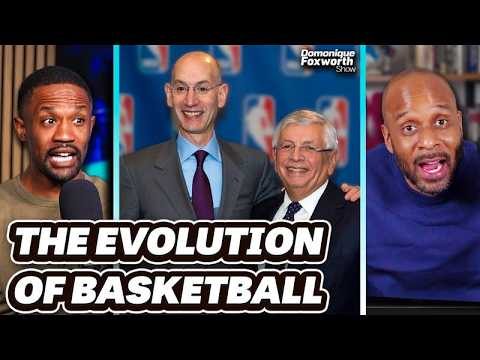
Zion’s NBA Future: Superstar Promise or Unfulfilled Potential?
The conversation around Zion Williamson has taken a familiar turn: is he a generational talent living up to his immense hype, or is his career trajectory one of unfulfilled potential? On The Domonique Foxworth Show, host Domonique Foxworth and guest Bomani Jones delved into the complexities of Williamson’s journey, touching on everything from his early promise to the impact of injuries and the evolving landscape of basketball culture.
The discussion kicked off with a lighthearted, yet pointed, exchange between Foxworth and Jones regarding a perceived slight from journalist Joel Anderson. Foxworth humorously recounted Anderson’s claim that Foxworth had advised him to ‘mix a salad,’ vehemently denying it and emphasizing his personal policy against joking about weight, particularly with friends who struggle with it. This led into a broader topic about self-awareness and the nature of online discourse.
Hall of Fame Hurdles and Unrecognized Talent
A curious statistic opened the door to a deeper dive into NBA history: the existence of 17 Hall of Fame players with fewer than 500 career games. Jones and Foxworth engaged in a guessing game, correctly identifying Bill Walton and Yao Ming. The conversation highlighted how certain players, like Arvydas Sabonis, George McGinnis, and Ralph Sampson, might blur the lines of what constitutes a typical Hall of Fame career, especially when considering international careers or early departures from the league.
“I feel like once we start talking about them imports, right, that got here a little bit late. I don’t feel like that’s…” Jones mused, questioning the criteria for some inclusions. McGinnis, in particular, sparked a discussion about his legendary ‘McGinnis drill’ and the visual spectacle of such a large man executing complex dribbling moves in an era where such athleticism was less common.
The Unparalleled Athleticism of Basketball Stars
The show then pivoted to the unique athleticism of basketball players. Foxworth argued that the combination of size, athleticism, and coordination found in NBA players is unparalleled, even when compared to elite athletes in other global sports. He pointed to the stark contrast between NFL players, who are often the biggest and most intimidating in their sport, and their appearance when standing next to NBA power forwards.
“I think there’s a drastic misunderstanding of how huge those guys…” Foxworth stated, referencing clips of NFL stars like Miles Garrett appearing smaller next to NBA giants. Jones added to this, noting that even seemingly ‘skinny’ players like Kevin Durant are physically imposing, and that the sheer size of players like Victor Wembanyama, despite a slender frame, means their muscles are incredibly dense and powerful.
Zion Williamson: The Dunk Contest Conundrum
The discussion naturally gravitated towards Zion Williamson, with the current state of the NBA dunk contest serving as a focal point. Jones expressed surprise that Williamson, whose explosive athleticism was his initial claim to fame, has never participated in the event. He suggested that Williamson could be the catalyst to revitalize the contest, drawing parallels to Vince Carter’s iconic performances.
“Somebody giving that boy Zion some bad advice ’cause he should have been begging to be in the dunk contest. He could get everybody back,” Jones exclaimed. He lamented that Williamson’s career has been marred by injuries, preventing him from becoming the consistent phenomenon many expected. The conversation touched on the perception of Williamson, with Jones noting that despite public criticism of weight, fans often embrace athletic, ‘fat’ basketball players who can perform spectacular dunks.
Teachable Moments and Parenting Pitfalls
Foxworth shared a personal anecdote from the 2019 NBA Summer League in Las Vegas, where he met Zion Williamson and his father. He recalled the father’s reluctance to let Zion become independent as a potential foreshadowing of the challenges Williamson has faced. Foxworth posited that this lack of early independence might have contributed to the ‘chaos’ in Williamson’s life and career.
“I don’t know how you balance it, but they got it wrong. I don’t think there’s any question about they got it wrong,” Foxworth asserted, linking it to the concept of ‘helicopter parenting’ and the importance of allowing young athletes the space to develop self-sufficiency. He argued that this lack of independent development, coupled with injuries and conditioning issues, has hampered Williamson’s ability to reach his full potential.
The ‘Bust’ Label and Unfinished Business
The hosts debated whether Williamson’s career thus far warrants the ‘bust’ label. While Jones hesitated to use the term, citing injuries as a primary factor, he acknowledged that Williamson has been a ‘disappointment.’ Foxworth countered that while injuries are a significant concern, Williamson’s two All-Star selections and strong statistical performances when healthy prevent a definitive ‘bust’ categorization.
“I typically avoid that terminology… I avoid that terminology when the primary issue has been injury,” Jones stated. Foxworth agreed, suggesting that Williamson’s career is more of an ‘incomplete’ than a finished product. The conversation also touched on the hypothetical scenario of draft-day swaps, questioning if John Morant would have fared better in New Orleans or if Zion would have been as successful in Memphis.
Building Around Zion: A Risky Proposition?
The long-term outlook for Williamson and the New Orleans Pelicans was a key point of discussion. Both hosts agreed that it’s likely too early to definitively write off Williamson’s career, but the Pelicans organization faces a difficult decision. While he remains young enough to develop, his unreliability due to injuries makes him a questionable cornerstone for a championship-contending team.
“You’re not going to build around him. I don’t think you’re not reliable enough,” Foxworth concluded. He reminisced about players like Dominique Wilkins, who, while not a championship-leading star, was immensely entertaining and had a valuable role. The lack of consistent availability for Williamson has left fans with little tangible evidence of his promised impact, making it difficult to explain his collegiate phenomenon to future generations.
The Pelicans’ Perpetual Mediocrity and the Path Forward
The Pelicans’ struggles were highlighted, with Foxworth describing the franchise as one of ‘perpetual mediocrity.’ Despite flashes of brilliance from Williamson and the emergence of players like Trey Murphy III, the team consistently fails to reach the league’s elite tier. The discussion suggested that for Zion to truly break through, the Pelicans would need a significant uptick in performance, perhaps including a strong playoff run.
“Honestly, like it might be a cheat to say it’s about the playoffs, but like I feel like the playoffs is when like people really solidify themselves as a class we should care about,” Jones remarked. He added that the Pelicans’ defensive struggles and inconsistent shooting, even with Williamson playing, prevent them from being considered top-tier contenders.
Basketball as a Creative Endeavor vs. Analytics
The conversation took a philosophical turn, exploring the essence of basketball and its evolution. Jones lamented the shift from basketball as a creative, music-like endeavor to one dominated by analytics and financial gain. He questioned how often players truly play basketball ‘for fun’ in an era of intense training, surveillance, and goal-oriented development.
“Basketball is the closest thing to making music as you have. You have a whole like you have all these things that have to be done to make a song just like you have all these things you need to do to make a team and you’ve got five different instruments there… but that is that is the work of the creative mind,” Jones articulated. He suggested that the focus on trainers and structured development might be stifling the very creativity that made players like Kyrie Irving and the legendary Dominique Wilkins so captivating to watch.
The Charles Barkley Archetype and Career Choices
The show concluded with a discussion on career choices and player archetypes, using the classic debate of Robert Horry versus Charles Barkley. Both hosts agreed that while Horry’s seven championships are undeniable, Barkley’s career, marked by individual brilliance and a charismatic personality, holds a unique place in basketball lore.
“Everybody who says Robert Ory is aliveing or or or stupid,” Jones quipped. He highlighted Barkley’s ability to transcend the game and create an environment where his personality is not only accepted but celebrated. This led to a brief mention of Barkley’s famously unfiltered commentary, underscoring his unique position as a beloved figure who can seemingly get away with anything.
The overarching sentiment was that while tangible success like championships is important, the cultural impact and enduring appeal of a player like Barkley, who embodies a certain authenticity, are equally significant. The conversation left viewers pondering the many facets of what makes a basketball player great, from raw talent and physical gifts to personality and cultural resonance.
Source: What happened to basketball culture? (ft. Bomani Jones) | The Domonique Foxworth Show (YouTube)

Related Articles

Ant Dropping Jaws in Denver Debut!
Anthony Edwards, 'Ant,' arrived in Denver ready to make a statement against the champion Nuggets. The high-stakes matchup was a potential playoff preview, with Edwards aiming to prove the Timberwolves' championship aspirations.

Barkley’s Spurs Prediction Sparks Hilarious Jalen Rose Jab
Jalen Rose hilariously teased Charles Barkley about his past predictions regarding the San Antonio Spurs, pivoting the discussion to the city's famous churros. The exchange highlighted the lighthearted banter of the Inside the NBA crew.
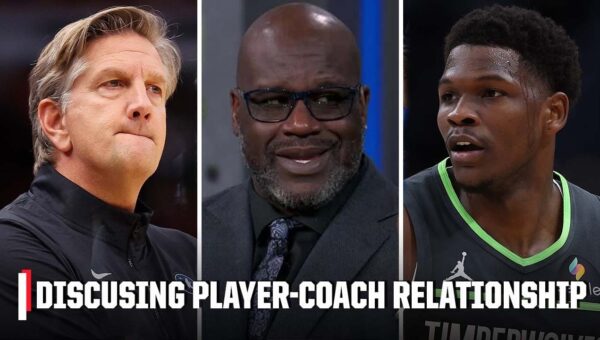
Shaq: Respect Key in Ant-Man’s Fiery Coach Relationship
Shaquille O'Neal and Charles Barkley discuss Anthony Edwards' assertive player-coach relationship with Chris Finch, emphasizing the importance of respect in navigating on-court disagreements for team success.