Zelenskyy’s Unyielding Defiance: Ukraine Vows No Surrender Amid Stalled Peace Talks and Shifting Global Alliances
Ukrainian President Volodymyr Zelenskyy has emphatically rejected any surrender to Russia, even as peace talks in Geneva falter due to Moscow's maximalist demands. This defiance comes as Europe rethinks its security posture amid doubts about U.S. reliability, while internal military dynamics within Ukraine also present complex challenges.

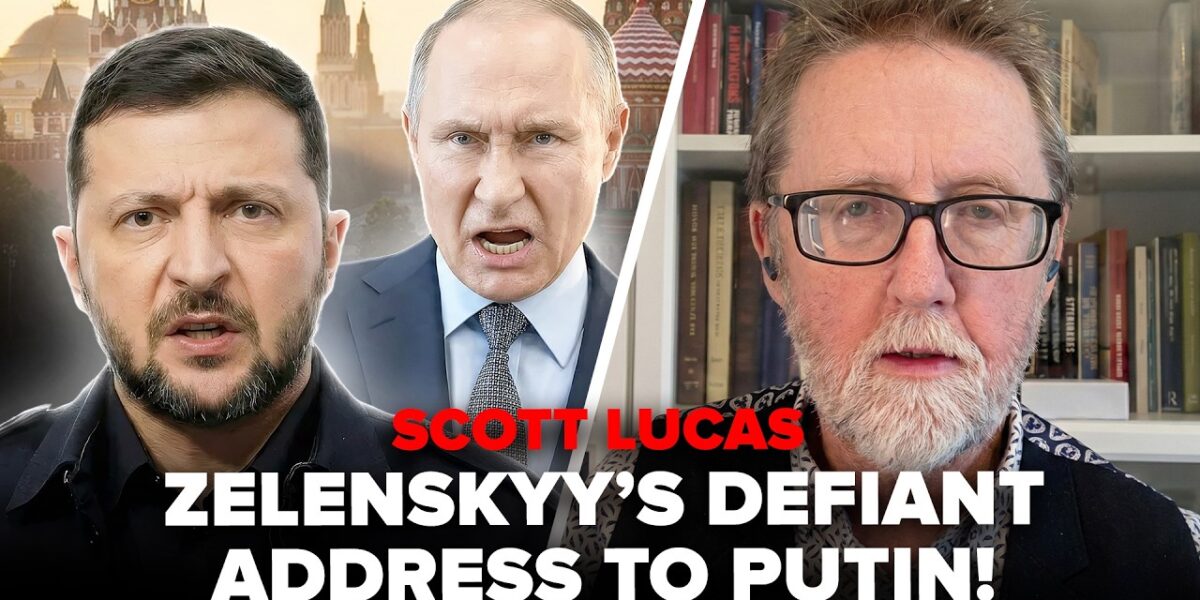
Zelenskyy’s Unyielding Defiance: Ukraine Vows No Surrender Amid Stalled Peace Talks and Shifting Global Alliances
In a powerful display of resolve, Ukrainian President Volodymyr Zelenskyy has unequivocally rejected any notion of surrender to Russia, even as recent peace negotiations in Geneva falter. His defiant stance, characterized by both strategic messaging and palpable frustration with Moscow’s maximalist demands, underscores Ukraine’s unwavering commitment to its sovereignty and territorial integrity. This comes amidst a complex geopolitical landscape where European nations are increasingly questioning long-term U.S. reliability and exploring greater self-sufficiency in defense, while internal dynamics within Ukraine’s military leadership add another layer of complexity to the ongoing conflict.
Speaking with a blend of sardonic wit and steely determination, Zelenskyy has not only countered Russian propaganda but also directly challenged the psychological warfare waged by the Kremlin. His message is clear: Ukraine is not going away, and its government will not be overthrown to satisfy Moscow’s imperial ambitions.
A President’s Defiance: “I’m Not Going Away”
President Zelenskyy’s recent pronouncements serve as a direct riposte to Vladimir Putin’s persistent efforts to delegitimize the Ukrainian government. As noted by Scott Lucas, Professor of International Politics at University College Dublin’s Clinton Institute, Zelenskyy’s remarks were a deliberate attempt to “wind up Vladimir Putin.” Beyond a playful jab at his own youth and appearance compared to the Russian leader, the core message was one of enduring presence: “I’m not going away.” This assertion directly confronts the Kremlin’s long-standing narrative that the Ukrainian government is illegitimate, riddled with “Nazis,” and a puppet of Western powers – disinformation campaigns designed to sow discord and justify its aggression.
The Kremlin’s strategic objective, as consistently demonstrated since the full-scale invasion began, is not merely to seize territory but to dismantle Ukraine’s sovereign government, replacing it with a subservient regime. Zelenskyy’s unwavering refusal to concede on this front is a crucial pillar of Ukraine’s resistance. He has consistently stated that elections can only be held once a reliable and monitored ceasefire is in place, emphasizing that any such electoral process would be genuinely competitive. This condition directly refutes Moscow’s attempts to force a political capitulation under duress, highlighting Ukraine’s commitment to democratic principles even in wartime.
The notion that the Zelenskyy government would simply “go on vacation” while Russia dictates terms is dismissed as absurd. His public statements, even those laced with frustration, are deemed “necessary theater” – a vital communication to both the Ukrainian people and the international community that resistance remains firm. This resolve is particularly poignant given Russia’s continued efforts to push disinformation and maneuver international actors, particularly the United States, into accepting a settlement that would require Ukraine to not only cede territory but also its very government. Zelenskyy’s resolute “No, it’s not going to happen” is the bedrock of Ukraine’s survival.
Geneva Talks: Military Progress, Political Deadlock
Recent high-level negotiations in Geneva, involving Ukraine, Russia, and U.S. mediators, have painted a picture of limited, largely technical progress overshadowed by fundamental political deadlock. Professor Lucas highlighted President Zelenskyy’s own candid assessment, which indicated some movement within a “military group” discussing the practicalities of a ceasefire, particularly monitoring mechanisms. According to Zelenskyy, there appeared to be a working agreement for the U.S. to lead such a monitoring mission, a significant technical step. However, the potential involvement of European nations in this mission remains a contentious point, primarily due to Russia’s explicit objections to any European troops on Ukrainian soil.
While discussions on military arrangements, such as demilitarized zones and ceasefire monitoring, hold value as blueprints for a potential future, they remain largely theoretical without a political breakthrough. The “political group” discussions, in stark contrast, were reported to be stalled. Zelenskyy’s frustration was evident in his remarks, which, though couched in social media decorum, conveyed a deep exasperation with the Kremlin’s chief negotiator, Vladimir Medinsky.
Instead of engaging in substantive negotiations on critical issues such as the status of the Donetsk region, comprehensive security guarantees for the remainder of Ukraine, or the fate of the Zaporizhzhia nuclear power plant, Medinsky reportedly resorted to lengthy “historical lessons.” This refers to the Kremlin’s oft-repeated, revisionist narratives about Ukraine being an inseparable part of a greater Russia, denying its distinct national identity and sovereignty. Such tactics, effectively restating Moscow’s maximum demands for Ukraine’s political and territorial surrender, rendered the talks largely unproductive. The dramatic reduction in negotiation time – from nearly six hours on the first day to just two on the second – was a clear indicator of the impasse.
Ukraine has expressed a desire for another round of meetings in February, but the prospects remain dim as long as Moscow adheres to its maximalist position. The Kremlin’s objective, as Professor Lucas articulated, is not to negotiate a compromise but to secure Ukraine’s capitulation. This includes seizing all of the strategically vital Donetsk region and ensuring that the rest of Ukraine remains weak, devoid of effective security guarantees. Zelenskyy’s resolute declaration that Ukrainians would reject any deal requiring them to cede the Donbas region without a national referendum further solidifies this impasse. He even proposed a demilitarized zone, where Ukrainian forces would withdraw from the 22% of Donetsk they control if Russia reciprocated from occupied areas – a proposal Moscow has shown no indication of accepting. The fundamental reality is that as long as the Kremlin demands all of Donetsk, and Ukraine, supported by its European partners, refuses to relinquish such a fortified and strategic area, a political agreement remains elusive.
Kremlin’s Transactional Diplomacy: From Witoff to Kushner
The Kremlin’s approach to engaging with U.S. officials reveals a deeply transactional and manipulative strategy, particularly evident in its shifting preference for American interlocutors. Initially, Moscow appeared content with Steve Witoff, a real estate developer, as a conduit to the Trump administration. The Kremlin’s willingness to engage with Witoff, even in the absence of other U.S. officials, stemmed from a calculated belief that he could be manipulated. This was underscored by a meeting in October where Vladimir Putin’s top economic advisor, Kirill Dmitriev, worked with Witoff on a 28-point ultimatum to Ukraine.
However, when Witoff failed to secure the Trump administration’s full backing for Russia’s maximalist demands – essentially, Ukraine’s surrender – the Kremlin’s perception shifted. Foreign Minister Sergey Lavrov’s public frustration with the Americans for allegedly “retreating” from a non-existent agreement (a supposed U.S.-Russian accord at a summit between Putin and Trump that never materialized) highlighted Moscow’s disappointment. The Kremlin had specifically requested all of Donetsk at that purported meeting, a demand that remained unmet.
Professor Lucas suggests that Moscow’s current embrace of Jared Kushner, citing his “structured and organized approach,” is another strategic maneuver. The Kremlin, having failed to secure its objectives through Witoff, now believes it can flatter Kushner and entice him with promises of “trillions of dollars in economic projects.” This plays directly into the financial interests of Kushner’s investment firm, which has already secured billions from Gulf States, and the broader Trump family’s pursuit of lucrative global deals. The perception is that Kushner, with his significant financial aspirations, might be more susceptible to aligning U.S. policy with Russian interests in exchange for economic benefits, thereby delivering on Moscow’s maximum demands regarding Ukraine.
European Intelligence: A Long War Ahead
European intelligence assessments paint a grim, yet realistic, picture of the conflict’s trajectory: a quick end is unlikely, and Russia is not genuinely seeking a swift resolution. Instead, Moscow is seen as using negotiations as a “theater” to buy time, seek sanctions relief, and explore new business opportunities, particularly with American figures. This perspective directly contradicts Donald Trump’s repeated assertions that “Ukraine better make a deal,” a statement critics argue is emotionally driven and lacking in factual understanding of the conflict’s dynamics.
Trump’s calls for Ukraine to compromise often ignore Russia’s continued aggression, such as the launching of numerous missiles and drones at Ukrainian civilian infrastructure, including energy facilities, just hours before the Geneva talks. This highlights a critical divergence in understanding and priorities between some U.S. political factions and European allies, who recognize the Kremlin’s unwavering commitment to its long-term objectives.
European intelligence chiefs are pessimistic about a ceasefire materializing this year, largely because Russia’s economy, while showing signs of strain, is not on the verge of collapse. Although oil revenues remain significantly below previous levels, and major customers like India and China are limiting purchases, Russia continues to procure military components, often through indirect channels, and sustain its wartime economy. As long as Moscow can maintain this economic footing, secure necessary supplies, and find sufficient manpower, it will continue its full-scale assault on Ukraine. Professor Lucas emphasized this harsh reality: “Vladimir Putin is fighting for his legacy. So, he will not give up easily. But Ukraine is fighting for its existence. So, however long we’re talking about Russian attacks continuing through 2026, Ukrainian resistance is likely to continue.”
This stark assessment underscores the critical need for sustained international support for Ukraine, extending beyond mere diplomatic talks. Such support must include robust air defenses, a steady supply of modern equipment and weapons for frontline forces, investment in joint defense production projects (especially drones), and backing for Ukraine’s counterattacks within Russia. These tangible measures are vital to bolster Ukraine’s resilience and capacity to resist a protracted conflict.
Zelenskyy-Putin Meeting: A Non-Starter
The prospect of a direct meeting between President Zelenskyy and Vladimir Putin, though occasionally floated, remains a diplomatic non-starter. Zelenskyy’s public proposal for such a meeting was met with a sarcastic response from the Kremlin, which offered to host him in Moscow with a thinly veiled assurance of “security guarantees” – a cynical jab given Russia’s track record. Zelenskyy’s immediate counter-offer to meet anywhere outside Russia was swiftly dismissed by Moscow, underscoring the deep mistrust and irreconcilable differences that preclude any high-level direct engagement at this juncture.
As Professor Lucas noted, Zelenskyy’s primary motivation for even suggesting such a meeting was not a genuine expectation of it happening, but rather to “wind up Vladimir Putin.” It was another facet of his broader message: a direct assertion of his presence, his defiance, and Ukraine’s refusal to be silenced or disappear. This strategic communication serves to reinforce his leadership both domestically and internationally, countering the Kremlin’s narrative of an illegitimate or fading Ukrainian leadership.
Munich Security Conference: Europe’s Unease and Trump’s Shadow
The Munich Security Conference provided a platform for European leaders to voice their growing concerns about the long-term reliability of the United States, particularly under the specter of a potential return of Donald Trump to the presidency. Senator Marco Rubio’s speech at the conference, while seemingly a relief compared to the more confrontational tone of figures like JD Vance a year prior, still carried an underlying message of conditional U.S. engagement on Trump’s terms.
Rubio, despite his courteous rhetoric, implicitly endorsed the “hard movements” – often coded as anti-immigration and white nationalist – that align with Trump’s ideology. His subsequent meetings with Hungarian Prime Minister Viktor Orbán and Slovakian Prime Minister Robert Fico, both known for their pro-Kremlin stances and hard-right policies, further solidified this perception. Professor Lucas candidly stated that the Trump administration, through figures like Rubio, is effectively supporting “white nationalist movements” that seek to undermine the European Union, distort issues of immigration and free speech, and replace existing governments. This strategy poses a significant long-term threat to European security and cohesion.
While some European officials expressed a sense of relief that Rubio did not overtly “beat them over the head with a big stick,” the underlying message was clear: future U.S. cooperation might come at the cost of European values and unity. The best-case scenario, as posited by Lucas, is that Rubio’s public statements were a strategic performance for Trump’s benefit, while private reassurances of alliance continuity were offered. However, the public rhetoric itself has created profound unease, forcing Europe to confront the potential reality of a less reliable American partner.
Towards European Self-Sufficiency: The Nuclear Question
The growing doubts about U.S. reliability have spurred a remarkable shift in European defense thinking, pushing nations towards greater self-sufficiency and deeper intra-European cooperation. This trend, paradoxically, has been accelerated by the very unpredictability of Donald Trump’s foreign policy. If the U.S. cannot be reliably counted upon politically, militarily, or economically, European nations recognize the imperative to develop their own capabilities.
Poland’s President Andrzej Duda, who previously campaigned on a Trumpist platform, has now remarkably announced plans for new European defense development, including cooperation with Ukraine. This signifies a broader European awakening. Initiatives like the 800 billion euro program for defense production and investment are gaining momentum. Even more profoundly, discussions about a potential European nuclear capability, a concept once thought unthinkable, are now on the table. Traditionally, France’s and the UK’s nuclear arsenals were coordinated closely with the U.S. However, France and Germany are now openly discussing how such a European nuclear capability could be supervised and managed, potentially without direct U.S. oversight. Other countries, like Poland, are supporting this call.
This doesn’t necessarily point to the immediate creation of a unified European military, but rather a “very different NATO” – one where European nations assume far greater command and oversight structures, even with a continued American military presence. The objective is clear: to safeguard European security against the vagaries of U.S. politics, building robust indigenous capabilities across conventional weapons, intelligence sharing, and cybersecurity, rather than relying solely on Washington.
Zaluzhny’s Insights: Blame Game and Internal Friction
General Valerii Zaluzhny’s extensive interview with the Associated Press offered a rare and “full and frank” glimpse into the challenges faced by Ukraine’s military, particularly concerning the disappointing 2023 counteroffensive. Professor Lucas astutely observed that Zaluzhny, widely considered a potential future presidential candidate, used the interview to distinguish himself from President Zelenskyy, effectively laying blame for the counteroffensive’s shortcomings at the feet of Ukraine’s leadership.
Zaluzhny reportedly claimed that his NATO-backed plan to mass forces in the Zaporizhzhia region and push south to the Sea of Azov, thereby cutting Russia’s land bridge to Crimea, failed because insufficient resources were committed, and forces were instead spread out. This assessment, seemingly corroborated by some Western defense officials, suggests a strategic disagreement at the highest levels. However, Professor Lucas cautioned against a simple “blame game,” invoking the adage that “success has a thousand fathers, but failure is an orphan.” He argued that responsibility for the counteroffensive’s outcome is shared by all involved – Zelenskyy and his advisors, as well as the military leadership including Zaluzhny. Key factors included an over-reliance on tanks, an underestimation of the scale and sophistication of Russian fortified defenses, and a critical misjudgment of the decisive role of drones in modern warfare, which had not been as prevalent during Ukraine’s successful breakthroughs in 2022.
Perhaps even more revealing than the strategic disagreements was Zaluzhny’s account of an SBU (State Security Service of Ukraine) raid on his office in September 2022, during a period of successful counteroffensives. Zaluzhny claimed SBU agents attempted to seize documents and computers, prompting his forceful expulsion of them and direct calls to Andriy Yermak (Zelenskyy’s then-chief of staff) and the head of the SBU. This incident exposed significant friction and power struggles between Zaluzhny and elements within Zelenskyy’s office and the security services, even amidst military success. While Zaluzhny has since been appointed Ambassador to London and reportedly maintains good relations with Zelenskyy, this episode underscores how internal dynamics and rivalries at the top have complicated Ukraine’s war effort. Whether these issues have been fully resolved, particularly with Yermak’s departure, remains a critical question for Ukraine’s future leadership and stability.
Conclusion: A Long Road Ahead
Ukraine stands at a pivotal juncture, defined by President Zelenskyy’s unyielding defiance, stalled diplomatic efforts, and a rapidly evolving geopolitical landscape. The Geneva talks revealed Russia’s unwavering demand for surrender, while European nations are increasingly compelled to forge their own security destiny independent of a potentially unreliable U.S. partner. Internally, the candid assessments of military leaders like General Zaluzhny highlight the immense challenges and complex dynamics of wartime leadership. As the conflict grinds on, projected to continue for the foreseeable future, the resilience of Ukraine, bolstered by sustained international support in tangible forms – from air defenses to joint production of weaponry – will be paramount. Ukraine’s fight for existence is not merely a military endeavor but a profound struggle for self-determination, demanding unwavering resolve from its leaders and consistent solidarity from its allies.
Source: Zelenskyy FIRES BACK at Putin — Ukraine will never SURRENDER! (YouTube)

Related Articles
Trump’s Putin Stance: US Strategy and Global Implications
Analysis suggests Donald Trump's approach to the Ukraine war involves pressuring Kyiv, but US involvement is crucial for resolution. China's influence and the 'MAGA' agenda's geopolitical implications are key factors.
Iran’s Regime Under Siege: Attacks Cripple Leadership, Impact Russia
Iran's regime is reportedly facing critical blows from targeted attacks, crippling its leadership and severing a vital military supply line to Russia. This dual pressure is significantly impacting Russia's war efforts in Ukraine, while internal dissent grows within Iran.

Ukraine Strikes Deep: Russia’s ‘Untouchable’ Assets Hit
Ukraine has successfully launched long-range drone attacks deep inside Russia, hitting a crucial chemical plant in Perm and an oil terminal in Krasnodar. These strikes dismantle Russia's perceived geographical safety and target key economic lifelines, impacting its ability to sustain the war effort. The attacks highlight Ukraine's evolving strategy of systematic disruption and innovative use of technology, including high-altitude balloons, to degrade Russian capacity.