Zelenskyy’s Ominous Warning to Trump: A Geopolitical Crystal Ball?
Ukrainian President Zelenskyy reportedly issued a stark warning to Donald Trump in February 2025, cautioning that global conflicts inevitably affect even geographically distant nations like the US and underscore the need for allies. The response, however, was reportedly dismissive, highlighting a deep philosophical divide on foreign policy.


Zelenskyy’s Ominous Warning to Trump: A Geopolitical Crystal Ball?
A seemingly brief exchange in February 2025, captured from a YouTube video, may very well echo through the annals of modern diplomatic history. Ukrainian President Volodymyr Zelenskyy, in a moment of stark geopolitical foresight, reportedly warned then-candidate Donald Trump that while the United States might be insulated by vast oceans, the reach of conflict is ultimately inescapable. He posited that eventually, war would affect America, necessitating the very alliances it might currently be questioning. This wasn’t a plea for immediate aid, but a profound observation on the interconnectedness of global security. However, the reaction from Trump and Senator JD Vance, as depicted in the transcript, was not one of thoughtful consideration, but of dismissive defiance.
The Echoes of Isolationism vs. Interdependence
The core of Zelenskyy’s message, as relayed, was a simple yet powerful assertion: geographic distance is a temporary shield, not an impenetrable fortress. He suggested that the United States, despite its formidable position, would eventually feel the repercussions of global instability, and in that future, the strength of alliances would be paramount. This sentiment harks back to age-old debates about isolationism versus international engagement, a recurring theme in American foreign policy. The transcript captures a jarring exchange where Vance and Trump apparently rejected Zelenskyy’s premise outright, with Vance stating, “Don’t tell us what we’re going to feel.” Trump, too, seemed to rebuff the notion, emphasizing American strength and self-sufficiency.
“The United States may be protected by an ocean, but eventually war will affect the United States and they will need the help of their allies.” – Volodymyr Zelenskyy (as relayed)
The apparent response from Trump and Vance, as transcribed, was to dismiss Zelenskyy’s concerns with a focus on current American strength and a refusal to be lectured on future feelings or geopolitical realities. Phrases like, “We’re going to feel very good and very strong,” and “You’re right now not in a very good position. You’ve allowed yourself to be in a very bad position,” suggest a worldview where perceived immediate strength negates the need for long-term strategic thinking or acknowledgment of external threats. This reaction is particularly striking given the context of an ongoing global conflict, where Ukraine’s survival is intrinsically linked to the security of the broader international order.
Historical Context: The Perils of Underestimating Global Reach
History is replete with examples of nations that believed themselves immune to distant conflicts, only to be drawn in with devastating consequences. The attack on Pearl Harbor in 1941, which shattered American isolationism and propelled the United States into World War II, serves as a potent historical parallel. Similarly, the September 11th attacks in 2001 demonstrated that threats originating far from American shores could have a profound and immediate impact. Zelenskyy’s warning can be seen as a modern iteration of this enduring lesson: that in an interconnected world, the stability of one region invariably affects others. The refusal to acknowledge this interconnectedness, as seemingly demonstrated in the transcript, risks repeating past mistakes.
Why This Matters
This exchange, if accurately represented, highlights a critical divergence in foreign policy philosophy. On one hand, there is the perspective that global security is a shared responsibility, requiring proactive engagement and robust alliances to prevent conflicts from escalating and spreading. On the other hand, there is the inclination towards an inward-looking approach, prioritizing immediate national interests and viewing international entanglements with suspicion. Zelenskyy’s warning underscores the potential long-term costs of the latter. By dismissing the possibility that distant conflicts could eventually necessitate American involvement or impact its security, the response suggests a potential underestimation of evolving geopolitical threats and the interconnected nature of global stability. This has significant implications for how the United States approaches international relations, defense spending, and its role on the world stage.
Implications, Trends, and Future Outlook
The implications of such a stance are far-reaching. If a significant portion of American leadership continues to discount the ripple effects of global conflicts, it could lead to a weakening of alliances, a reduction in international aid, and a less proactive approach to crisis management. This trend could embolden adversaries and create vacuums of power that destabilizing actors might exploit. The future outlook, therefore, depends heavily on which foreign policy philosophy prevails. A continued emphasis on alliances and international cooperation could foster greater global stability, while a retreat into isolationism could leave both the United States and its allies more vulnerable. Zelenskyy’s prescient warning serves as a reminder that the strategic landscape is constantly shifting, and that future security may depend on the very partnerships that are currently being questioned.
The transcript points to a moment where a leader from a nation on the front lines of a major conflict attempted to impart a hard-won lesson about the nature of war and its global reach to a potential future leader of a superpower. The perceived dismissiveness of this warning is not merely a political disagreement; it represents a fundamental difference in understanding the interconnectedness of the 21st-century world. Whether this moment will be remembered as a missed opportunity for strategic dialogue or a confirmation of divergent worldviews remains to be seen, but the words attributed to Zelenskyy carry a weight that resonates with historical precedents and future uncertainties.
Source: Zelenskyy warned Trump… (YouTube)

Related Articles

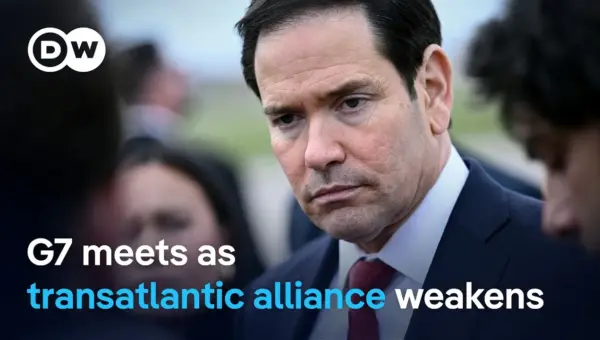
G7 Allies Clash Over Iran War Strategy, Urge Focus on Russia
G7 foreign ministers met in Paris, revealing deep divisions over the U.S. war with Iran. European allies urged the U.S. to pressure Russia, linking its actions to the conflict and fearing support for Ukraine will wane.

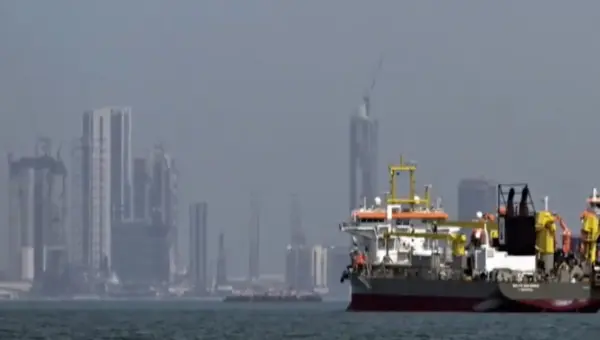
Iran Blocks China Ships, Exposing Beijing’s Weak Grip
Iran's recent decision to block Chinese ships at the Strait of Hormuz is exposing the limits of Beijing's influence in the Middle East. This action is causing delays and cancellations for Chinese manufacturers, turning a perceived geopolitical win into an economic strain.
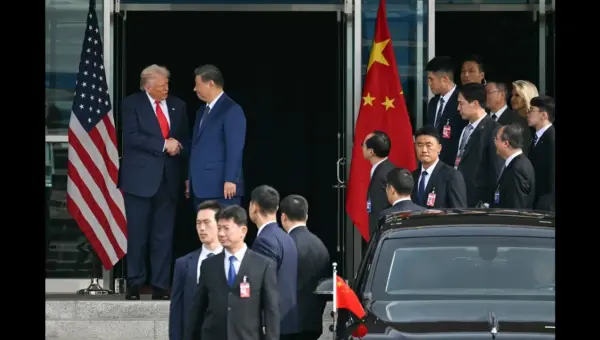
Trump’s “Walk Away” Tactic Signals Tougher Stance on China
Retired Air Force Brigadier General David Stillwell believes President Trump's strategy of being willing to walk away from negotiations puts pressure on China. This tactic, combined with US global actions and strengthened alliances, signals a more assertive American foreign policy.