Zelensky: Putin Fears Trump, Not Europe, Amidst Russian Weakness
Ukrainian President Volodymyr Zelensky believes Vladimir Putin fears Donald Trump more than Europe, citing the former US president's leverage over military aid and economic pressure. Zelensky also highlighted Russia's growing dependence on China and internal vulnerabilities, suggesting the Kremlin's image of strength is increasingly fragile.

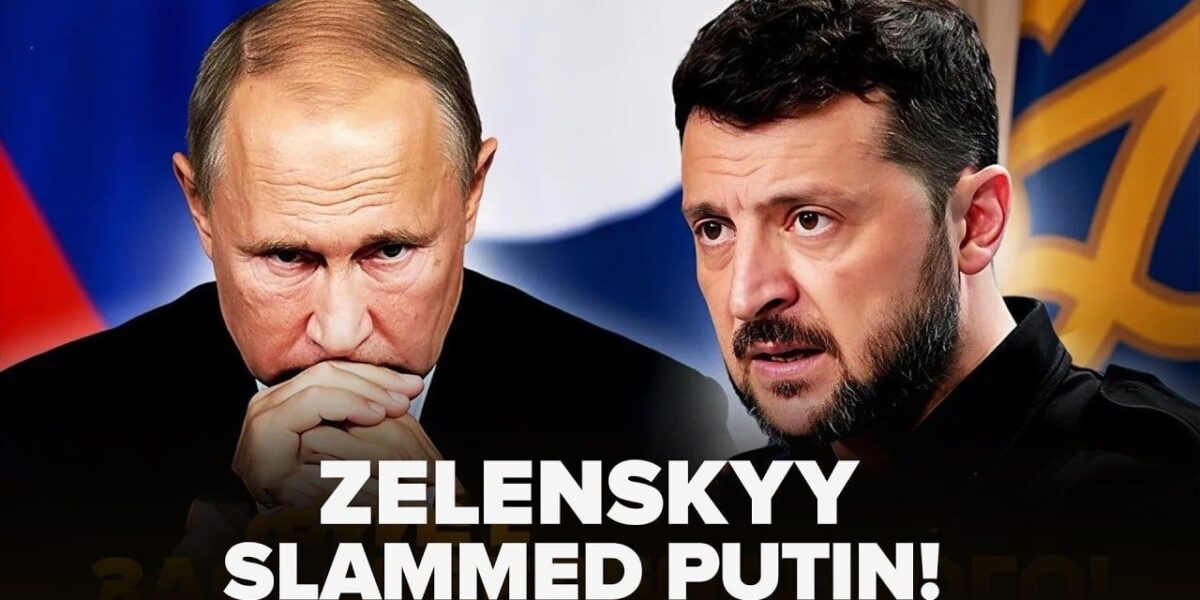
Zelensky: Putin Fears Trump, Not Europe, Amidst Russian Weakness
Kyiv, Ukraine – Ukrainian President Volodymyr Zelensky has offered a stark assessment of Vladimir Putin’s psyche and Russia’s geopolitical standing, asserting that the Russian leader harbors a significant fear of former U.S. President Donald Trump, while viewing Europe as a less potent threat. In a February 2026 interview with French channel France 2, Zelensky elaborated on what he perceives as Putin’s vulnerabilities, suggesting that the carefully crafted image of an invincible Russian president may be more myth than reality. The Ukrainian leader’s comments come amidst increasing international pressure on Russia following its full-scale invasion of Ukraine, a growing dependence on China, and internal dissent.
Putin’s Fear of Trump and Perception of Europe
According to President Zelensky, Vladimir Putin’s anxieties are not solely directed at external military threats but also at the potential loss of control. He specifically highlighted Donald Trump, stating that the former U.S. president holds significant leverage through the potential for military aid and economic pressure. Zelensky argued that Trump understands Washington’s ability to influence Moscow through sanctions and weapons supplies to Ukraine, which prevents him from simply agreeing to all of the Kremlin’s demands. “It is Putin who fears Trump, not the other way around,” Zelensky emphasized. “If President Trump understands this, he cannot accept all the conditions set by the Russian leader.”
In contrast, Zelensky expressed that while grateful for Europe’s substantial support, Putin does not perceive the continent as a decisive deterrent force. “We are grateful to Europeans. They are our partners and have helped us greatly. But unfortunately, Putin doesn’t fear them. Why? Because Europeans live in a safe and comfortable world they built themselves. Many cannot imagine that such aggression would reach their own countries,” he stated. Zelensky warned that if Ukraine fails to halt Russian aggression, Moscow could expand its reach further into Europe, with neighboring countries potentially becoming the first targets due to the range of Russian drones and missiles.
The Cult of Personality and Shifting Alliances
For years, the Russian state has meticulously cultivated a cult of personality around Vladimir Putin, portraying him as an invincible and untouchable leader. Media researchers and critics point to systematic centralization of his image through state-controlled television, popular culture, and public appearances. Western media has often referred to this phenomenon as the “Putin myth” or “Putin shaft.” Observers argue that Russian propaganda has spent decades crafting a superhero narrative, depicting Putin as incapable of weakness, mistakes, or fear. This narrative has even been amplified by religious figures, with Patriarch Kirill of the Russian Orthodox Church once describing Putin’s rule as a “miracle of God.”
However, the full-scale invasion of Ukraine has exposed significant vulnerabilities. Russia has faced sweeping international sanctions, leading to a gradual erosion of its economic ties with the West. In this context, China has emerged as Moscow’s primary partner. Oleksiy Danilov, Secretary of the National Security and Defense Council of Ukraine, stated in January 2026 that China had become Russia’s principal trading partner in both economic and military spheres, involving numerous joint projects in energy, infrastructure, mechanical engineering, and technology. Kyrylo Budanov, Head of the Main Intelligence Directorate of Ukraine’s Ministry of Defence, noted at the World Economic Forum in Davos that Beijing’s influence over Moscow is steadily increasing across economic, political, and technological domains.
“We are grateful to Europeans. They are our partners and have helped us greatly. But unfortunately, Putin doesn’t fear them.”
Volodymyr Zelensky, President of Ukraine
Putin’s Deep-Seated Fears and Internal Vulnerabilities
Beyond geopolitical pressures, opposition figures and international leaders have increasingly spoken about Putin’s personal fears, suggesting they significantly shape his decision-making. Russian opposition figures, such as exiled businessman Mikhail Khodorkovsky, have highlighted a range of phobias that reportedly began taking shape during Putin’s first presidential term. These include social anxiety, a fear of responsibility, a fear of the unknown, and a profound fear of death. These anxieties allegedly lead to his avoidance of public appearances, reliance on residences, and refusal to visit front lines.
The Russian opposition points to the emergence of individuals capable of replicating the past rebellion of Wagner Group head Yevgeny Prigozhin. They warn that such figures could lead social unrest stemming from the actions of prison authorities against ordinary Russians. The head of the charitable foundation Rusfond, Lev Romanov, stated that Putin fears this possibility and closely monitors the emergence of such figures, suggesting that Western hesitation during Prigozhin’s June 2023 revolt might have allowed it to succeed.
This discourse on Putin’s fears is not limited to Ukrainian officials and Russian dissidents. U.S. President Joe Biden has repeatedly labeled Putin a war criminal and a dictator, asserting in September 2022 that the Russian leader fears democracy and the example of a free Ukraine, which he sees as a direct threat to his regime. Similarly, former UK Prime Minister Boris Johnson wrote in March 2022 that Putin fears Ukraine’s democratic example and the possibility of color revolutions within Russia, suggesting that the invasion was motivated by a fear that Russians might desire the same freedoms as Ukrainians.
The Cracks in the Kremlin’s Facade
The narrative of unquestionable strength, long central to Russia’s state ideology, appears increasingly strained. International sanctions, economic dependence on China, and potential internal dissent create a complex web of vulnerabilities for the Kremlin. While the facade of absolute control is maintained, the underlying system exhibits growing fragility. The critical question remains how long this image can endure in an increasingly volatile geopolitical landscape and whether these perceived fears will fundamentally alter Russia’s trajectory or the outcome of the conflict in Ukraine.
Source: 😱Zelensky exposed everything about Putin! Kremlin is terrified by this address. Regime is cracking (YouTube)

Related Articles

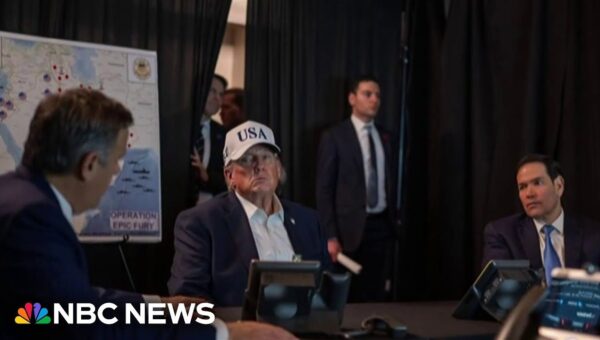
Trump: Iran Strikes Ahead of Schedule, Expects ‘Great Deal for World’
Three U.S. service members have been killed amid escalating conflict with Iran, President Trump confirmed. He stated that strikes are ahead of schedule, with senior Iranian leaders killed, and expressed optimism for a "great deal for the world" despite ongoing talks with Iranian officials.
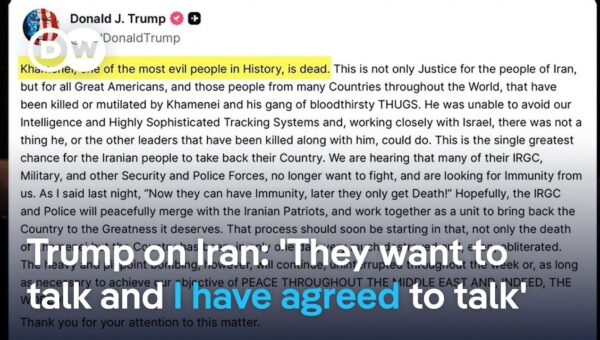
Trump Agrees to Talks with Iran After Major Strikes
President Donald Trump has agreed to talks with Iran's leadership following coordinated strikes that reportedly killed key figures, including the Supreme Leader. While Trump claims significant military successes, U.S. strategy remains unclear, and public opinion shows limited support for the actions amid rising American casualties.
Trump’s Putin Stance: US Strategy and Global Implications
Analysis suggests Donald Trump's approach to the Ukraine war involves pressuring Kyiv, but US involvement is crucial for resolution. China's influence and the 'MAGA' agenda's geopolitical implications are key factors.