YouTube Censors China Critics: Free Speech Under Threat?
Creators critical of China allege YouTube's algorithms and policies may be suppressing their content. This livestream discussion highlights concerns over free speech and geopolitical pressures influencing online platforms.

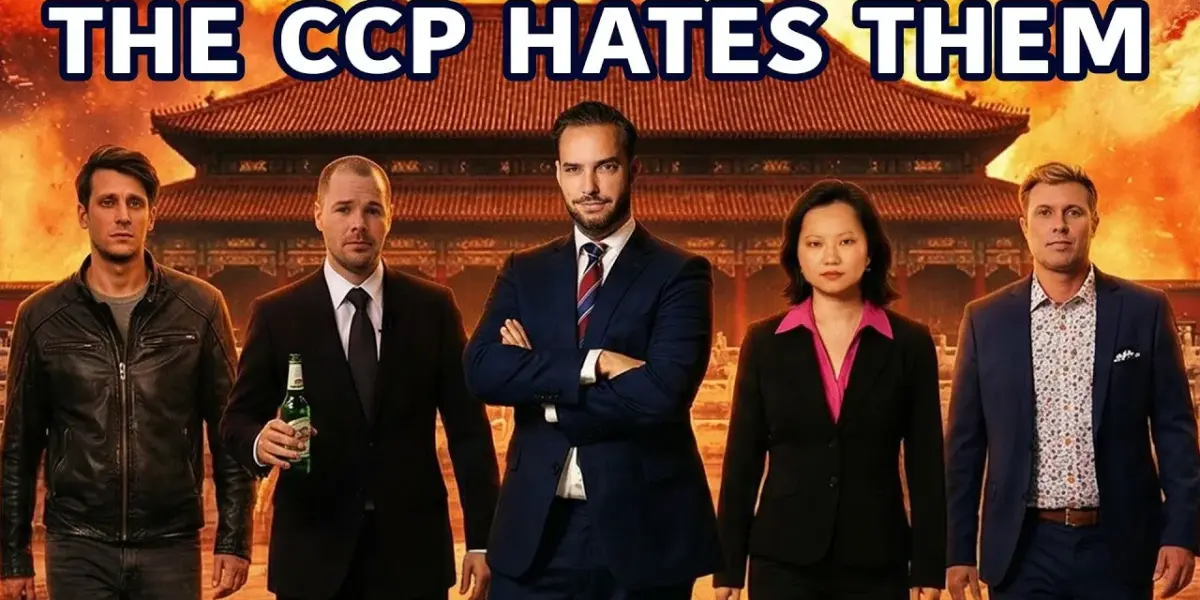
YouTube’s Shadow Ban: A Crackdown on China Critiques?
In an era where digital platforms wield immense influence over public discourse, YouTube’s content moderation policies have come under increasing scrutiny. A recent livestream featuring the “China Uncensored” crew, joined by creators Serpentza and Laowhy86, highlighted growing concerns that the platform may be actively suppressing or marginalizing content critical of the Chinese Communist Party (CCP). The discussion, though brief in its provided transcript, points to a broader trend of Big Tech’s complex relationship with censorship, particularly when dealing with geopolitical sensitivities.
The Allegation: YouTube’s Algorithmic Bias
The core of the concern, as implied by the “China Uncensored” livestream title, is that YouTube harbors an animosity towards shows that critically examine China. While the transcript doesn’t delve into specific instances of content removal or demonetization, the very premise suggests a perceived pattern of algorithmic or policy-driven marginalization. “China Uncensored,” Serpentza, and Laowhy86 are known for their direct commentary on the political, social, and human rights issues within China. Their content often challenges the official narrative propagated by Beijing, making them potential targets for platforms navigating the delicate balance between free expression and geopolitical pressures.
Navigating the Geopolitical Tightrope
YouTube, owned by Google, operates globally and must adhere to the laws and regulations of numerous countries. However, its decisions on content moderation also reflect its corporate values and business interests. The Chinese market is immensely lucrative, and platforms that wish to operate within China, or maintain a significant presence there, often find themselves compelled to self-censor or comply with Beijing’s demands. This creates a powerful incentive to avoid content that the CCP deems offensive or destabilizing.
Critics argue that in such scenarios, platforms like YouTube may err on the side of caution, applying stricter moderation standards to content critical of authoritarian regimes like China, even if that content doesn’t explicitly violate their terms of service. This can manifest as shadow banning, reduced discoverability, demonetization, or outright content removal, all of which effectively silence dissenting voices.
The Role of Independent Creators
The involvement of creators like Serpentza and Laowhy86 is crucial. These individuals often operate outside the mainstream media, leveraging platforms like YouTube to reach a global audience with perspectives that might be ignored or suppressed elsewhere. Their work provides a vital counter-narrative to state-controlled media and offers insights into the realities of life under the CCP. When their reach is curtailed, it represents a loss for informed public debate.
The call to action within the transcript – “To save China Uncensored, we need 1,402 more subscribers on https://chinauncensored.tv” – underscores the precarious financial and operational reality for many independent media outlets. Relying on platform algorithms for visibility and growth can be a risky strategy, especially if those algorithms are perceived to be working against them.
Historical Context: Big Tech and Censorship
The tension between platforms and content creators critical of powerful states is not new. Throughout the history of the internet, there have been ongoing debates about the role of platforms as publishers versus neutral conduits of information. Governments, including democratic ones, have also pressured social media companies to remove content deemed harmful or illegal. However, the specific case of China presents a unique challenge due to the CCP’s sophisticated censorship apparatus and its global influence.
Decades ago, the internet was hailed as a tool for liberation, a space where information could flow freely, unhindered by state control. Yet, as the internet has matured and consolidated into the hands of a few dominant corporations, the dream of a truly open digital sphere has faced significant headwinds. The CCP’s “Great Firewall” is a well-documented example of state-sponsored censorship, but the alleged “shadow banning” on platforms like YouTube suggests a more insidious form of control, where suppression is less overt but equally effective.
Why This Matters
The potential for platforms like YouTube to suppress content critical of China has significant implications for global understanding and policy. If a large segment of the global population relies on these platforms for information, and that information is curated or limited due to geopolitical pressures, it can lead to:
- A misinformed public unable to grasp the full scope of human rights abuses or political issues in China.
- Weakened international pressure on the CCP to reform its policies.
- An environment where authoritarian regimes feel emboldened, knowing that critical voices can be effectively silenced online.
- A chilling effect on independent journalism and activism, discouraging future critical reporting.
Implications, Trends, and Future Outlook
The trend observed by “China Uncensored” and its collaborators suggests a future where the digital public square becomes increasingly fractured and policed, not just by governments, but by the algorithms and policies of powerful tech companies. This could lead to:
- Increased reliance on alternative platforms: Creators and audiences may seek out platforms with more permissive content policies or those not subject to the same geopolitical pressures. Rumble, for instance, has seen growth in this area.
- Greater demand for transparency: There will likely be a growing call for platforms to be more transparent about their content moderation policies, algorithms, and the external pressures that influence their decisions.
- The evolution of censorship: As overt censorship becomes more difficult in a globally connected world, indirect methods like algorithmic manipulation and shadow banning may become the preferred tools for controlling narratives.
- A complex legal and ethical landscape: Governments and civil society will continue to grapple with how to hold platforms accountable for their content moderation practices without stifling free speech or enabling harmful content.
Conclusion
The concerns raised by “China Uncensored,” Serpentza, and Laowhy86 about YouTube’s potential bias against China-critical content warrant serious consideration. In an age of pervasive digital information, the integrity of platforms like YouTube is paramount. Ensuring that diverse voices, even those that challenge powerful governments, can be heard is not just about supporting individual creators; it’s about safeguarding the principles of free expression and informed global dialogue. The future of open discourse may depend on how effectively platforms can navigate these complex geopolitical waters while upholding their commitment to a free and open internet.
Source: LIVESTREAM: YouTube Hates These Shows About China (YouTube)

Related Articles
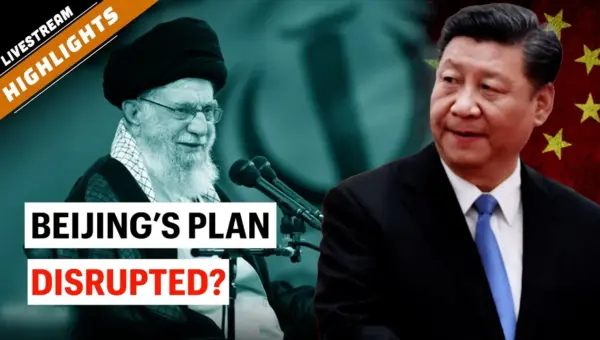
US Strikes Iran, Jolting Beijing’s Grand Bargain Dreams
Recent U.S. military actions in Iran, termed 'Operation Epic Fury,' are analyzed as a pivotal moment that may have disrupted Beijing's geopolitical strategy. The author posits that these strikes signal a shift to an 'enforcement through strength' global order, undermining China's reliance on Iran and its hopes for a 'grand bargain' with the U.S.
China’s Global Grip Loosens Amidst Sanctions and Shifting Alliances
Recent weeks have seen China facing increased scrutiny, from accusations of supplying Russia with military hardware to allegations of foreign influence operations targeting U.S. politics. Meanwhile, strategic alliances and economic countermeasures by rivals like the U.S. and Japan signal a potential shift in global power dynamics.

China’s Island Gambit Threatens US Security, Exposing Global Deception
China's strategic expansion across Pacific islands and alleged disinformation campaigns pose significant threats to U.S. national security. From the potential compromise of Diego Garcia to manufactured narratives surrounding military purges, Beijing's global ambitions are increasingly apparent.