Young Space Enthusiast Inspires Nation’s Space Ambitions
A young boy's viral enthusiasm for the Artemis space launch has reignited public interest in space exploration. His clear explanations and astronaut praise highlight a generation inspired by the cosmos. This renewed passion could shape future space policy and international cooperation.


Young Space Enthusiast Captures Nation’s Attention, Boosts Space Ambitions
A young boy named Hel, whose infectious excitement for the Artemis launch went viral, has captured the hearts of many and even earned praise from a NASA astronaut. His passion for space exploration highlights a renewed public interest in America’s journey beyond Earth. Hel’s enthusiasm, shared on CNN and other platforms, shows how deeply space exploration can inspire people of all ages.
Hel’s Journey to Viral Fame
Hel’s journey to viral fame began with his clear and excited explanation of the Artemis launch. He spoke about the spacecraft performing a ‘trans-lunar injection burn.’ This is the crucial step where engines fire to send the spacecraft on its path to the Moon. He explained that this journey takes about three days. Hel also corrected a common misconception, noting that the path to the Moon isn’t a straight line. Like the Apollo missions, it involves orbiting Earth first to get the right trajectory.
Astronaut’s Encouragement and a Gift
The young space buff’s passion did not go unnoticed by those who have actually traveled to space. Astronaut Leroy Chiao saw Hel’s video and was so impressed that he sent him a personal message. Chiao said Hel’s enthusiasm reminded him of his own feelings when he was young. He even promised to send Hel a copy of his new book, ‘Dinner with an Astronaut.’ Hel expressed his gratitude, saying the message meant the world to him and he looked forward to reading the book every night. This interaction shows the strong connection between current space missions and the next generation of explorers.
NASA’s Recognition and Future Aspirations
Hel’s viral moment also reached the highest levels at NASA. The head of NASA saw the video and recognized Hel’s dedication. He promised to send Hel some official NASA merchandise, or ‘swag.’ Hel, when asked about his dream destination, chose Mars over the Moon. He stated his desire to explore a new planet that humans have never visited before. This ambition echoes NASA’s long-term goals for Mars exploration, building on the successes of rovers like the Perseverance.
Parents’ Reaction and Public Enthusiasm
Hel’s parents, Kent and Rachel, were surprised by the overwhelming response to their son’s video. They mentioned that CNN’s request for an interview caught them off guard. However, they are proud of Hel’s infectious enthusiasm. They believe his passion for his country and for space is inspiring others. The public’s positive reaction shows a strong desire for space exploration and national pride.
Global Impact
Hel’s story is more than just a viral video; it represents a surge in public interest in space exploration. In an era often focused on terrestrial challenges, Hel’s unbridled excitement serves as a powerful reminder of humanity’s innate curiosity and drive to explore the unknown. His ability to explain complex concepts like orbital mechanics in simple terms makes space science accessible and engaging for a wider audience. This renewed public enthusiasm can translate into greater support for space programs, both governmental and private. It encourages younger generations to pursue careers in STEM fields, ensuring a future pipeline of scientists, engineers, and astronauts. Furthermore, international space missions often foster cooperation and peaceful competition among nations, and widespread public support is crucial for sustaining these ambitious endeavors. Hel’s viral moment underscores that the dream of space exploration continues to capture the global imagination.
Why This Reshapes the World Order
While Hel’s story is personal, it taps into a broader geopolitical context. Nations worldwide are increasingly investing in space capabilities, from satellite technology for communication and defense to ambitious crewed missions. The Artemis program, led by NASA with international partners, aims to establish a long-term human presence on the Moon and eventually send astronauts to Mars. This effort is partly a response to growing space ambitions from other countries, notably China, which has its own lunar program and plans for a space station. Hel’s viral popularity demonstrates that space is not just a scientific or economic frontier, but also a source of national pride and inspiration. This widespread public engagement can influence political will and resource allocation, potentially shaping the future direction and pace of international space exploration. It reinforces the idea that space is a domain where nations can compete and collaborate, with public opinion playing a significant role in shaping national priorities.
Historical Context
Hel’s enthusiasm echoes the spirit of the original Space Race during the Cold War. The Apollo missions, which landed humans on the Moon between 1969 and 1972, were driven by both scientific curiosity and geopolitical competition between the United States and the Soviet Union. Today’s Artemis program, while not directly driven by the same level of ideological rivalry, is part of a new era of space competition and cooperation. International partnerships, like those involved in the International Space Station, demonstrate a shift towards collaboration, but competition for leadership in lunar and Martian exploration is evident. Hel’s choice of Mars as his preferred destination reflects the next logical step in human space exploration, a goal shared by multiple space agencies and private companies.
Economic Leverage
Space exploration has significant economic implications. Investments in space technology drive innovation in areas like materials science, computing, and telecommunications, with applications benefiting Earth-based industries. The development of new launch systems and spacecraft is a major economic undertaking. Furthermore, control over orbital assets and potential resource extraction in space could become significant economic factors in the future. While Hel’s story doesn’t directly involve economic policy, the public’s fascination with space can indirectly influence economic decisions by supporting policies that fund these high-cost, high-reward ventures. Countries that lead in space technology often gain economic advantages through innovation and the development of new industries.
Future Scenarios
Hel’s aspiration to visit Mars highlights a key future scenario: human colonization of other planets. This could unfold in several ways. One scenario involves continued international cooperation, with multiple nations pooling resources for a joint Mars mission. Another scenario sees private companies, like SpaceX, taking the lead, driven by commercial interests. A third, more competitive scenario, could involve nations racing to establish a presence on Mars, similar to the early days of lunar exploration. The likelihood of each scenario depends on technological advancements, sustained funding, and geopolitical stability. Hel’s generation will be at the forefront of these future missions, and their dreams, inspired by moments like his viral video, will shape the path forward.
Source: Young space buff goes viral, earns praise from astronaut | Katie Pavlich Tonight (YouTube)

Related Articles
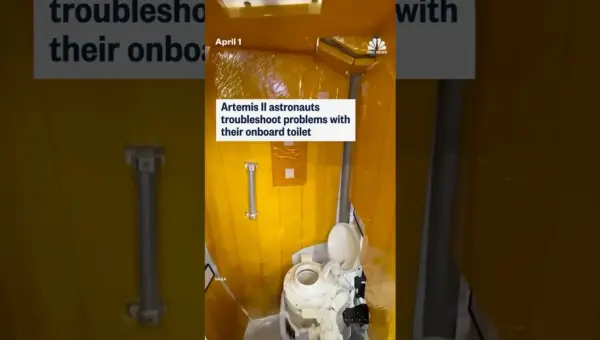
Artemis II Toilet Trouble: Astronauts Fix Spacecraft “Plumbing”
Astronauts aboard the International Space Station are troubleshooting a problem with the onboard waste management system. Mission control is guiding Christina Koch through specific steps to repair the space toilet. This fix is crucial for upcoming Artemis II lunar missions.


Trump Fires Attorney General, Artemis II Reaches Lunar Orbit
Attorney General Pam Bondi has been dismissed amid pressure over the Epstein investigation, with Todd Blanche stepping in as acting AG. Meanwhile, the Artemis II astronauts have successfully entered lunar orbit, a historic first since 1972. Severe storms are expected to disrupt Easter weekend travel across the U.S.
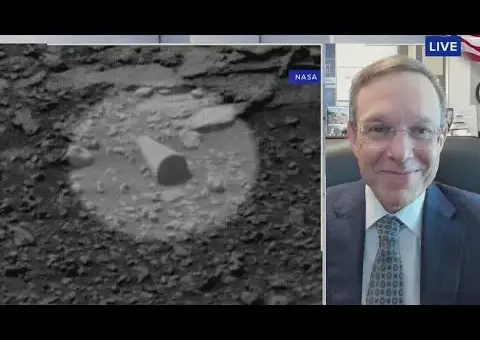
Harvard Professor Challenges NASA on Mars Object
Harvard Professor Avi Loeb is questioning NASA's explanation of a 'party hat'-shaped object on Mars. While NASA calls it a natural rock, Loeb believes it warrants further investigation and highlights the importance of curiosity-driven science.