Young Men Reject Gender Equality: Gillard Warns of “Bad Direction”
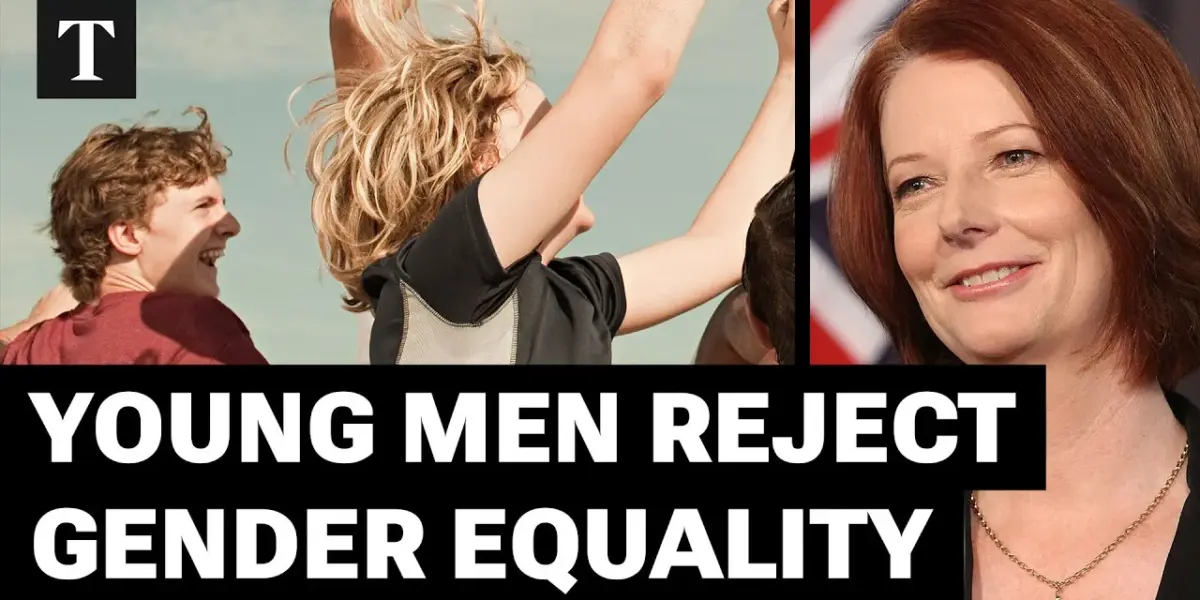
New global research reveals a concerning trend of young men rejecting gender equality, with one-third of Gen Z men under 29 agreeing a wife should obey her husband. Former Australian PM Julia Gillard warns this trend is moving in a "bad direction" and calls for inclusive strategies rather than blame.

Young Men Increasingly Reject Gender Equality, New Research Reveals
Alarming new research indicates a significant segment of young men, particularly those under 29, are displaying a marked increase in traditional views on gender roles and a decreased support for gender equality initiatives. The findings, stemming from a global poll conducted by Ipsos in partnership with the Global Institute for Women’s Leadership at King’s College London, surveyed 23,000 individuals across the UK, USA, Brazil, Australia, and India. The study uncovered that a concerning one-third of Gen Z men (under 29) agree with the statement that a wife ought to obey her husband, a sentiment that challenges decades of progress towards gender parity.
Former PM Julia Gillard Sounds the Alarm
Julia Gillard, former Prime Minister of Australia and Chair of the Global Institute for Women’s Leadership, expressed that while disheartening, the results were not entirely surprising. “We’ve been in partnership with Ipsos Mori at the Global Institute for Women’s Leadership now for several years and we were amongst the first to be saying there is a trend line here particularly amongst young men going in a bad direction when it comes to gender equality,” Gillard stated. She elaborated that previous observations had already suggested a growing attraction to traditional gender roles among younger men, making this poll’s direct confirmation a serious concern.
Factors Driving the Trend: The Manosphere, Online Influences, and Perceived Resentment
When questioned about the underlying causes of this shift, Gillard pointed to a complex interplay of factors. “Intuitively I think it’s a mix of the manosphere, which of course has been much discussed now, the influence of online influences and their version of masculinity,” she explained. Gillard also cited the early and widespread access to pornography as a contributing element. Furthermore, she raised a critical point about the unintended consequences of programs designed to promote girls and women in leadership and STEM fields. “I think we’re also looking at the generation of young men that came through school when there were a lot of programs for the girls… clearly there was a need to do those programs but perhaps what we underestimated is that they would cause resentment amongst the boys,” Gillard observed. This is occurring against a backdrop of economic uncertainty and global instability, which disproportionately affects young men’s transitions from education to employment, potentially exacerbating feelings of disenfranchisement.
Rethinking the Approach: Moving Beyond Blame and Towards Inclusion
The common discourse surrounding this issue often resorts to blaming young men, labeling them as inherently problematic or aligning them with negative online subcultures. However, Gillard strongly advocates for a different strategy. “I think we actually need to do the complete reverse of that. I think slogans like toxic masculinity and all the rest are not serving us at all. I think they’re the wrong approach,” she asserted. Gillard argues that such rhetoric fosters the perception of gender equality as a zero-sum game, where gains for women are seen as losses for men. She emphasized that a more gender-equal world would ultimately benefit everyone, offering greater options and choices. “A more gender equal world would actually be a better world for everyone,” Gillard stated, referencing research from the Global Institute for Women’s Leadership that linked gender equality in local government areas to greater social and economic advancement.
Broader Implications and the Importance of Inclusive Messaging
Gillard stressed the necessity of including men, especially young men, in the broader project of achieving gender equality. “We’ve got to make sure that men, including young men, are wrapped up into this project,” she urged. She cautioned against the simplistic framing of cultural or ethnic backgrounds as the sole drivers of attitudes towards women, emphasizing the danger of embracing new stereotypes in the fight against old ones. While acknowledging that individuals from any background can hold negative views, she advocated for addressing harmful attitudes directly rather than making broad assumptions based on origin. “We shouldn’t just presume because someone is from a particular background that they hold a particular view without asking them about it and actually finding out,” Gillard advised.
Leadership, Gender, and the Path Forward
Discussing the role of women in leadership, particularly in the context of global geopolitical events, Gillard reiterated her commitment to a gender-equal world where leadership at all levels reflects parity. However, she cautioned against stereotyping female leadership as inherently more empathetic or nurturing, emphasizing that merit, not gender, should be the basis for leadership. “My argument for gender equality isn’t necessarily that women would do it differently or better. It is that if we believe that merit is equally distributed between the sexes and I do then that must tell you that there are women of merit who are missing out under current structures because they are channeling through men,” she explained. Gillard concluded by highlighting the need for leadership, regardless of gender, that demonstrates strength, empathy, and is evidence-based and reason-based.
What’s Next: Deepening Research and Inclusive Strategies
The findings presented by Gillard underscore an urgent need for further research into the specific pathways that lead young men to reject gender equality. Developing inclusive strategies that resonate with young men, counteracting the influence of harmful online narratives, and fostering a shared understanding of gender equality as a collective benefit, rather than a divisive issue, will be crucial. The focus must shift from condemnation to constructive engagement, ensuring that the pursuit of a more equitable society encompasses all genders.
Source: Why Young Men Are Opposing Gender Equality | Former Australian PM Julia Gillard (YouTube)

Related Articles


Gen Z Questions Foreign Policy Amidst Iran Conflict
Defense Secretary Pete Hegseth faced criticism for downplaying media coverage of the Iran conflict, while young voters express a mix of support and unease. Gen Z's skepticism towards institutions and a desire for stability shape their nuanced views on foreign policy.

Nepal’s Gen Z Rises: Youth Demand Change in Landmark Election
Nepal's youth are taking center stage in a landmark election following last year's anti-corruption protests. Gen Z candidates are challenging the 'old guard,' demanding accountability and reform. The election's outcome could reshape the nation's political future.


Trump Admin Lacks Post-War Iran Strategy Amid Escalating Conflict
The U.S. war against Iran has escalated dramatically, drawing in NATO and expanding deep into Iranian territory. However, the Trump administration has offered no clear post-war strategy, leaving experts questioning the long-term objectives and potential consequences of the deepening conflict.