Xi’s Military Purge Sparks Questions of Paranoia and Weakness
President Xi Jinping's extensive purge of top military commanders has triggered debates about his paranoia and the PLA's readiness. Analysts question if these dismissals signal a consolidation of power or reveal deep-seated corruption and incompetence within China's armed forces, with significant implications for regional stability, particularly concerning Taiwan.

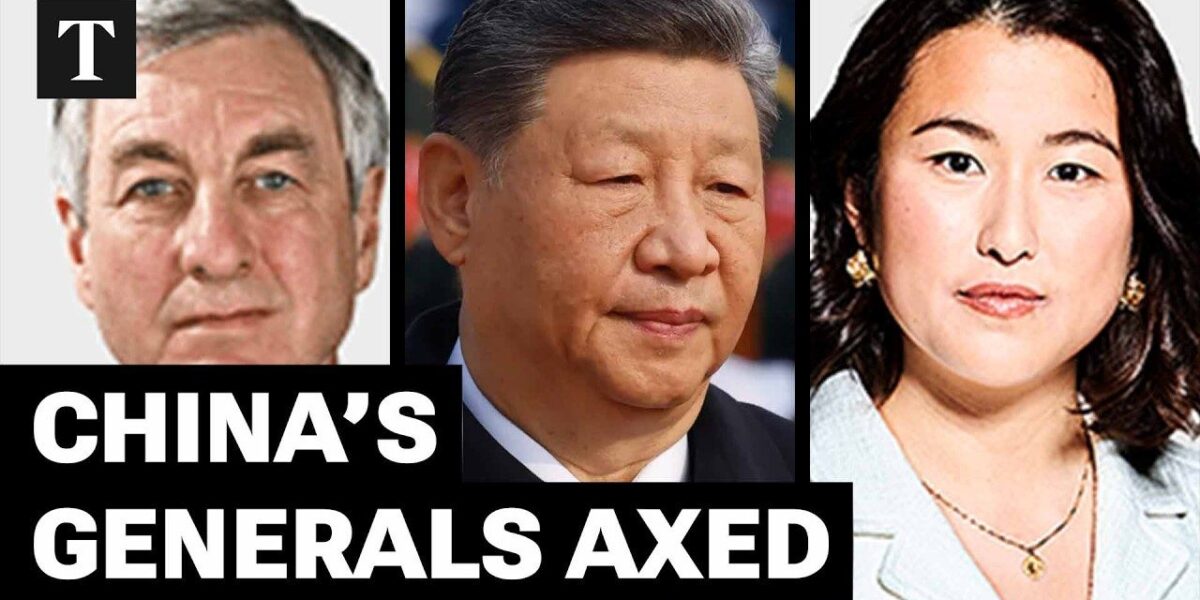
Xi Jinping’s Military Shake-Up Raises Alarms
Beijing – In a significant move that has sent ripples through international security circles, Chinese President Xi Jinping has reportedly purged more than half of his top military commanders. This extensive reshuffling within the People’s Liberation Army (PLA) suggests a deep-seated desire by Xi to eliminate potential opposition and consolidate his power, with some analysts speculating it could pave the way for a prolonged, potentially lifelong, tenure. The exact reasons behind the purges remain shrouded in secrecy, fueling debate among experts about whether they stem from Xi’s increasing paranoia or reveal underlying systemic corruption and incompetence within the PLA.
Uncertainty Surrounds the Motives for Purges
The lack of transparency surrounding the dismissals has led to a spectrum of interpretations. Cindy, a commentator featured in a recent discussion, highlighted the difficulty in ascertaining the precise motivations. “Nobody knows,” she stated, likening the situation to a mystery where conflicting explanations are plausible. One theory posits that Xi, after nearly 15 years in power, has become increasingly isolated and paranoid, leading him to purge loyal and competent commanders out of an abundance of caution. This perspective raises concerns about the quality of advice Xi receives, particularly given the dismissal of individuals, like a childhood friend and commander named Johnny, who had known him since primary school.
“The worry that you come out of this is that you’ve got an aging leader who is increasingly isolated and nobody everybody’s terrified of him because he’s so ruthless with his purges. What kind of decisions does that kind of leader make if nobody can kind of get rid of him in the short term which seems to be the case?”
An alternative explanation centers on the PLA’s potential for deep-seated corruption and inefficiency. The ongoing Russian invasion of Ukraine may have brought to light the PLA’s weaknesses, such as corrupt procurement practices or a general lack of combat readiness, prompting Xi to clear out underperforming elements. However, this interpretation also carries significant implications, suggesting that the military might be far from prepared for ambitious geopolitical actions, such as a potential invasion of Taiwan.
Implications for Military Strength and Taiwan
Regardless of the exact cause, the widespread purges do not bode well for the perceived strength of the Chinese military. Experts suggest that either Xi is replacing seasoned commanders with inexperienced sycophants who will blindly follow orders, potentially leading to disastrous decisions like an invasion of Taiwan, or the PLA is genuinely in a state of disarray, making such an offensive operation highly improbable. Michael, another analyst, noted that many of the recently dismissed individuals were newly appointed, which is an unusual pattern. “It appears that many of the ones who’ve been sacked were newly appointed which suggests either that he made a mistake and appointed people he decided he didn’t really like or they turned out to be pretty dud when they got into office,” he observed.
The uncertainty surrounding the PLA’s capabilities leads to a re-evaluation of the perceived threat from China. “Maybe it’s overblown,” Michael mused, acknowledging that detailed knowledge of China’s military is scarce. The purges, he added, raise questions about who is truly advising Xi, especially when even long-standing personal connections seem insufficient to prevent dismissal.
Economic Headwinds and the AI Conundrum
Beyond military concerns, China faces significant economic challenges. The nation’s economic growth has slowed, marked by a real estate crisis, high youth unemployment, and a stuttering economy. In this context, a new concern has emerged: the impact of Artificial Intelligence (AI) on China’s workforce and social stability.
Cindy elaborated on the unique position China finds itself in regarding AI. Unlike Western nations where AI adoption is largely market-driven, China’s government is actively promoting the widespread integration of AI across all facets of life. “In China, they are explicitly driving forward companies and organizations and individual users to basically embed AI as much as possible in their lives,” she explained. This government-led push means AI is likely to have a more immediate and profound impact on Chinese citizens, from recent graduates in office jobs to migrant workers who often leave school before the age of 16.
The AI Dilemma: Stability vs. Progress
The rapid advancement and deployment of AI present China with an existential dilemma. The government’s paramount concern for social stability is at odds with the potential for AI-driven job displacement. “What happens to those kind of marginalized groups basically? And China’s going to have an almighty political question on its hands because it cares about social stability so much,” Cindy questioned.
The choice boils down to a difficult trade-off: accelerate AI adoption to keep pace with global technological rivals, particularly the United States, and risk widespread social unrest, or slow down AI development and risk falling behind technologically. “So, do you go full guns blazing with AI and risk social stability or do you slow down AI and risk America overtaking?” she posited.
The complexity of AI’s implications is such that even experts struggle to fully grasp its future impact. Michael admitted, “I watched a very good explanation on television… and I thought just for a minute I think I’ve grasped it and 5 minutes after the program ended I said I really haven’t a clue what it’s about.” This collective uncertainty underscores the monumental challenge facing leaders worldwide, including those in Beijing, as they navigate the transformative power of AI.
Looking Ahead
The coming months will be critical in observing how President Xi Jinping addresses the internal dissent and potential weaknesses within the PLA, and how China balances its ambitions in AI development with the imperative of maintaining social stability. The world watches to see if these purges are a sign of a strengthened, albeit ruthless, leadership, or an indicator of profound instability and vulnerability within the Chinese military and its broader economic strategy.
Source: Paranoia or Corruption: The Times Experts Break Down Xi’s Military Purge (YouTube)

Related Articles

Iran War Escalates: US Suffers First Casualties
The conflict involving Iran has dramatically escalated with the first confirmed U.S. service member fatalities. As 13 nations become involved, U.S. and Israeli forces intensify operations against Iranian missile sites and command centers. The rising casualties and regional instability raise questions about future U.S. involvement.


Iran Rejects Trump Ceasefire Offer Amid Escalating Regional Conflict
Iran has rejected a ceasefire offer from the Trump administration, escalating regional tensions and leading to U.S. casualties. The conflict, dubbed 'Operation Epic Fury,' has seen Iranian retaliatory strikes across the Middle East and disruption in the Strait of Hormuz.


AI’s Economic Shift: Ownership is the New Wage
Artificial intelligence is projected to significantly reduce the economic value of human labor within a decade. Experts suggest that capital ownership, rather than wages, will become the primary means of wealth accumulation. Investors are urged to consider this shift in their long-term strategies.