Xi’s Military Purge Backfires: Protection Shields Top Generals
Despite widespread military purges under Xi Jinping, key generals like Zhang Youxia and Liu Zhenli retain their positions and delegate status. This unexpected protection, rooted in NPC delegate immunity, suggests institutional resistance to Xi's consolidation of power within the PLA, raising questions about his ultimate control.

Xi’s Military Purge Backfires: Protection Shields Top Generals
The recent maneuvers within China’s National People’s Congress (NPC) Standing Committee, aimed at formalizing investigations into high-ranking military officials, have revealed a surprising resilience among some of the very figures President Xi Jinping appears to be targeting. While a significant number of mid-level officers and generals have been stripped of their delegate status, the continued protection of key figures like Zhang Youxia and Liu Zhenli suggests that Xi’s anti-corruption campaign, particularly within the People’s Liberation Army (PLA), is facing unexpected institutional hurdles.
The Unspoken Silence Speaks Volumes
Two recent meetings of the 14th NPC Standing Committee were convened, ostensibly to review delegate qualifications. The initial meeting on February 4th saw three officials from the aerospace industry removed. However, the second session, held from February 25th to 26th, brought more significant changes. Nineteen delegates lost their status, including nine PLA officers: five full generals, one lieutenant general, and three major generals. Notably, Major General Liu Sheng, president of the military court—the very body tasked with prosecuting generals—was also removed. This action, in itself, signals a deep-seated effort to clean house within the military judiciary.
Yet, the most striking outcome was the conspicuous absence of any mention of Zhang Youxia and Liu Zhenli. Their delegate status remained intact, and they were not removed from their positions on the Central Military Commission (CMC). This silence, in the face of what many believed were targeted purges, is being interpreted as a powerful indicator. On paper, their formal political standing has not changed, a stark irony given the ongoing investigations and public speculation.
The Immunity Shield: A Legal Impasse
The PRC’s constitutional and procedural framework grants NPC delegates a degree of immunity. Crucially, without first stripping their delegate status, formal criminal investigations against them cannot legally proceed. This means that, at least on paper, any investigation lacks proper legal grounding. Xi Jinping may have initiated actions, but the necessary institutional endorsement—the formal stripping of delegate status—has not yet materialized for Zhang and Liu. This presents a significant challenge to Xi’s authority and his ability to fully consolidate power within the military.
The Scale of Xi’s Purge: “Structural Rotation by Annihilation”
Xi Jinping’s anti-corruption campaign within the PLA has been relentless and vast. Over the past 14 years, more than 200,000 officers have faced discipline, with nearly 160 generals purged and around 10 members of the CMC removed. This intensity reportedly exceeds that of purges during the Mao era. The current approach is described not merely as discipline but as a form of “structural rotation by annihilation.”
Impact of the Latest Purge: A System-Wide Shockwave
The recent purge of nine generals has had far-reaching consequences, impacting the PLA across multiple dimensions:
- Generational Break in the Army: The removal of figures like Li Shangfu, the former army commander, signifies a generational shift. With him and other post-reform army commanders effectively removed, an entire generation that led the ground forces after Xi’s reforms has been purged. Given the army’s traditional role as the PLA’s foundational pillar, this destabilizes a critical component of the regime.
- New Combat Forces Not Immune: The fall of General Li Wei, political commissar of the Information Support Force, is particularly symbolic. This force, established less than two years ago and representing the future of warfare (cyber, electronic warfare, digital coordination), was personally unveiled by Xi. Its top political commissar being purged sends a chilling message: even newly established, high-priority units and their leaders are not permanently secure, and institutional lifespan offers no protection.
- Retirement Offers No Sanctuary: The inclusion of three retired generals among the nine purged underscores a new reality: retirement is no longer a safe harbor. Political accountability is now retroactive and indefinite, meaning loyalty has no expiration date, and there is no guaranteed safe exit.
- Frontline Disruption: Two of the purged generals commanded critical frontline units: the 73rd Group Army (facing Taiwan) and Rocket Force Base 64 (anchoring nuclear deterrence). Removing commanders at these crucial nodes interrupts operational continuity, disrupts institutional memory, and fractures trust and planning rhythms. Some experts suggest this “annihilation style rectification” has degraded the PLA from a professional fighting force into a more ceremonial body.
Xi Standing Alone?
The pattern of purges suggests Xi Jinping is increasingly isolated at the top. While some fallen generals are linked to Xi’s faction, others are associated with Zhang Youxia. The removal of Li Shangfu, widely viewed as aligned with Zhang, raises questions about whether Xi or Zhang himself orchestrated his downfall. The official confirmation of crimes against three generals whose delegate status was revoked in December, and who are believed to have been taken down by Zhang Youxia last year, suggests that Zhang’s earlier actions have not been reversed. This implies that Zhang’s influence, even after his alleged downfall, may still be operative within the system.
Turbulence Within Xi’s Own Camp
The unexplained absence of two retired generals, Hing and Ping, from a recent MPC session, despite their seats being prepared, strongly indicates recent trouble. Both were senior officers promoted during Xi’s military reforms and deeply embedded in what is considered Xi’s military base. Their sudden disappearance suggests turbulence within Xi’s own inner circle, raising questions about whether these purges are entirely self-initiated or if anti-Xi forces are playing a role.
The Unfinished Consolidation of Power
The confirmation of investigations against previously removed generals, combined with the mysterious absences, points to a continuing purge within Xi’s own military network. Even after moving against figures like Zhang Youxia and Liu Zhenli, Xi has not secured full control over the broader military system. Without complete command of the armed forces, the risk of anti-Xi forces gradually encroaching on his network remains significant. This ongoing struggle for ultimate control highlights the complex and potentially precarious nature of Xi’s hold on power within the PLA.
Why This Matters
The implications of these developments are profound for China’s internal stability and its external posture. If Xi Jinping cannot fully consolidate power within the PLA, it raises questions about the effectiveness and reliability of the military in executing his directives, particularly in sensitive geopolitical situations like Taiwan. The internal purges could weaken the PLA’s operational readiness and decision-making capabilities, potentially creating miscalculations. Furthermore, the perception of instability at the top could embolden internal opposition or create opportunities for external adversaries. The continued protection of certain figures, despite apparent investigations, suggests deep-seated factionalism or institutional checks on Xi’s power, indicating that his anti-corruption campaign, while extensive, has not yet achieved its ultimate goal of absolute control.
Historical Context and Future Outlook
Throughout the history of the People’s Republic of China, the military has been a critical pillar of the Communist Party’s rule. Leaders have often sought to ensure absolute loyalty from the armed forces, sometimes through purges and personnel reshuffling. Xi Jinping’s campaign is unprecedented in its scale, echoing the purges of the Mao era. However, the current context is different: China is a global power with complex military modernization challenges. The “annihilation style rectification” risks undermining the professionalization of the PLA, potentially creating a less effective fighting force. The future outlook suggests a continued struggle for Xi to consolidate his power. The institutional resistance, as evidenced by the protection of Zhang and Liu, indicates that Xi may face sustained challenges in achieving total military dominance. This could lead to further purges, increased internal political maneuvering, or a period of strategic uncertainty as Xi works to overcome these obstacles.
Source: Xi’s Military Purge Backfires: Why Zhang Youxia Still Has Protection (YouTube)

Related Articles
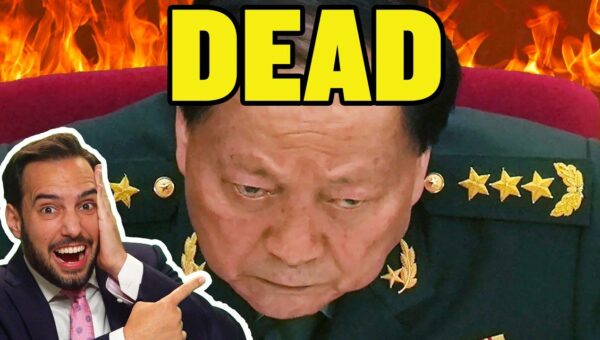
Xi’s Reign of Terror: Are CCP Officials Really Dying?
Rumors swirl about Xi Jinping orchestrating deadly purges of CCP officials, with unverified reports of executions and suicides surfacing. A critical analysis reveals the challenges of discerning truth from fiction in China's opaque political system.
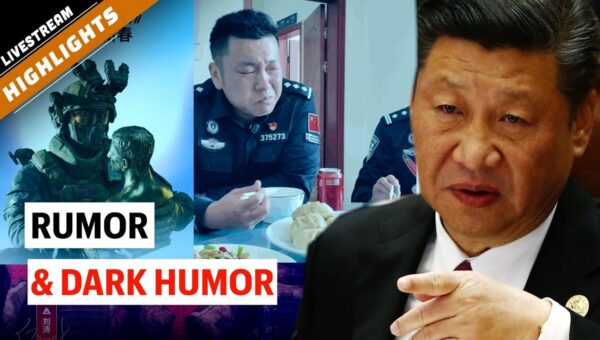
China’s Info War: Rumors, Ads Hint at Deep Political Strife
Unusual rumors of executions and a provocative game advertisement hint at a brewing information war within China. State media's own subtly critical reports further suggest deep political undercurrents and potential dissent.
Xi’s Military Purge Sparks Questions of Paranoia and Weakness
President Xi Jinping's extensive purge of top military commanders has triggered debates about his paranoia and the PLA's readiness. Analysts question if these dismissals signal a consolidation of power or reveal deep-seated corruption and incompetence within China's armed forces, with significant implications for regional stability, particularly concerning Taiwan.