Xi’s Grip Tested: Strange Signals Emerge from China’s Two Sessions
Unusual signals from China's Two Sessions, including delegate absences and a rare dissenting vote, fuel speculation about elite power struggles. Rumors of former leaders under house arrest highlight the opacity of CCP politics and potential challenges to Xi Jinping's authority.

Xi’s Grip Tested: Strange Signals Emerge from China’s Two Sessions
China’s annual “Two Sessions,” a key political gathering, has concluded, but the event has left a trail of unusual signals and swirling rumors, prompting intense speculation about the inner workings of the Chinese Communist Party (CCP) elite and the stability of Xi Jinping’s leadership. While official narratives project unity and unwavering direction, a closer examination of the proceedings reveals anomalies that suggest underlying factional struggles and a potential challenge to the established order.
Whispers of House Arrest and Elite Discontent
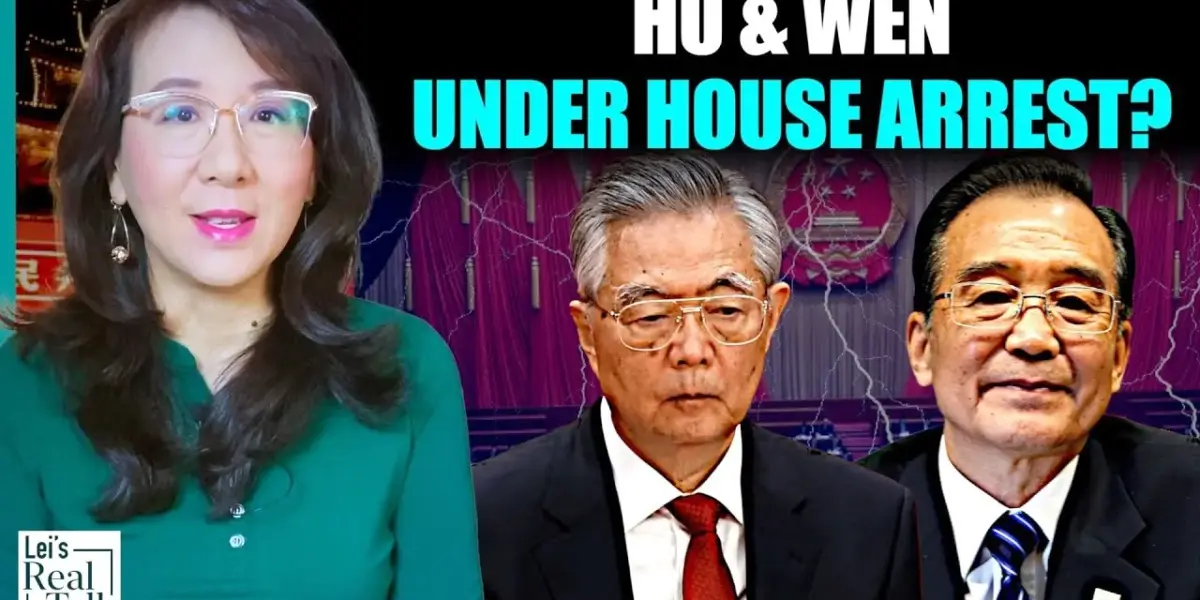
The most sensational claims circulating online suggest that former leaders Hu Jintao and Wen Jiabao are under house arrest. While these rumors are unconfirmed and should be treated with caution, their emergence and persistence during such a high-profile event cannot be dismissed entirely. In the opaque world of Chinese politics, such whispers often serve as a proxy for deeper political currents, reflecting anxieties about power consolidation and potential dissent among veteran party figures who may hold sway or represent specific factions.
The historical context of succession politics in China reveals a delicate balance of power and influence among former leaders. Figures like Hu Jintao and Wen Jiabao, while no longer in direct power, often maintain significant informal influence or represent factions that could be concerned by Xi Jinping’s increasingly centralized authority and his departure from the collective leadership norms established after Mao Zedong. The timing of these rumors, coinciding with the Two Sessions, could be interpreted as a deliberate attempt to sow discord, undermine Xi’s image of absolute control, or signal internal opposition.
Anomalies in the Official Proceedings
Beyond the rumors, several concrete developments during the Two Sessions warrant analytical attention. A record number of delegate absences were noted, a detail that, while potentially attributable to various logistical or health-related factors, can also be interpreted through a political lens. In a system that emphasizes performative unity, significant absences could hint at a lack of enthusiasm, deliberate abstention by those aligned with dissenting factions, or even a subtle protest against the prevailing political climate.
Furthermore, a rare dissenting vote on Premier Li Qiang’s government work report sent ripples through the usually choreographed proceedings. Such a public display of disagreement, even if isolated, is highly unusual in a political system designed to project consensus. It suggests that not all delegates are uniformly aligned with the leadership’s agenda, and that some level of ideological or policy disagreement persists within the party ranks. This single dissenting vote, magnified by its rarity, becomes a potent symbol of potential cracks in the facade of absolute loyalty.
Shifting Economic Priorities and Military Undercurrents
The economic priorities outlined during the Two Sessions also revealed subtle shifts. While maintaining a focus on stability and national security, there appeared to be a greater emphasis on self-reliance and technological advancement, potentially at the expense of more market-oriented reforms or international cooperation. This recalibration reflects the broader geopolitical pressures and Xi’s strategic vision, but it also raises questions about the economic policies favored by different factions within the party. Are these shifts driven by genuine necessity, or are they a reflection of a power struggle where economic policy becomes a battleground?
Unusual developments within the People’s Liberation Army (PLA) delegation further fueled speculation. Changes in leadership or significant personnel shifts within the military apparatus are often sensitive indicators of internal power dynamics. In a system where the party commands the gun, any perceived instability or unusual activity within the PLA can be interpreted as a sign of broader political unease or a preemptive move by the leadership to ensure military loyalty.
The Political Meaning of Rumors and Power Struggles
The targeting of former leaders like Hu Jintao and Wen Jiabao through online rumors is a tactic that has been employed before in Chinese politics. It serves to delegitimize potential rivals, signal the leadership’s vigilance against opposition, and test the public’s perception of the party’s stability. By associating these elder statesmen with rumored house arrest, the current leadership might be attempting to portray them as sidelined or irrelevant, thereby consolidating Xi Jinping’s own authority and narrative.
These rumors, whether fabricated or based on some kernel of truth, are integral to the ongoing power struggle surrounding Xi Jinping. They are part of a complex information warfare waged within and around the party. The goal is often to shape perceptions, deter dissent, and consolidate support. The fact that such rumors gain traction and are discussed, even in analytical circles, indicates a public and expert interest in the potential fragility of Xi’s power, an interest that the leadership likely seeks to manage or counter.
Why This Matters
The events and rumors surrounding China’s Two Sessions are not mere political theater; they offer critical insights into the internal dynamics of one of the world’s most powerful nations. The potential for factionalism, even in a seemingly monolithic political system, highlights the enduring complexities of elite politics in Beijing. Understanding these undercurrents is crucial for global policymakers, businesses, and observers seeking to navigate China’s trajectory.
Implications, Trends, and Future Outlook
The signals from the Two Sessions suggest a continuation of Xi Jinping’s consolidation of power, but also reveal the potential for resistance or dissent. The emphasis on national security and self-reliance points towards a more inward-looking and strategically assertive China, potentially exacerbating global tensions. The unusual events also underscore the importance of information control and narrative management by the CCP. Future political developments will likely hinge on Xi’s ability to maintain party discipline, manage economic challenges, and navigate the complex web of relationships with past and present party elites.
The trend towards greater centralization of power under Xi Jinping is undeniable. However, the anomalies observed during the Two Sessions suggest that this centralization is not without its friction points. The future outlook for Chinese politics may involve a continued balancing act between Xi’s authority and the lingering influence of established factions, as well as the potential for emergent challenges. The CCP’s ability to project an image of unwavering unity will be tested by the persistent whispers of internal dissent and the strategic maneuvers of its elite.
Source: Strange Signals at China’s Two Sessions (YouTube)

Related Articles
Xi Jinping Stays Home, Fuels Military ‘Blood Feud’ Fears
Xi Jinping's unusual 133-day stay in Beijing and his cautious visit to Xiongan highlight deep-seated security fears and potential military discontent. A past flood disaster involving the 82nd Group Army may fuel a "blood feud" against the leader.


China’s Organ Harvest: The CCP’s Dark Secret Exposed
A new bestseller, "Killed to Order," exposes China's alleged 20-year practice of forced organ harvesting from prisoners of conscience. Author Jan Jekielek details the system's scale and how the West may have become complicit. The book raises critical questions about human rights and international ethics.
China’s Shadow on Campus: Universities Under CCP Surveillance
U.S. universities face growing concerns as lawmakers warn the Chinese Communist Party (CCP) is targeting campuses. Reports detail alleged surveillance, intimidation of students, and misuse of research, raising alarms about academic freedom and national security.