Xi Jinping’s Purges: A Double-Edged Sword for Global Security and Taiwan’s Future
Xi Jinping's recent purges of top military officials have sparked a global debate: do they weaken China's military, delaying a Taiwan invasion, or embolden a reckless leader? While some see a chance for the West to prepare, historical precedents and expert analysis suggest such purges often lead to increased aggression. This underscores the urgent need for unwavering vigilance against a continually expanding Chinese military threat.

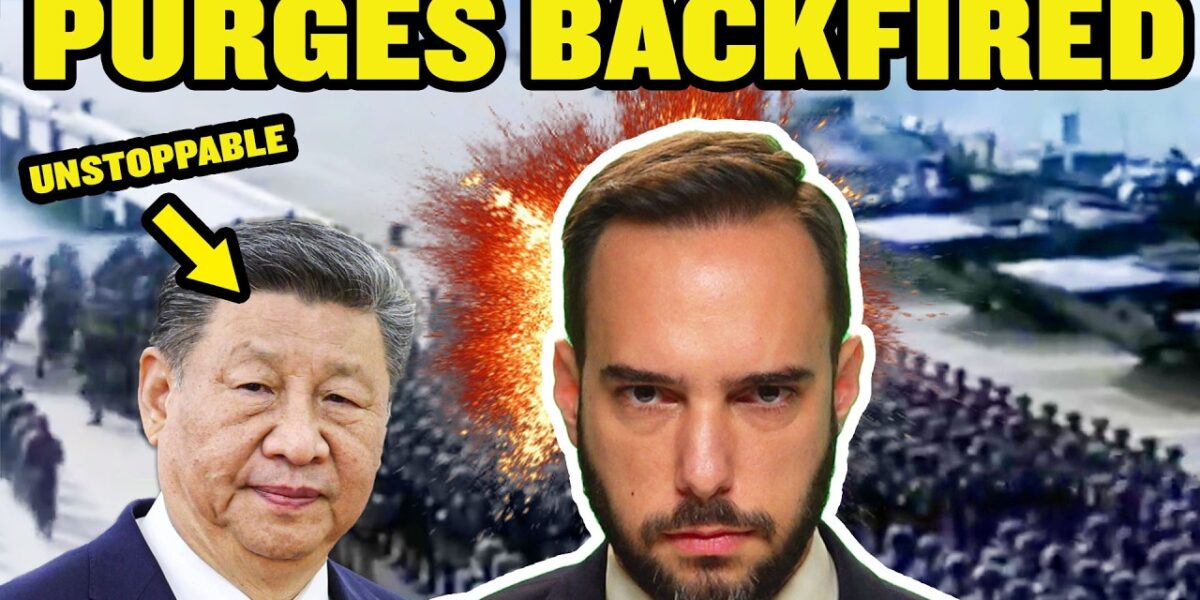
Xi Jinping’s Purges: A Double-Edged Sword for Global Security and Taiwan’s Future
In a dramatic display of consolidating power, Chinese leader Xi Jinping has continued his sweeping purges within the upper echelons of the People’s Liberation Army (PLA). Earlier this month, the seismic removal of General Jang Yoshia, the top general and vice chairman of the Central Military Commission (CMC), alongside another CMC General Leo Jung Lee, sent shockwaves through the global security community. This internal upheaval, described by one researcher as an “emperor’s no clothes moment for the PLA,” has ignited intense debate: do these purges make the world safer or more dangerous, particularly concerning the increasingly volatile situation surrounding Taiwan?
The timing of these high-profile dismissals is particularly critical, occurring just one year before 2027—the year by which Xi Jinping has explicitly stated his ambition for China to be ready for a Taiwan invasion. The “bloodbath” within the Central Military Commission, the very apex of China’s military command, has led to a crucial interrogation of China’s military readiness and its implications for regional and global stability. A former CIA analyst starkly characterized Jang’s purge as representing “the total annihilation of the high command,” raising profound questions about the future trajectory of China’s military and its strategic intentions.
The Purge’s Scope and Immediate Implications
The Central Military Commission (CMC) stands as the highest decision-making body within China’s military structure, directly reporting to the Communist Party of China (CPC) and Xi Jinping himself. Its members are the architects and executors of China’s defense policy, military modernization, and strategic planning. The removal of key figures like General Jang Yoshia and General Leo Jung Lee from such a critical institution is not merely a change in personnel; it signifies a profound disruption at the core of China’s military leadership. Jang Yoshia, in particular, was a veteran officer with considerable experience, including participation in the 1979 Sino-Vietnamese War, making his ouster especially noteworthy.
Such extensive purges, especially at the highest levels, are often indicative of a leader’s drive to eliminate potential rivals, consolidate personal authority, and ensure absolute loyalty. In an authoritarian system like China’s, maintaining control over the military is paramount for a leader’s survival and the execution of their strategic vision. The “emperor’s no clothes” analogy suggests a perceived vulnerability or a moment of truth for the PLA, where underlying issues or weaknesses might be exposed by the sudden removal of established figures. This event forces observers to reassess the internal dynamics of the PLA and the true extent of Xi Jinping’s grip on power, as well as the potential consequences for its operational capabilities.
The Argument for a Delay: Doubts on Preparedness and Morale Erosion
One perspective posits that these purges could inadvertently serve to delay or even deter a potential invasion of Taiwan, at least in the short term. The libertarian think tank Cato Institute has weighed in on this, suggesting that the purges cast significant doubt on China’s military preparedness. Their analysis concludes that the internal upheaval “lowers the probability that Xi will feel confident enough to launch a risky invasion of Taiwan.” The logic is straightforward: dislodging the very individuals tasked with leading an organization as vast and complex as China’s military inevitably disrupts its functioning. Such disruption, it is argued, would necessarily impact China’s ability to conduct war effectively, introducing an element of uncertainty that even an ambitious leader like Xi might hesitate to gamble on.
Further supporting this viewpoint, an analysis from Politico suggests that China’s military purge could offer strategic advantages to the U.S. Pentagon. The argument here is that the purges could severely impair Chinese decision-making processes and significantly erode morale within the ranks. In an environment where top generals are suddenly removed, soldiers and officers alike may become hesitant, constantly second-guessing their actions to avoid falling victim to similar purges. This climate of fear and suspicion is antithetical to fostering innovation and independent strategic thinking, qualities crucial for modern warfare. Instead, such an environment prioritizes political loyalty above all else, potentially leading to a cadre of “yes-men” rather than competent, critical thinkers. This shift from meritocracy to absolute allegiance could, in turn, degrade the PLA’s operational effectiveness and strategic agility.
For the United States and its allies, this potential degradation of Chinese military capabilities could buy precious time. More time would allow for enhanced preparation for a potential conflict with China and facilitate better coordination with key regional allies such as Japan and the Philippines. The argument is that a less confident, internally fractured PLA presents a less immediate threat, affording the democratic world a critical window to bolster its defenses and solidify its alliances in the Indo-Pacific.
The Counter-Argument: Recklessness Unleashed and Increased Miscalculation Risk
However, this optimistic assessment is far from universally accepted. Many experts contend that the purges could, in fact, have the opposite effect, making the global security landscape even more perilous. Professor Steve Tsang, director of the China Institute at the School of Oriental and African Studies (SOAS) University of London, issued a stark warning: the removal of generals like Jang means that “there will not be any general who would dare to advise Xi against a military adventure when the time comes.” This creates a dangerous vacuum where dissenting opinions or cautious counsel are suppressed, leaving Xi Jinping surrounded by sycophants unwilling to challenge his directives, however risky. Such an echo chamber significantly increases the risk of a catastrophic miscalculation on Xi’s part.
Former Pentagon official Drew Thompson echoes this concern, stating, “I worry about the consequences of someone other than Jang Yosha providing Xi Jinping with military advice.” Thompson’s apprehension stems from the “devil you know versus the devil you don’t know” dilemma. He and others believe that Jang Yoshia, having personal experience in actual combat—specifically China’s ill-fated 1979 war against Vietnam—possessed a unique understanding of the brutal realities and complexities of warfare. This experience, they argue, might have made him one of the few voices capable of injecting a dose of realism and caution into Xi’s strategic deliberations, potentially acting as a check against rash decisions. His removal, therefore, is seen as eliminating a crucial restraining influence, leaving Xi more susceptible to the counsel of less experienced or more ideologically driven “wolf warrior types,” as China analyst Bill Bishop points out, who might advocate for aggressive military adventures without fully grasping the costs.
The concern is that without voices of caution, Xi Jinping, already known for his assertive and nationalistic stance, might be emboldened to pursue more aggressive military actions, including against Taiwan. The absence of experienced, dissenting voices could lead to a less nuanced understanding of military risks and a greater willingness to gamble on high-stakes operations, thereby making the world less safe.
Historical Precedents: Do Purges Halt Wars?
A critical examination of history provides a sobering counterpoint to the notion that military purges inherently delay or prevent wars. In fact, historical evidence frequently suggests the opposite. Ryan Evans, founder of War on the Rocks, and Peter Mattis, President of the Jamestown Foundation, have highlighted numerous instances where militaries launched attacks shortly after undergoing significant purges, underscoring that internal turmoil does not necessarily translate into external restraint.
Perhaps the most salient example is Joseph Stalin’s Great Purge in the Soviet Union between 1936 and 1938. This brutal campaign systematically decimated the Red Army’s leadership, removing thousands of its most experienced officers, including marshals, generals, and admirals. The Red Army was, by all accounts, gutted. Yet, despite this crippling internal upheaval, the Soviet Union proceeded with invasions of both Poland and Finland in 1939. The Winter War against Finland, in particular, proved to be a brutally costly military venture for the Soviets, highlighting the severe operational deficiencies caused by the purges. However, the purges did not deter the aggression; they merely made it more difficult and bloody.
Another chilling historical parallel is Pol Pot’s regime in Cambodia. After orchestrating a genocide that wiped out a quarter of Cambodia’s population, Pol Pot, despite his nation’s internal devastation, initiated cross-border raids and massacres in Vietnam. This reckless aggression directly paved the way for a nearly decade-long war with its more powerful neighbor, ultimately leading to the downfall of his regime. The internal chaos and massive purges did not prevent external aggression; they arguably contributed to a distorted reality that fueled it.
Similarly, Idi Amin’s violent coup in Uganda in 1971 was followed by a comprehensive purge of nearly all non-commissioned officers, decimating the professional core of the Ugandan army between 1971 and 1979. This internal restructuring did not, however, stop Uganda from waging the 1979 Uganda-Tanzania War, another conflict driven by the erratic decisions of a dictator. And let’s not forget Saddam Hussein, who carried out a significant purge within his military just prior to the outbreak of the Iran-Iraq War. These historical patterns suggest that rather than fostering caution, purges in authoritarian regimes often clear the path for unchecked aggression by removing any potential internal opposition or voices of restraint.
The lesson from history is grim: dictators, when consolidating power through purges, are not necessarily rendered impotent. Instead, they often become more unpredictable and dangerous, free from internal checks and balances. Finding examples of dictators not acting recklessly after a purge is, in fact, far more challenging. This historical context suggests that relying on purges to deter Chinese aggression against Taiwan might be a dangerously flawed assumption.
Challenging Assumptions and Western Strategic Blind Spots
It is crucial to critically assess the premise that figures like Jang Yoshia were inherently voices of reason or moderation. While some in the West, like former Pentagon official Thompson, may mourn Jang’s purge and even allude to him as a “friend,” this perspective can be fraught with peril. It falls into a common trap of assuming that engagement with high-level Chinese Communist Party (CCP) officers, even those with military experience, automatically translates into a meaningful safeguard for U.S. interests or global stability.
The CCP, fundamentally, views itself as being in an ideological and strategic conflict with the United States and the free world. One of its well-documented tactics involves deploying seemingly “moderate” CCP officials for talks with American politicians and diplomats. The insidious goal behind this strategy is to foster complacency in the West, leading them to believe that China is not an existential threat, or that common ground can be found through dialogue. All the while, the CCP continues to advance its strategic agenda, often through deceptive means, while promises of productive talks repeatedly lead nowhere. This “engagement trap” can lull democratic nations into a false sense of security, delaying necessary defensive preparations and emboldening Beijing’s long-term ambitions.
Therefore, grieving for figures like Jang Yoshia, or viewing their removal as a loss for stability, risks playing directly into the CCP’s strategic playbook. It’s a dangerous form of complacency that has historically proven costly. Every time major purges occur within the CCP, there is a tendency in the West to breathe a sigh of relief, questioning China’s military readiness and speculating about Xi Jinping’s “collapse moment.” This happened during previous purges, with some arguing that China was too destabilized by corruption and factional power politics to invade Taiwan. However, history has repeatedly shown these predictions to be false. Xi Jinping remains firmly in power, and none of his previous purges have diminished China’s trajectory as an increasing global threat. On the contrary, China’s military expansion and assertiveness have continued unabated.
The Enduring Threat: China’s Military Growth Despite Purges
Regardless of internal political machinations, the undeniable reality is that China’s military continues its relentless modernization and expansion, posing a persistent and growing threat to regional and global security. The notion that purges somehow diminish this overarching trend is a dangerous misconception. China has already surpassed the United States in terms of sheer ship numbers, boasting the world’s largest navy. This expansion is not merely quantitative; it encompasses a qualitative leap in its capabilities, including advanced naval vessels, stealth fighter jets, ballistic missiles, and sophisticated cyber warfare units.
The PLA continues to build both its arsenal and its ability to conduct complex, sophisticated operations against the U.S. and its allies. This relentless military build-up occurs irrespective of who holds specific positions within the Central Military Commission. The strategic objectives of the CCP, particularly regarding Taiwan and broader regional hegemony, remain constant, driven by a long-term vision that transcends individual leadership changes.
Evidence of this unwavering assertiveness is constantly on display around Taiwan. According to the Australian Strategic Policy Institute (ASPI), throughout 2025 (the transcript mentions 2025, but likely refers to a recent period of observation), there were only two days when no Chinese military air or maritime assets were detected around Taiwan. This constant presence—a form of gray-zone warfare—is designed to intimidate, normalize Chinese military operations in Taiwan’s vicinity, and wear down Taiwan’s defenses. It demonstrates a sustained, high-tempo operational tempo that is unaffected by internal purges at the top. The sheer scale and continuous nature of these operations underscore that the PLA’s institutional momentum and strategic directives are deeply ingrained and not easily swayed by internal personnel shifts.
Therefore, the West cannot afford to become complacent. China’s military is simply too large, too technologically advanced, and too strategically driven for any internal political reshuffling to be interpreted as a sign of weakness or a reason to relax vigilance. Even in the hypothetical scenario of Xi Jinping himself being purged, the fundamental nature of the Chinese Communist Party as an authoritarian, expansionist entity would remain. The threat is systemic, embedded in the ideology and structure of the CCP, rather than solely dependent on the personality of its current leader.
Internal and External Complicity: Fueling the Dragon
Compounding the external threat is the unfortunate reality of internal and external complicity that continues to empower China’s military ambitions. Despite clear warnings and escalating geopolitical tensions, many U.S. allies and even American entities seem to be, as the transcript puts it, “totally fine with embracing China.” This embrace often comes in the form of economic deals and partnerships that, directly or indirectly, bolster China’s economic strength and, by extension, its military capabilities.
The transcript raises pertinent questions about specific instances of such problematic engagement: “Why is Ford partnering with a Chinese military company using federal tax credits?” Such collaborations, even if seemingly civilian in nature, can provide financial resources, technological know-how, or strategic advantages that ultimately benefit China’s military-industrial complex. Similarly, the lack of progress in banning Chinese companies like GNC from U.S. military bases, or the alarming revelation of a U.S. defense contractor turning out to be a Chinese agent, highlights critical vulnerabilities within the very security apparatus designed to counter China.
These examples illustrate a broader pattern where economic interests, lobbying efforts, or even outright espionage undermine the collective security efforts of the free world. Rolling out the “red carpet for more economic deals” that inevitably strengthen China’s economy and, by extension, its military, is a self-defeating strategy. It provides the very resources and leverage that Beijing then uses to challenge global norms, threaten its neighbors, and pursue its authoritarian agenda. This complicity, whether born of naivete, greed, or strategic miscalculation, plays a direct role in empowering an adversary that explicitly seeks to diminish the influence and ultimately, the existence of the free world as we know it.
Conclusion: Vigilance as the Only Option
The recent purges within China’s Central Military Commission, while significant, offer no clear path to global security or a guaranteed delay in China’s ambitions towards Taiwan. The conflicting analyses—some suggesting a temporary weakening, others warning of increased recklessness—highlight the inherent opacity of China’s political system and the dangers of making definitive predictions. History, however, offers a grim lesson: purges in authoritarian regimes often clear the way for unchecked aggression rather than deterring it.
The most critical takeaway is the imperative of unwavering vigilance. The West, particularly the United States and its allies, cannot afford to fall into the trap of complacency, assuming that internal Chinese political turmoil automatically translates into a diminished external threat. China’s military continues its formidable expansion and modernization, driven by the enduring strategic objectives of the Chinese Communist Party. The threat is systemic, rooted in the CCP’s ideology and its long-term vision for global dominance, transcending the fate of individual generals or even leaders.
Therefore, the focus must remain squarely on strengthening defenses, solidifying alliances, and critically re-evaluating economic and technological engagements that inadvertently empower Beijing. To do otherwise is to ignore the lessons of history and the relentless trajectory of a formidable adversary. The free world must stay vigilant, ensuring it does not inadvertently empower an enemy that seeks its demise, lest it finds itself facing an “emperor that no one’s allowed to mention isn’t wearing pants.”
Source: War with China May Be Unstoppable Now (YouTube)

Related Articles

US Regime Change Efforts: A History of Tactical Wins, Strategic Losses
A comprehensive review of U.S. interventions reveals a consistent pattern: while the United States is adept at tactically removing foreign governments, achieving strategic success—the establishment of stable, legitimate political orders—has proven exceedingly difficult. Historical analysis points to unintended consequences and long-term instability as common outcomes.


Thousands Mourn Khamenei, Chant ‘Death to America’ in Iran
Thousands gathered in Yazd, Iran, to mourn Supreme Leader Ayatollah Ali Khamenei following reported U.S. and Israeli strikes. The mourning ceremony was marked by chants of "Death to America," highlighting deep-seated anti-American sentiment amid geopolitical tensions.

Middle East Crisis Triggers Global Chaos: Flights, Oil Prices Hit
A major global crisis has erupted following coordinated strikes on Iran, triggering a massive retaliatory response that has impacted multiple countries across the Middle East. The large-scale attacks have caused widespread aviation chaos and pose significant risks to global energy markets and financial stability.