Xi Jinping’s Power Crisis: How Internal Resistance Forced an Urgent Diplomatic Reversal
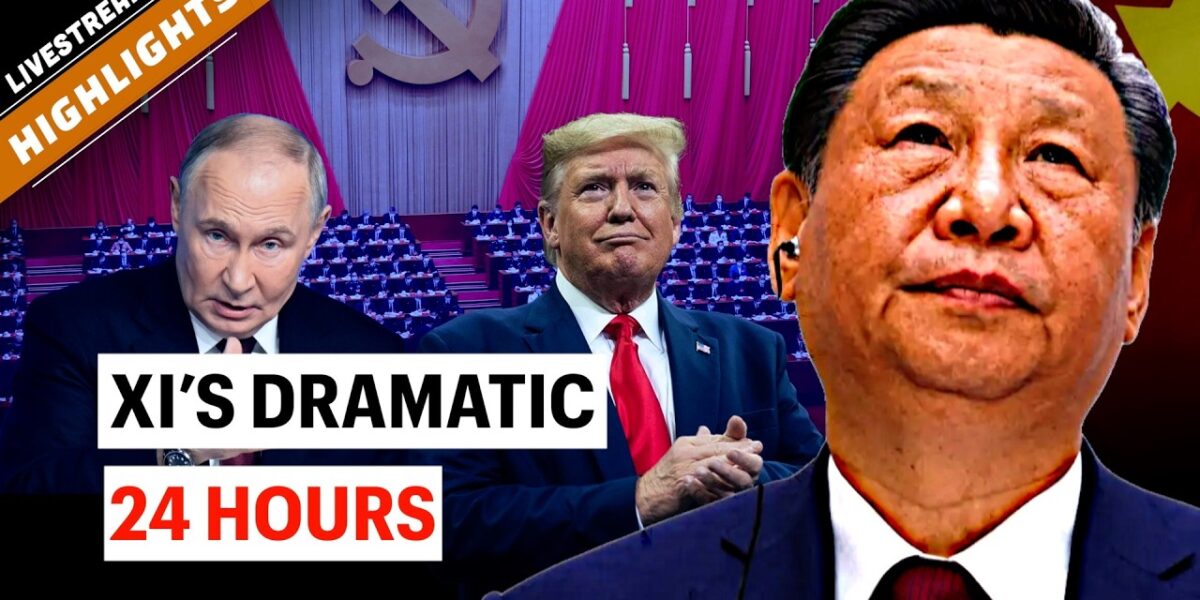
Chinese President Xi Jinping is reportedly facing a severe internal power crisis, stemming from the party's collective silence following his detention of two senior military officials. This domestic challenge forced Xi into urgent, unprecedented diplomatic overtures, making significant concessions to secure visits and political validation from both former U.S. President Donald Trump and Russian President Vladimir Putin. The events underscore a leader under immense internal pressure, desperately seeking external support to stabilize his position.

Xi Jinping’s Power Crisis: How Internal Resistance Forced an Urgent Diplomatic Reversal
In a dramatic twenty-four-hour period, Chinese President Xi Jinping reportedly faced a significant internal challenge to his authority, prompting an unprecedented series of diplomatic maneuvers. Far from the usual rumors or speculations, the true indicator of Xi’s predicament emerged from a collective silence within the Communist Party apparatus, signaling a deep-seated resistance to his recent actions. This internal power struggle, ignited by the detention of two senior military officials, culminated in Xi making urgent, uncharacteristic overtures to both former U.S. President Donald Trump and Russian President Vladimir Putin, seeking crucial external validation to shore up his weakening domestic position.
The Unfolding Internal Crisis: A Breach of Protocol
The genesis of Xi’s current crisis lies in his decision to detain two high-ranking military officials, identified in the transcript as Jang and Li. This move, according to observers, violated the internal procedures of the Chinese Communist Party (CCP) and lacked basic legitimacy. Crucially, every level of the party and the military, with the exception of a few official PLA daily op-eds and articles, has remained conspicuously silent. There has been no customary endorsement, no ritualistic statements of support – nothing. This collective silence, rather than outright defiance, is understood to be the core of the problem for Xi Jinping.
For Xi, securing some form of institutional approval was paramount to retroactively legitimize his controversial decision. His initial attempt to achieve this was a Politburo meeting held on a Friday, January 30th. However, this high-level gathering failed to produce any consensus backing the generals’ arrest, leaving Xi’s actions unsupported by the party’s top decision-making body.
Failed Institutional Backing: The NPC’s Stand
Days later, the CCP announced an emergency session of the 20th meeting of the National People’s Congress (NPC) Standing Committee. Held the following day, this ad hoc meeting had a singular agenda: to hear a report on the qualifications of certain NPC deputies or delegates. The announcement immediately raised expectations among many observers who anticipated a formal revocation of the two generals’ NPC delegate status, which would pave the way for their formal removal from the state Central Military Commission.
Revoking their NPC delegate status would have been a significant victory for Xi Jinping, providing the institutional backing he so desperately needed. However, the outcome was strikingly different. The meeting, presided over by the NPC chair and Politburo Standing Committee member, did not mention the two generals at all. Instead, the official NPC statement indicated that three other NPC deputies from major defense and military industry enterprises were removed. This omission was a clear signal: the NPC did not back Xi Jinping’s move against the generals.
The implications of this non-endorsement are profound. It suggests that Xi Jinping no longer commands full control over the National People’s Congress, a body traditionally seen as a rubber stamp for the party’s decisions. This development is dramatic, indicating that when Xi moved against the two generals, he seriously underestimated the level of resistance he would encounter within the party, the government, and the military. He likely anticipated that once the initial target was neutralized, others would fall in line and pledge loyalty. Instead, he was met with collective resistance and near-total silence, revealing that he cannot, at least not at this moment, fix his legitimacy problem.
A Swift Pivot to External Validation: The Urgent Calls
Realizing the extent of his internal predicament, Xi Jinping swiftly pivoted to the external front. In a rapid sequence of events, he made urgent phone calls to two of the world’s most influential leaders: Donald Trump and Vladimir Putin. The timing and circumstances of these calls were particularly revealing. Last night, Beijing time, he called Donald Trump. Earlier that afternoon, he had a video call with Vladimir Putin.
A crucial detail missing from both official Chinese readouts was the phrase “at the invitation of…”. Beijing is typically meticulous about this wording, as it signals that the foreign leader requested the call, projecting an image of international demand for Chinese leadership. Its absence this time strongly suggests that both calls were initiated by Xi Jinping himself, highlighting the urgency of his need to speak directly with these two men. Trump, representing China’s biggest external rival, and Putin, its most important strategic ally, both hold unique sway and can directly influence Xi’s standing inside the party. Xi could not wait for intermediaries; he needed to speak with them immediately, whether they were adversaries or allies.
Xi’s Concessions to Trump: A Bid for Support
According to Xinhua’s readout of the call with Trump, the primary focus was China-U.S. relations. Xi Jinping raised the issue of Taiwan, stating it was a core concern and that China must safeguard its sovereignty and territorial integrity, urging the United States to handle arms sales to Taiwan with prudence. Notably, Xi’s tone was unusually mild; he did not demand an end to U.S. arms sales, instead signaling that a prudent approach from the U.S. would be acceptable.
Trump’s own social media post provided a more revealing account. He described the call as long and thorough, covering trade and military issues, and expressed anticipation for a visit to China in April. Discussions included Taiwan, the Russia-Ukraine war, and Iran. Most significantly, Trump happily reported that Xi Jinping promised to increase imports of U.S. oil and natural gas and to significantly boost purchases of U.S. agricultural products, particularly soybeans.
The scale of these agricultural promises is striking. Xi reportedly pledged a massive increase in U.S. soybean purchases: 20 million tons this quarter and 25 million tons next quarter. To put this in context, in October 2023, during an event in a South Korean city, Xi Jinping had promised that from 2026 to 2028, China would buy at least 25 million tons of U.S. soybeans *per year*. Xi’s new promise compressed what was an annual commitment into a single quarter, and this only covers the first half of the year. Coupled with softened rhetoric on Taiwan and signals of cooperation on Ukraine and Iran, these concessions represent a significant shift in Beijing’s posture.
This sudden change is perplexing given that China-U.S. relations had not experienced major recent turbulence. In fact, Washington’s firm stance on Venezuela and Iran had arguably weakened Beijing’s proxies. From a position of confidence, Beijing would typically respond with resistance, not rush into new concessions or display weakness. The unavoidable conclusion is that Xi Jinping made a major effort to please Trump, indicating a desperate need for something in return.
From the official readouts and Trump’s post, Xi’s objectives are clear: first, to lock in Trump’s visit to China in April, and second, to secure a public signal of political support. Trump’s post concluded with a telling statement: “The relationship with China and my personal relationship with President Xi is an extremely good one, and we both realize how important it is to to keep it that way.” This emphasis on the personal relationship is precisely the public validation Xi Jinping needs at a time when his internal position is shaky.
The Putin Connection: Another Lifeline
Just hours before calling Trump, Xi Jinping had his video call with Vladimir Putin. The true substance of this conversation was not found in Xinhua’s readout but in comments from Putin’s foreign policy advisor, Yuri Ushakov, who spoke to Reuters afterward. Ushakov revealed three key points:
- The call lasted 1 hour and 25 minutes.
- Putin accepted Xi Jinping’s invitation and will visit China in the first half of this year.
- The two sides discussed a possible ceasefire in the Russia-Ukraine war.
None of these points appeared in Xinhua’s official readout. For those familiar with CCP propaganda, such deliberate omissions typically indicate information that is inconvenient for Beijing or politically awkward for Xi Jinping. This suggests that the discussion around a Ukraine ceasefire, and the confirmation of Putin’s visit, were sensitive topics that Xi did not want widely publicized domestically, likely because they are directly tied to his need for external validation.
Broader Implications: A Shaking Foundation
The timeline of events paints a clear picture: in the morning, the NPC Standing Committee avoided endorsing Xi’s move against the generals. In the afternoon, Xi called Putin. At night, he rushed to call Trump, lowering his posture and securing commitments from both leaders to visit China. This sequence underscores the tremendous pressure Xi is under from rivals within the CCP and his urgent need for external backing to stabilize his position.
Xi Jinping’s proactive calls to both U.S. and Russian leaders, delivered in an unusually accommodating tone, and his haste to secure visits from them, reveal a core objective: to use these high-profile diplomatic engagements to politically bolster himself. His political base is demonstrably shaking due to the internal turmoil following his actions against the generals. While he may not be on the brink of total collapse, the intensity of the resistance he faces within the party is significant, and the trouble he is in is undeniably real.
The need for Putin and Trump to come to China serves to lift him up politically, providing him with crucial external validation that he currently lacks domestically. This unprecedented display of diplomatic urgency and concession highlights a leader grappling with a profound crisis of power, forcing him to seek reinforcement from beyond China’s borders to maintain his grip on authority.
Source: How Xi’s Power Crisis Unfolded in a Single Day (YouTube)

Related Articles
Trump: Iran Strikes Ahead of Schedule, Expects ‘Great Deal for World’
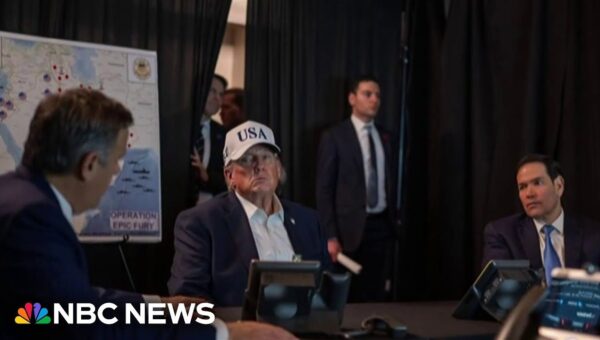
Three U.S. service members have been killed amid escalating conflict with Iran, President Trump confirmed. He stated that strikes are ahead of schedule, with senior Iranian leaders killed, and expressed optimism for a "great deal for the world" despite ongoing talks with Iranian officials.
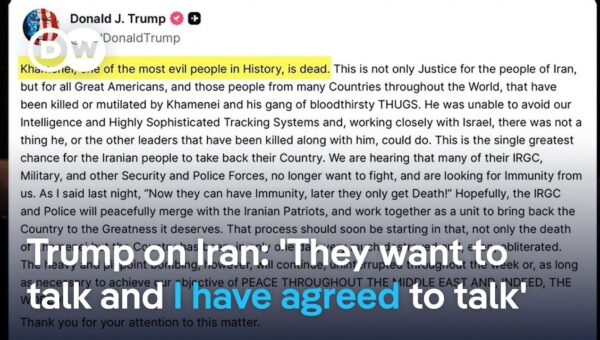
Trump Agrees to Talks with Iran After Major Strikes
President Donald Trump has agreed to talks with Iran's leadership following coordinated strikes that reportedly killed key figures, including the Supreme Leader. While Trump claims significant military successes, U.S. strategy remains unclear, and public opinion shows limited support for the actions amid rising American casualties.
Trump’s Putin Stance: US Strategy and Global Implications
Analysis suggests Donald Trump's approach to the Ukraine war involves pressuring Kyiv, but US involvement is crucial for resolution. China's influence and the 'MAGA' agenda's geopolitical implications are key factors.