Xi Jinping’s Iron Grip on PLA Under Strain: A Deep Dive into China’s Brewing Power Struggle
A deep internal power struggle is reportedly challenging Xi Jinping's control over China's military, marked by an open letter from a detained general's son accusing illegal arrest. This unprecedented dissent, coupled with military standoffs and factional ultimatums, signals significant instability within the CCP and PLA, raising questions about the future of China's leadership.

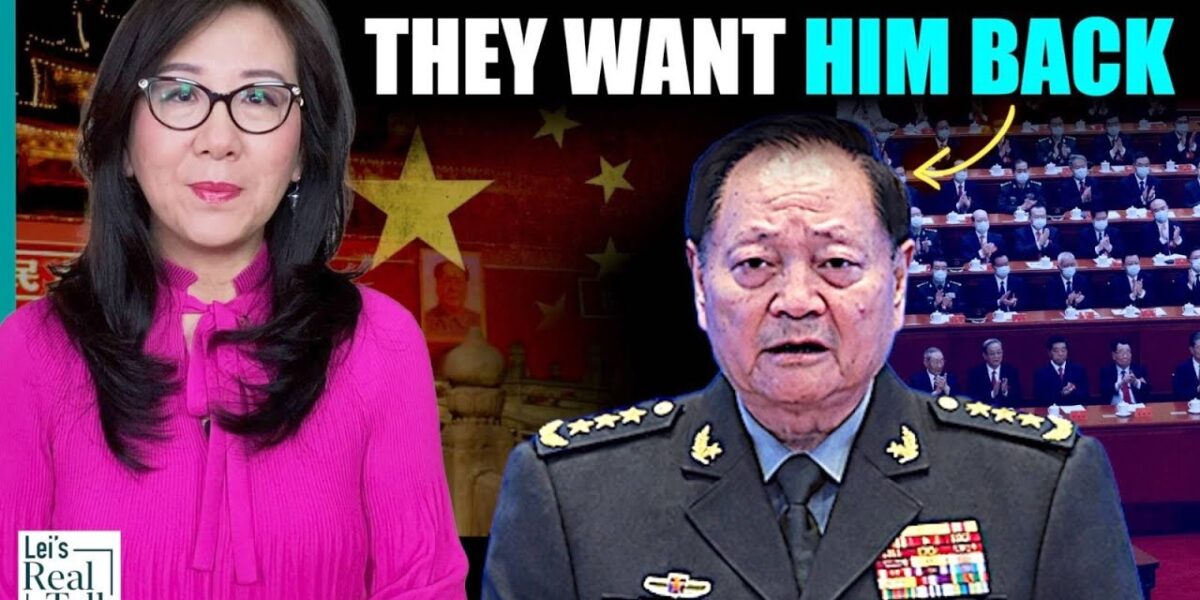
Xi Jinping’s Iron Grip on PLA Under Strain: A Deep Dive into China’s Brewing Power Struggle
In a rare and unprecedented display of internal dissent, the formidable authority of Chinese President Xi Jinping is reportedly facing significant challenges from within the People’s Liberation Army (PLA) and the broader Chinese Communist Party (CCP) establishment. Whispers of a power struggle, once confined to the shadows, are now manifesting in public-facing acts of defiance, most notably an open letter allegedly penned by the son of a detained high-ranking general, Zhang Youxia. This escalating internal tension, marked by allegations of illegal arrests, military standoffs, and the potential for fabricated confessions, signals a precarious moment for China’s leadership, raising questions about the stability of the world’s second-largest economy and its military.
The situation, unfolding against the backdrop of the Lunar New Year, has ignited a firestorm of speculation and concern, revealing deep fissures within the CCP’s elite circles. While official channels remain tight-lipped, a combination of circulating documents, insider leaks, and expert analysis paints a picture of a leader whose once unshakeable control is now being openly contested.
The Whispers of Discontent: “Remove Xi” and the Lunar New Year Omen
The first significant crack in the façade of Party unity emerged through a subtle yet potent piece of wordplay. As China prepared for the Lunar New Year, a traditional time for family reunions and celebration, a phrase began circulating within certain circles of the PLA: “除夕” (chúxī), meaning New Year’s Eve dinner. However, Chinese netizens, renowned for their linguistic ingenuity in navigating censorship, seized upon its phonetic similarity to “除习” (chúxí), meaning “remove Xi.”
This seemingly innocuous linguistic coincidence has taken on a politically charged meaning, transforming a cultural tradition into a veiled call for leadership change. The full phrase circulating is even more direct: “On New Year’s Eve, remove Xi, and the world will be blessed.” This sentiment, far from being a mere joke, is interpreted as a clear political signal, indicative of a mood no longer calm within the Party and military system. It suggests that the jokes have ceased to be humorous and have instead become potent expressions of deep-seated dissatisfaction, hinting at a loss of faith in Xi Jinping’s leadership among significant factions.
The Lunar New Year has always held immense cultural and social significance in China, representing unity, family, and a fresh start. The deliberate co-option of this auspicious period for political messaging underscores the gravity of the internal discontent. It reflects a growing boldness among those who oppose Xi Jinping, daring to express their dissent through coded language that is both universally understood within Chinese culture and difficult for censors to entirely suppress without appearing to stifle traditional celebrations.
An Unprecedented Challenge: The Open Letter from General Zhang Youxia’s Son
The most direct and audacious challenge to Xi Jinping’s authority has come in the form of an open letter, allegedly written by Zhang Jing, the son of General Zhang Youxia. General Zhang Youxia, a highly influential figure and a former Vice Chairman of the Central Military Commission (CMC), is believed to have been detained by authorities. The letter, which has reportedly circulated within Beijing’s “red princeling networks,” carries significant weight, signaling that it is not a random act but a coordinated move by powerful factions.
The letter opens with a carefully worded statement, emphasizing its basis in the son’s understanding of his father, as well as observations from relatives and close friends. It declares an intent to “clear up misunderstandings and call for rational handling in order to safeguard the stability of the country and the military.” This preamble sets a tone of measured concern, yet the subsequent nine points deliver a series of direct refutations and accusations against the current leadership.
The letter systematically addresses and denies all charges leveled against General Zhang Youxia:
- Refutation of Political Wavering: It firmly refutes a PLA Daily editorial that accused Zhang of wavering in his political stance and betraying party beliefs.
- Denial of State Secrets Leakage: It vehemently denies charges that the general leaked state secrets or betrayed the country, dismissing such accusations with the proverb, “If you want to frame someone, you can always find an excuse.”
- Rejection of Corruption Allegations: The letter states that Zhang’s income was solely derived from his regular salary and benefits, with no illicit gains, bribes, or gifts.
- Upholding CMC Chairman’s Authority: It denies claims that Zhang undermined the system of the CMC chairman being in charge or opposed the top commander (an implicit reference to Xi Jinping). It asserts that Zhang “strictly follows discipline,” has “no personal ambitions,” and has “never opposed the top commander in thought or action,” always upholding the authority of the top leadership in all his decisions.
Beyond these denials, the letter ventures into far more sensitive territory, directly pointing fingers at those allegedly responsible for Zhang’s predicament. It accuses Xi Jinping’s former military chief of staff of stirring up trouble behind the scenes and misleading the top leadership into making wrong decisions. This tactic, while avoiding direct accusation of Xi, effectively places the blame squarely on his inner circle, suggesting he is either misinformed or misguided by loyalists.
Crucially, the letter details the circumstances of Zhang Youxia’s detention. It states that on January 20th, General Zhang attended a seminar at the Central Party School and was detained by special forces from the Ministry of Public Security (MPS) upon arrival. He has since been held at an MPS interrogation facility. This revelation is central to the letter’s argument regarding the illegality of the arrest.
The letter also highlights the widespread concern and support for General Zhang within the military, noting that many colleagues and subordinates contacted the family to express their respect and solidarity. It warns that if the authorities fail to handle the situation rationally, “there could be serious consequences,” a thinly veiled threat of unpredictable military reaction, signaling Zhang’s strong backing within the PLA and the potential for instability if the situation escalates.
The most critical aspect of the letter is its repeated emphasis on the illegality and procedural violations of Zhang’s arrest. It argues that the MPS has no authority to arrest a top military general of Zhang’s rank, who holds a Politburo seat. Such a high-profile case, it contends, should have first undergone Politburo discussion, National People’s Congress review, and then investigation by military discipline authorities. A direct police arrest, the letter asserts, is not only a breach of procedure but also risks dangerous chain reactions, calling it “an absurd joke that no one can accept.” The letter concludes with a direct demand: the immediate release of General Zhang Youxia and General Liu Zhenli, another general allegedly detained alongside Zhang, insisting on basic due process and legal frameworks for any investigation.
Analysis: A Calculated Gambit Against Xi Jinping’s Authority
The open letter, regardless of its precise authorship, is a masterclass in political messaging. Its writing is described as “airtight,” perfectly balancing legal arguments with emotional appeals. Expert analysis suggests it serves multiple strategic objectives:
- Legal and Moral Offensive: By focusing on the illegality of the arrest, the letter immediately places Xi Jinping on the defensive, challenging his actions on both legal and moral grounds. It underscores a fundamental tenet of rule of law, which the CCP ostensibly upholds, highlighting the glaring deviation in this case.
- Proxy Blame and Core Conflict: While avoiding direct criticism of Xi Jinping, the letter shifts blame to his chief of staff or former aid, framing the issue as a conflict between adherence to established rules and Xi’s perceived rule-breaking. This tactic allows the anti-Xi faction to challenge his methods without directly attacking the Party Chairman, a move that would be far riskier.
- Signaling Military Dissent: The letter sends an unequivocal message that there is intense reaction and widespread rejection of the accusations within the military. It implies that morale is unstable and, more boldly, hints that the PLA’s traditional loyalty—”the gun obeys the Party”—may no longer fully apply under Xi’s command. This is a direct challenge to Xi’s paramount identity as Chairman of the CMC.
- Public Demand for Release: The son’s public demand for his father’s release is an unprecedented act of defiance. It transforms the private detention into a public political objective, signaling that the forces behind the letter seek not just justice for Zhang but a political victory—his return as a symbol of their leverage.
The question of whether Zhang Jing personally penned the letter is secondary to its significance. Most analysts believe that even if he did, he did not act alone. Such a confrontational demand in today’s China, against the backdrop of Xi Jinping’s stringent control, would require very strong backing. The letter’s calm, firm, and controlled tone, arguing from a position of law and political norms rather than humble supplication, suggests it is a public negotiation between parties who believe they possess significant leverage. If the son’s name is indeed attached, it implies confidence that the move would not backfire, indicating that the forces behind him believe they hold the upper hand in this round of the power struggle.
Ultimately, the letter is seen as a reflection of the stance of the Zhang and Liu families, their extensive networks, and a substantial portion of the military establishment. Its circulation, both within high-level princeling circles in Beijing and among overseas influencers, lends it credibility and suggests that many within these powerful groups not only believe its message but also desire its spread, thereby escalating pressure on Xi Jinping.
Behind Closed Doors: The General’s Vanishing Act and the Threat of Fabricated Confession
Following the letter’s emergence, further details have leaked out, painting a grim picture of General Zhang Youxia’s situation. According to these leaks, the Zhang family has received no information about the general since his detention on January 20th. Initial hopes for a routine internal review and quick resolution have evaporated as days turned into weeks. Family members have reportedly made multiple attempts to visit Zhang at the MPS interrogation facility but have been consistently turned away by guards, with no explanation or updates.
Zhang Jing, the son, reportedly expressed profound distress, stating, “There’s been no information at all. It’s like my father just vanished. Our whole family sits by the phone every day waiting for news, but nothing. My mother can’t sleep at night. She’s cried her eyes out.” This account highlights the emotional toll of the situation on the family and humanizes the high-stakes political drama.
More alarmingly, a rumor is reportedly spreading widely within the military that authorities intend to force General Zhang Youxia to record a confession video. This video, if obtained, would then be broadcast across the PLA and on state television, ostensibly to “stabilize military morale and public opinion.” The alleged goal is to compel Zhang to admit to crimes he did not commit, using him as a cautionary example to intimidate others and lend a veneer of fairness to the investigation. However, General Zhang has reportedly flatly refused these attempts, described by his son as a man who would “rather break than bend,” having come from the battlefield and unwilling to bow to false charges.
The chilling possibility of an AI-fabricated confession video has also been raised. The son reportedly warned people not to believe any such video if it were to appear, asserting that his father would never compromise his reputation to save his life. This concern underscores the growing threat of deepfake technology in political coercion and information warfare, adding another layer of complexity and deception to the unfolding drama.
The PLA Divided: Standoffs, Hostages, and a Leaderless Command
The internal struggle extends beyond public letters and leaked information, manifesting in concrete actions within the military command structure. Sources indicate a severe disruption within the Central Military Commission (CMC), the highest decision-making body for the PLA, chaired by Xi Jinping.
One critical development involves Zhang Xiaoming, currently the only remaining member of the CMC. He is reportedly being effectively held hostage in Beijing by Cai Qi, the head of the Party’s General Office and Xi Jinping’s chief of staff for party affairs. Cai Qi’s alleged fear is that Zhang Xiaoming might leave Beijing and not return, which would further destabilize the CMC and escalate the crisis. This suggests a desperate attempt by Xi’s loyalists to maintain a semblance of control over the military’s top echelon.
Consequently, the CMC headquarters is now reportedly “leaderless.” While departments remain staffed, there is a pervasive uncertainty about decision-making, leading to a breakdown in the chain of command. Communication between the CMC and the various theater commands and service branches, while existing on paper, is no longer resulting in proper execution of orders. This operational paralysis at the military’s apex is a grave concern, especially for a country with ambitious military modernization goals and escalating regional tensions.
A stark illustration of this breakdown came during Xi Jinping’s Lunar New Year greetings to the troops. Unlike previous years where Xi personally visited frontline units, this year he used a video call. Notably, aside from Zhang Xiaoming and Defense Minister Dong Jun, no other senior generals appeared on the call, not even remotely. Insiders claim the highest-ranking officer on the receiving end was merely a colonel. This was not a mere oversight; it’s interpreted as a deliberate snub. When the order for video greetings came from the CMC, service branches and theater commands reportedly treated it as a mere formality, arranging low-level units to appear, assuming Xi might not even be on the call. Even if they had known, it’s unclear if senior commanders would have chosen to show up, signaling a profound lack of respect and obedience towards Xi Jinping’s authority.
Further exacerbating the military’s internal divisions are reports of direct standoffs. After General Zhang Youxia’s detention, the Beijing garrison reportedly took over the Central Military Commission headquarters (the PLA building) without resistance. However, when the same force attempted to seize the Western Hills Command Center, a strategically vital facility hardened to withstand nuclear strikes, they were met with resistance. The 82nd Army, under the command of the newly promoted General Han Senyan, who now heads the Central Theater Command, blocked the takeover. General Han is reportedly now regularly stationed at the Western Hills Command Center, forming a direct standoff with Xi Jinping’s camp. This move is said to be a protective measure for senior party leaders, including former President Hu Jintao, who have refused to leave Beijing and are now effectively sheltered by a brigade of the 82nd Army. The inability of Xi’s camp to seize this critical command center by force highlights the significant division within the PLA and the limits of his power.
Factional Fault Lines: Party Elders, Princelings, and the Quest for Balance
The unfolding drama is not merely a clash between Xi Jinping and a few disgruntled generals; it represents a deeper struggle between entrenched factions within the CCP. The transcript highlights two primary camps: the conservative camp and the reformist camp.
Zeng Qinghong and the Conservative Camp: Representing the Party’s conservative faction, Zeng Qinghong, a powerful former Politburo Standing Committee member, is reportedly negotiating with Xi Jinping’s camp. Zeng’s involvement is significant given his historical role; Xi Jinping’s ascent to power was largely due to Zeng’s recommendation, making him feel a personal responsibility to resolve the current crisis. His primary demand is the production of Generals Zhang Youxia and Liu Zhenli, alive or dead. This suggests that the conservative camp prioritizes accountability and the adherence to established norms, even if it means directly confronting the Party Chairman.
Liu Yuan, Deng Pufang, and the Reformist Camp: On the other side are princelings like Liu Yuan (son of former President Liu Shaoqi) and Deng Pufang (son of paramount leader Deng Xiaoping), who are leading the reformist forces. Liu Yuan has reportedly left Beijing and entered the headquarters of the 82nd Army, signaling preparations for a potential military showdown. He is seen as an interim military leader, reporting to a central coordination and decision-making body composed of party elders. His strategic positioning outside Beijing underscores the risks perceived by these factions within the capital.
Deng Pufang, chosen as the representative of the “red families” (descendants of revolutionary elders) in Beijing, is reportedly advocating for a more aggressive approach. There has long been tension between the Deng and Xi families, with many believing Deng Xiaoping would never have chosen Xi Jinping as a successor. Deng Pufang is said to believe that Xi’s camp has lost its rationality and that negotiation is merely a tactic to buy Xi time. He argues for moving troops into Beijing quickly to neutralize Xi and his loyalists in a decisive move, even at the risk of the Party’s collapse. This extreme view reflects the depth of animosity and the perceived existential threat posed by Xi’s actions.
However, the Party’s central decision-making and coordination body, which these factions rely on, has authorized negotiations with Xi’s camp, compelling Liu Yuan and Deng Pufang to wait. Moving heavily armed troops into Beijing is a monumental step, requiring collective approval, not just the decision of two princelings. While delay carries risks, the preferred approach remains to use military pressure to force Xi’s surrender, rather than initiating open bloodshed that would be difficult to control and could have catastrophic consequences for the Party and the country.
The Grim Reality: Alive or Dead, an Ultimatum Looms
The central deadlock revolves around the fate of Generals Zhang Youxia and Liu Zhenli. Xi Jinping’s camp insists they are involved in major corruption cases and must remain in isolated detention for investigation, refusing to produce them. The conservative camp, led by Zeng Qinghong, continues to hold out hope for their rescue, unwilling to give up. However, there is a growing fear among some, particularly within the reformist faction, that the two generals may already be dead.
The confirmation of their deaths would be a critical turning point. If Zhang and Liu are indeed deceased, the conservative camp would have no choice but to move towards open confrontation with Xi Jinping. Given that Xi cannot fully control all generals or military units, such a development could trigger unpredictable incidents at any moment. The consensus is that if the deaths are confirmed, Xi Jinping’s political end would be very close.
The internal pressure on Xi is mounting from multiple fronts. Reports indicate that retired senior officers from several group armies are preparing a joint letter demanding the generals’ release. There are even rumors of active-duty units discussing traveling to Beijing to petition, though this might be delayed due to the ongoing holiday period. Furthermore, a former CMC vice chairman reportedly confronted Xi Jinping directly at a recent reception, warning him that arresting Zhang and Liu was a “serious mistake” that shakes military morale.
In the most recent development, the anti-Xi camp has reportedly issued an ultimatum: Xi Jinping has three months to produce Generals Zhang Youxia and Liu Zhenli, alive or dead. This timeline is speculated to align with a potential visit by Donald Trump to Beijing, suggesting a desire to avoid internal turmoil during a sensitive diplomatic period. However, this three-month window is also fraught with risks, especially given Zhang Youxia’s age (reportedly 72 or 73) and the potential for severe interrogation conditions. Many fear that the generals may not survive such an ordeal, making the ultimatum a high-stakes gamble with uncertain outcomes.
Broader Implications: The Shaking Foundations of Chinese Power
The internal struggle within the CCP and PLA carries profound implications for China’s future and global stability. Xi Jinping’s decade-long anti-corruption campaign, which has been instrumental in consolidating his power by removing rivals and disloyal elements, now appears to be facing unprecedented pushback. The current crisis suggests that this campaign may have gone too far, alienating powerful factions and threatening the delicate balance of power that has historically maintained Party unity.
A divided military, with its chain of command compromised and regional units potentially disloyal, presents a significant risk to China’s domestic stability and its foreign policy ambitions. A leader whose authority is openly contested from within may struggle to project strength externally, potentially impacting China’s stance on Taiwan, its relations with the United States, and its role in regional conflicts. The specter of military infighting or a forced leadership change could trigger widespread instability, with economic and geopolitical ripple effects felt worldwide.
Moreover, the alleged use of AI to fabricate confession videos highlights the dangerous intersection of advanced technology and political repression, signaling a new era of information warfare that could further erode trust and truth within authoritarian systems. The demands for due process and adherence to legal frameworks, even from within the Party, underscore a fundamental tension between Xi Jinping’s personalized rule and the institutional norms that some factions still seek to uphold.
Conclusion: A Precarious Future for China’s Leadership
The battle to free General Zhang Youxia is more than just a legal or personal dispute; it is a microcosm of a larger, high-stakes power struggle challenging Xi Jinping’s dominance over the CCP and the PLA. The open letter, the military standoffs, the hostage situations, and the looming ultimatum collectively paint a picture of a Chinese leadership in turmoil. As the Lunar New Year festivities conclude, the political signals from Beijing and the military indicate that the mood is anything but calm. The coming months will be critical in determining whether Xi Jinping can reassert his unchallengeable authority or if the mounting pressure from party elders, princelings, and a divided military will fundamentally reshape the future of China’s leadership and its trajectory on the global stage.
Source: The Battle to Free Zhang Youxia: Xi’s Grip on the PLA Under Strain (YouTube)

Related Articles
Xi’s Reign of Terror: Are CCP Officials Really Dying?
Rumors swirl about Xi Jinping orchestrating deadly purges of CCP officials, with unverified reports of executions and suicides surfacing. A critical analysis reveals the challenges of discerning truth from fiction in China's opaque political system.
China’s Info War: Rumors, Ads Hint at Deep Political Strife
Unusual rumors of executions and a provocative game advertisement hint at a brewing information war within China. State media's own subtly critical reports further suggest deep political undercurrents and potential dissent.
Xi’s Military Purge Sparks Questions of Paranoia and Weakness
President Xi Jinping's extensive purge of top military commanders has triggered debates about his paranoia and the PLA's readiness. Analysts question if these dismissals signal a consolidation of power or reveal deep-seated corruption and incompetence within China's armed forces, with significant implications for regional stability, particularly concerning Taiwan.