Xi Jinping Under Siege: Internal Cracks and External Pressures Mount Against Chinese Leader
Chinese President Xi Jinping faces unprecedented internal and external pressures, from aggressive CIA recruitment videos targeting his military to his own cautious movements and the controversial return of a politically charged singer. These events, coupled with rumored instability in his security apparatus, signal a leader grappling with deep distrust and potentially eroding control, suggesting a system under immense strain.

Xi Jinping Under Siege: Internal Cracks and External Pressures Mount Against Chinese Leader
In an unprecedented display of vulnerability, Chinese President Xi Jinping appears to be facing a dual onslaught of internal dissent and aggressive external pressure. Recent actions by the Central Intelligence Agency (CIA) targeting Chinese citizens and military personnel, coupled with Xi’s own cautious movements and the controversial reappearance of a politically charged figure, paint a picture of a leader whose grip on power may be far less secure than perceived. This confluence of events suggests a system under immense strain, where loyalty is questioned, and the very foundations of the authoritarian regime are being tested.
The situation has been described by observers as a ‘squeeze’ on Xi Jinping, with cracks appearing both within the tightly controlled military and political apparatus, and from foreign intelligence agencies openly challenging the regime’s narrative. The implications for China’s stability and the future trajectory of its leadership are profound, signaling a potentially tumultuous period ahead for the world’s most populous nation.
The External Onslaught: CIA’s Digital Recruitment Offensive
For decades, the covert world of intelligence gathering has operated in the shadows. However, recent moves by the Central Intelligence Agency have shattered this traditional approach, launching an overt, multi-pronged recruitment campaign directly targeting individuals within mainland China. This bold strategy, leveraging social media and direct messaging, represents a significant escalation in information warfare against the Chinese Communist Party (CCP) and a direct challenge to its control over information and public sentiment.
First Wave: Targeting the Bureaucracy and Grassroots
The initial phase of this digital offensive began approximately nine months ago when the CIA released two Chinese-language recruitment videos. These were not generic appeals but carefully crafted messages designed to resonate with specific segments of Chinese society. One video was aimed at high-ranking officials, appealing to their potential disillusionment or desire for change, while the other targeted grassroots cadres, perhaps tapping into local grievances or a sense of injustice. The impact was immediate and striking: in less than a year, these two videos collectively garnered over 45 million views. This massive reach, especially within China’s heavily censored internet, underscored the deep curiosity or potential receptiveness among the targeted audience.
Second Wave: The VPN Playbook and a Direct Call for Truth
The CIA’s strategy evolved further about four weeks ago with the release of another Mandarin video. This installment was even more direct, offering step-by-step instructions on how to securely contact the agency using virtual private networks (VPNs) – a technology routinely blocked and surveilled by Chinese authorities. The message accompanying this video was blunt and uncompromising: "The CIA wants to know the truth about China, and we’re looking for trustworthy people who know the truth and are willing to share it. The information you hold may be more valuable than you realize."
The language was a clear invitation to potential informants, highlighting the perceived value of their insights and implicitly promising protection or reward. The response was astonishing: in just one month, this single video surpassed 63 million views. Given that the videos are in Chinese, the vast majority of these viewers are presumed to be from mainland China, indicating a significant penetration into the country’s digital ecosystem and a potential hunger for alternative narratives or avenues of expression.
Third Wave: Direct Appeal to the Military – "The Fate of the World is in Your Hands"
The most recent and perhaps most provocative development occurred just today, following a period of intense internal political drama within China, including the high-profile downfall of senior military figures like Zhang Youxia. The CIA dropped yet another Chinese-language video, this time directly targeting Chinese military personnel. The description of the video openly called on people inside China to contact the CIA, explicitly stating that the agency respects and protects those who cooperate.
The video’s message was meticulously crafted to exploit perceived grievances and ideological rifts within the People’s Liberation Army (PLA). It posed a series of pointed questions: "Do you have information about China’s top leadership? Are you a military officer or do you work with the military? Do you work intelligence, diplomacy, and the economy, science, or advanced technology? Or interact with people in those fields?" This comprehensive list effectively covers almost anyone with access to sensitive information, from high-ranking generals to engineers in defense industries.
While the video’s voiceover did not explicitly name Zhang Youxia, it made an unmistakable reference to "the latest development in China," implying the recent purges and power struggles. The narrative was a scathing indictment of the current leadership, stating, "The leaders were never protecting the people, only their private interests. Their power is built on countless lies. Now those walls of lies are beginning to collapse, and what’s left for us is to clean up the wreckage. Anyone with real leadership is seen as a threat, hunted down and crushed without mercy."
It then appealed directly to the conscience of soldiers: "I can’t let these madmen shape the world my daughter will grow up in. History teaches us that the greatest victory is to win without fighting. But those who have never seen war are eager to throw us onto the battlefield. I’m a soldier. My duty is to protect the people and defend my country. Choosing this path is how I fight for my family and for my nation." The video concluded with a striking and ominous declaration from the CIA: "The fate of the world is in your hands."
Implications of the Digital Offensive
The combined viewership of these three videos, exceeding 100 million, suggests an unprecedented level of engagement within China. Experts note that the CIA’s Chinese videos are becoming "better and better, and more direct." The fact that a foreign intelligence agency is openly soliciting Chinese soldiers in their own language, and that tens of millions are watching, signals a profound shift. This public appeal implies that "something inside the system is breaking," putting "tremendous pressure on the man who tries to control the Chinese military." It challenges the CCP’s narrative of national unity and leadership infallibility, potentially sowing seeds of doubt and distrust among a populace accustomed to tightly controlled information.
The Internal Cracks: Xi Jinping’s Precarious Grip
While the external pressure from the CIA is significant, the most revealing insights into Xi Jinping’s current predicament come from his own actions and the palpable sense of unease within the Chinese political and military establishment. A series of unusual behaviors and public appearances by Xi suggest a leader grappling with deep-seated distrust and a potentially eroding power base.
A Leader in Hiding? Xi’s Unprecedented Absence and Cautious Appearances
According to state media reports, after inspecting Guangdong Province on November 7-8, 2025 (note: transcript states 2025, but context implies late 2023/early 2024), Xi Jinping did not leave Beijing from November 9th until February 12th – a full three months. This prolonged absence from national tours is highly uncharacteristic. In previous years, particularly around the Western and Chinese New Year periods, Xi was known for his extensive travels across the country, frequently inspecting military units and projecting an image of an engaged and hands-on leader.
The stark deviation from this tradition leads many observers to a simple, yet alarming conclusion: "He doesn’t dare to leave because he isn’t in total control." This suggests a fear of leaving the perceived security of the capital, possibly due to concerns about loyalty or potential challenges to his authority while away.
Xi’s first public appearance after the reported downfall of Zhang Youxia came on February 6th, when he attended a Chinese New Year gala hosted by the Central Military Commission (CMC) for retired PLA officers in Beijing. Footage from the event revealed a cautious and tense atmosphere. Xi himself appeared guarded, and senior military figures around him seemed anything but relaxed. Notably, a high-ranking official, identified as "Jang Ming," was seen walking cautiously behind Xi, maintaining a noticeable distance and displaying a tense expression. Furthermore, many young people in uniform, believed to be Xi’s personal bodyguards, were present among the retired officers, indicating a heightened level of personal security.
Another significant detail was the seating arrangement: current Defense Minister Dong Jun, a relatively new appointee, was seated three rows behind Xi, clearly delineating a strict hierarchy and his subordinate position relative to other senior figures.
The Virtual Military Inspection: An Eerie Display of Isolation
Days later, on February 11th, Xi Jinping, still confined to Beijing, conducted his traditional New Year military inspection virtually from the PLA building. This was a profound departure from established protocol. Annually, the CMC Chairman personally travels to frontline units to offer holiday greetings and inspect readiness. This tradition had been consistently upheld by Xi from 2013 to 2022, with the sole exception of 2023 during the peak of nationwide COVID-19 outbreaks and lockdowns.
The CCTV footage of this virtual inspection was described as "bizarre" and "eerie." It showed a massive hall with only three tables. Xi sat at the main table, flanked by "Jang Ming" and Dong Jun at two side tables. The presence of Dong Jun, who is not a CMC member and had been seated three rows behind Xi just days prior, at the same level as "Jang Ming," was striking. It was interpreted as a deliberate attempt to create "visual balance," as "Jang Ming" would have appeared "very, very lonely" otherwise. The room’s extreme emptiness, with only a handful of individuals staring at a screen, conveyed a sense of isolation and a leadership disconnected from its vast military.
In his remarks, Xi conceded that the past year was "highly unusual." He praised the military for being "revolutionarily tempered through anti-corruption" and insisted that "grassroot troops were absolutely reliable and politically solid." However, observers noted the conspicuous absence of similar praise for higher-ranking officers, implying a continued lack of trust at the command level. This language, characteristic of ongoing purges, suggested that "the purge isn’t over yet. Anyone could be next."
The decision to conduct the inspection virtually, rather than face the troops, speaks volumes. "He’s afraid of his own military after arresting Zhang Youxia and Liu Jundong," one analysis concluded. This unprecedented level of dread, where the supreme commander hides within headquarters and inspects readiness through a screen, signifies a collapse in morale and trust within the PLA. "A military of millions now looks like it has only a bare commander," a situation unprecedented since the CCP established its army and regime. This internal turmoil, it is suggested, is undoubtedly amplified by the CIA’s ongoing digital recruitment efforts.
The Imperial Guard and the Enigmatic Jujin
The question of who truly guards Xi Jinping, particularly within Beijing, becomes paramount if he no longer fully trusts the broader PLA. A curious detail emerged from CCTV’s news program on February 10th: a mysterious man in uniform was seen sitting near Xi during a briefing with Beijing’s municipal party and government leadership.
This individual was identified as Jujin, the Political Commissar of the Beijing Garrison. The Beijing Garrison is no ordinary military unit; it functions as the "Imperial Guard," responsible for protecting Zhongnanhai (the CCP’s central leadership compound) and other core political sites. In times of crisis, it would be responsible for the evacuation of top leadership. Whoever controls the Beijing Garrison effectively controls half of the capital’s security, making its leadership a critical determinant of power within the CCP.
Jujin himself is an almost spectral figure in Chinese politics, with a remarkably sparse public record. Born in Hunan in the 1970s, his official disclosures are minimal. He first appeared publicly in 2019 as the political commissar of an air force unit in Yingtan, promoted to major general in December 2019, and then transferred to Urumqi Air Base in Xinjiang as political commissar in January 2020. He then vanished from public view for over four years, only to reappear in June 2024 (note: transcript states 2024, but context implies late 2023/early 2024) and be parachuted directly into Beijing as the Political Commissar of the Beijing Garrison.
The timing of Jujin’s sudden reappearance and promotion is highly significant. It coincided with a period when Xi Jinping’s grip on the PLA reportedly began to weaken in the spring of 2024. This weakening was exacerbated by clashes with figures like Zhang Youxia over the controversial role of Xi’s wife, Peng Liyuan, in military affairs (a circulating picture showed her in uniform inspecting military units, allegedly vetting promotions). By July 2024, Xi was rumored to be seriously ill, and his power had seemingly slipped further. Jujin’s arrival in Beijing was precisely "in the middle of that turbulence."
Adding to his political weight, Jujin also holds a uniformed standing member position on the Beijing Party Committee. His political affiliation, however, remains a subject of intense speculation among China watchers. Some point to his extensive years in Yingtan and Sichuan, regions historically associated with the military networks of former leaders Jiang Zemin and Hu Jintao. This has led to speculation that Jujin’s loyalties might align with these older factions, rather than being solely dedicated to Xi Jinping. If true, it means Xi’s personal security now depends on individuals whose political loyalties are, at best, unclear.
The ‘Seductress’ Returns: A Political Statement on Stage
In the CCP system, power is not merely enforced by military might; it is also meticulously managed through public visibility – who is allowed to appear, who is erased, and who is brought back into the spotlight. A recent event, seemingly an entertainment story, has sent powerful political signals, further illustrating the fragility of Xi’s control.
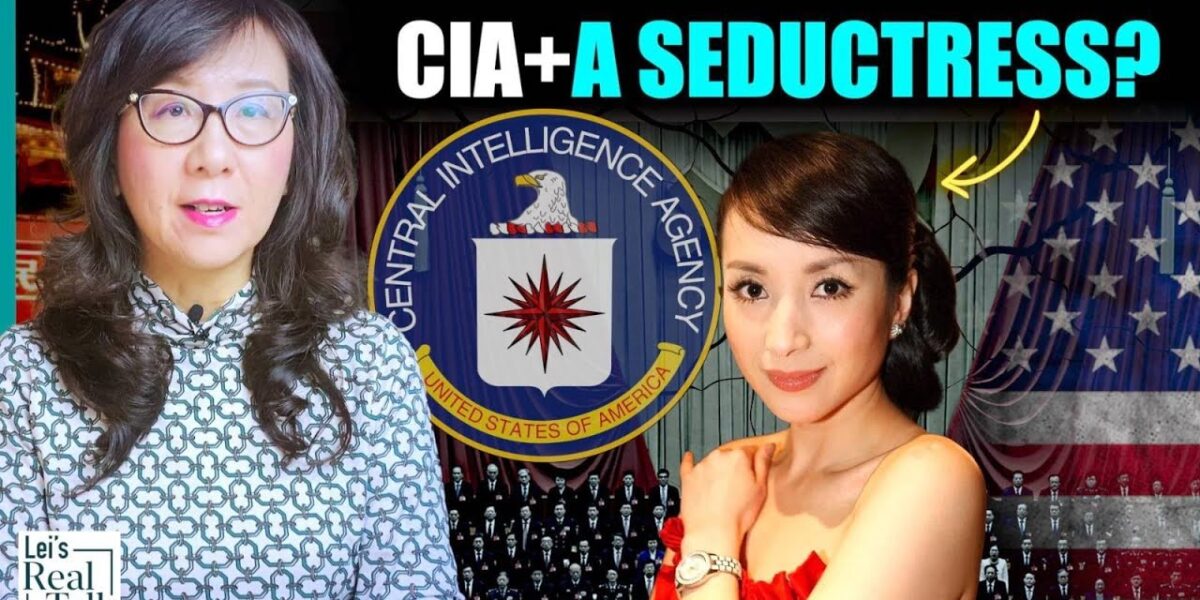
The individual in question is Tan Jing, once dubbed "China’s most famous military seductress." She was notoriously linked to several of Xi Jinping’s most formidable political enemies, including Bo Xilai and Zhou Yongkang, who were implicated in a coup plot against Xi during his early years as CCP leader. Tan Jing was rumored to have close personal ties with individuals involved in the coup and was even suggested to have acted as a go-between. Her case was never just about illicit affairs; it was deeply political, with whispers that she "took down more generals in bedrooms than many did on the battlefield."
After being secretly sentenced to seven years in prison for economic crimes (serving under an alias), Tan Jing was released in 2016. Her whereabouts since then have been largely unknown, adding to her politically radioactive status, especially given her long-standing rivalry with Xi’s wife, Peng Liyuan, both hailing from the same folk singing lineage and competing for top honors. Street rumors suggested Peng Liyuan played a role in Tan Jing’s downfall, viewing her as both a personal and public enemy.
Against this backdrop, Tan Jing made a high-profile comeback on a CCTV New Year gala. While not the main New Year’s Eve show, it was produced by the CCTV network and broadcast on official platforms with substantial reach and strict political vetting. Her reappearance was far from subtle: her name was placed first on the performer list, she sang three songs by herself, receiving headliner treatment, and her picture prominently featured on the event poster. Stage photos leaked online showed her standing dead center in the lineup, dressed distinctively from others – a clear sign that this was no accident.
Under normal CCP rules, someone with Tan Jing’s background – criminal record, links to a coup, and a politically toxic reputation – should never be allowed on a core party media platform, let alone as a headliner. Her return, immediately following the purges of Zhang Youxia and Liu Jundong, sends an undeniable political message. It suggests that "Xi Jinping does not have the game fully locked down." By pushing Tan Jing back onto official platforms, powerful factions within the system are effectively "sending a strong message: We can still embarrass you in public. You don’t control everything." This public display of defiance, utilizing the very propaganda channels Xi seeks to control, underscores the deep divisions and challenges to his authority.
The Rumor Mill: Wang Xiaohong and the Security Apparatus
Adding to the climate of uncertainty are persistent rumors concerning Wang Xiaohong, Xi Jinping’s Minister of Public Security. Wang is widely considered one of Xi’s most loyal enforcers, playing a key role in consolidating his power and cracking down on internal dissent. He is essentially Xi’s security chief, controlling the vast public security system, which includes the police, domestic security, and internal surveillance.
Recent rumors suggest that Wang Xiaohong may be stepping down or being forced into retirement, with "health reasons" (specifically cancer) cited as the official excuse. While rumors of his ill health have circulated for some time, the prospect of his imminent departure is new and highly significant. What lends credibility to this particular rumor is its source: the same individual who reportedly first broke the news of Zhang Youxia’s arrest, indicating a well-placed informant.
If Wang Xiaohong were indeed to step down, the implications for Xi Jinping would be catastrophic. Xi would lose control of the public security system, a critical pillar of his authoritarian rule. Finding another loyalist capable of filling such a pivotal role, especially one with Wang’s deep trust and enforcement capabilities, would be exceedingly difficult. This would leave Xi "effectively blind and disarmed on the internal security front," severely compromising his ability to detect and neutralize internal threats. While Chinese state media has attempted to dispel the rumor by showing Wang hosting a meeting, the persistence and source of the information indicate that this development warrants close attention.
Conclusion: A System Under Strain
The confluence of these internal and external pressures paints a grim picture for Xi Jinping. From the aggressive, overt recruitment efforts of the CIA challenging the loyalty of his military, to his own cautious movements, the eerie isolation of his virtual inspections, the strategic placement of potentially disloyal guards, and the brazen political statement made by a "rehabilitated" singer, the signs point to a leader under unprecedented siege.
The military, once Xi’s bedrock of power, is now rife with distrust and fear, fueled by relentless purges. The political landscape is fractured, with factions seemingly willing to challenge Xi’s control, even through symbolic gestures. Simultaneously, foreign intelligence agencies are exploiting these very cracks, actively seeking to amplify internal dissent. This combination of a "cracking house" and external forces "pulling at the cracks" is lethal to any authoritarian system, threatening to turn mere pressure into systemic failure.
Xi Jinping’s ability to absorb both these internal and external forces simultaneously is now in serious doubt. The coming months will be critical in determining whether he can reassert his unassailable authority or if these mounting pressures will indeed lead to a structural failure within the CCP, with profound consequences for China and the world.
Source: How Xi Is Being Squeezed From Inside and Out (YouTube)

Related Articles

CIA Predicts IRGC Hardliner to Succeed Iran’s Supreme Leader
A CIA assessment suggests that the next Supreme Leader of Iran is likely to be an IRGC hardliner, not a moderate figure. This projection highlights the growing influence of the Revolutionary Guard within Iran's political structure. Such a succession could impact domestic policies and international relations.
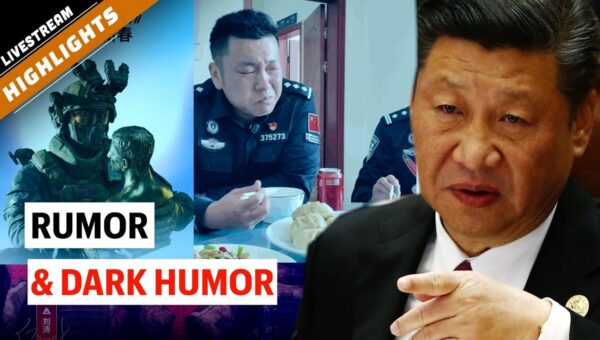
China’s Info War: Rumors, Ads Hint at Deep Political Strife
Unusual rumors of executions and a provocative game advertisement hint at a brewing information war within China. State media's own subtly critical reports further suggest deep political undercurrents and potential dissent.
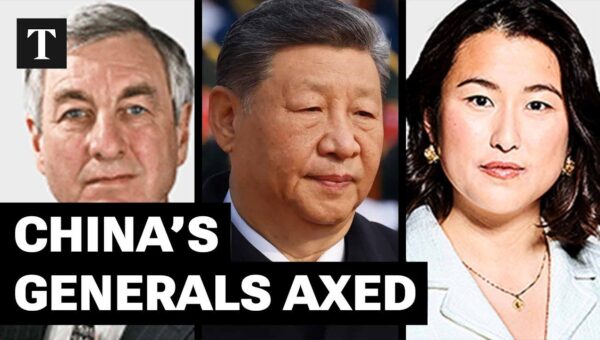
Xi’s Military Purge Sparks Questions of Paranoia and Weakness
President Xi Jinping's extensive purge of top military commanders has triggered debates about his paranoia and the PLA's readiness. Analysts question if these dismissals signal a consolidation of power or reveal deep-seated corruption and incompetence within China's armed forces, with significant implications for regional stability, particularly concerning Taiwan.