xAI Teases Recursive Self-Improvement Breakthrough
xAI, Elon Musk's AI venture, is reportedly nearing a breakthrough in recursive self-improvement, a capability where AI systems can autonomously enhance themselves. This potential advancement, hinted at by Musk and corroborated by former employees and industry trends, could dramatically accelerate AI development.

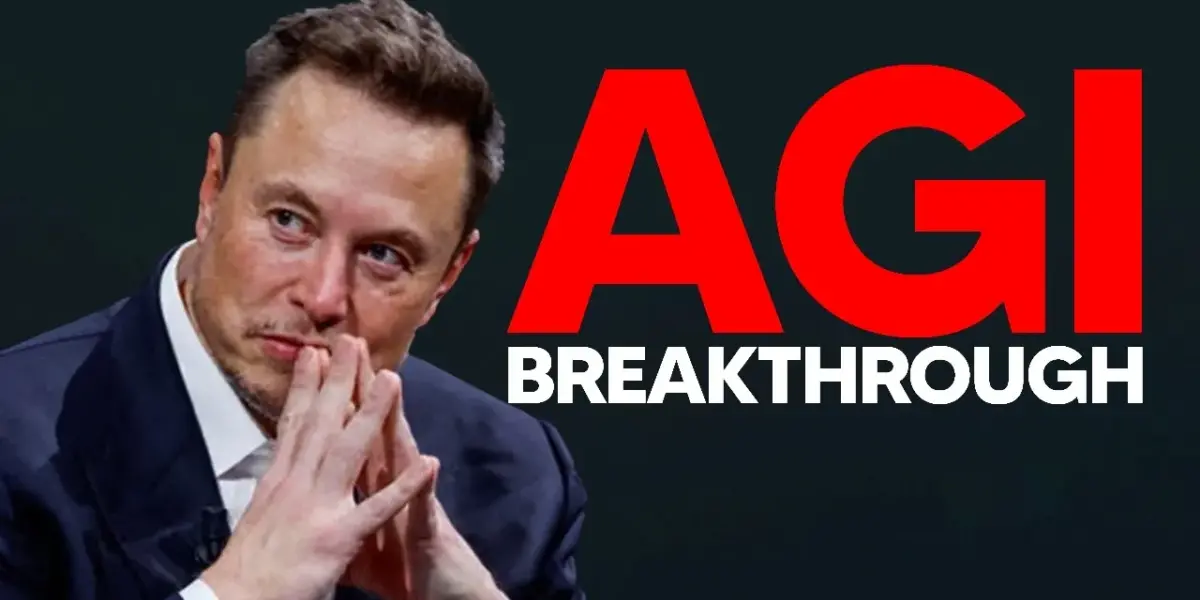
xAI Teases Recursive Self-Improvement Breakthrough
Elon Musk’s AI venture, xAI, is reportedly on the cusp of a significant breakthrough with its Grok AI, potentially enabling recursive self-improvement. While details remain scarce, a series of tweets and statements from current and former xAI employees suggest a major shift in AI development, moving towards systems that can autonomously enhance themselves.
Grok 4.2 and the Promise of Weekly Improvement
The latest iteration, Grok 4.2, has sparked considerable discussion. Elon Musk himself tweeted that the model’s foundations are designed for weekly improvement, hinting at strong recursive intelligence growth. While some initially dismissed this as hyperbole, closer examination of statements from key figures within the AI community lends credence to the claim.
Key Figures Signal Recursive Loops
A pivotal piece of information comes from Jimmy Bar, a co-founder of xAI, who stated upon his departure that “recursive self-improvement loops are likely to go live in the next 12 months.” This statement, from an individual with deep involvement in xAI’s development and a strong background in machine learning (co-author of the influential Atom Optimizer paper), suggests that the company is not merely iterating but building systems capable of self-enhancement.
Recursive self-improvement describes an AI system that can improve itself and then use that enhanced version to improve itself again, creating a compounding loop. In essence, an AI model could design and train a better version of itself, which would then be even more adept at creating the next, superior iteration. This cycle could potentially accelerate AI development beyond human capacity, automating the research and development process itself.
The Challenge of Continual Learning
Shant Patel, another former xAI employee, shed light on the technical hurdles being addressed. He described continual learning as a “context compression problem.” Current AI models are largely static; once trained, their parameters are fixed. They cannot learn from new experiences without costly retraining. Every interaction is essentially forgotten, with no accumulation of knowledge or growth.
The challenge lies in processing the constant, overwhelming stream of real-world data (video, audio, text, sensor data) and compressing it into a “dense, reusable learning representation” that the model can integrate into its core. This requires a unified learning representation, capable of handling multimodal data seamlessly, mirroring how humans learn from the integrated sensory input of the real world.
Evidence from Departing Talent and Competitors
The significance of xAI’s potential breakthrough is further underscored by the actions of its former employees. Roland, another departing xAI member, has launched a new company called Neuroline, focused on building the “missing infrastructure that enables AI native software to continuously self-improve.” His statement, “I got to see a clear path towards hill climbing any problem that can be defined in a measurable way… Learning shouldn’t stop at the model weights, but continue to improve every part of an AI system,” directly echoes the concept of recursive self-improvement.
This trend is not isolated to xAI. OpenAI’s CodeX model was reportedly instrumental in its own development, assisting with debugging, deployment, and evaluation. Sam Altman, CEO of OpenAI, has spoken about entering an “era of recursive self-improvement,” where AI models accelerate the creation of subsequent AI generations, leading to a dramatic increase in development velocity.
Industry-Wide Acceleration
The implications are profound. Peter Diamandis predicts that if recursive self-improvement predictions hold true, existing governance and safety frameworks will become rapidly obsolete. Gary Tan notes the stark contrast between cutting-edge advancements in recursive self-improvement and the skepticism many developers still hold regarding AI coding tools.
Dario Amodei, CEO of Anthropic, suggested that AI models like Claude could be performing the majority of software engineering tasks end-to-end within 6 to 12 months. This acceleration is also evident in academic research, with Google’s DeepMind exploring continual learning through “nested learning” to combat catastrophic forgetting, and Meta developing methods for sparse memory fine-tuning.
Grok 5: The Next Leap?
Musk has previously tweeted about “dynamic reinforcement learning” and stated that Grok 5, like smart humans, will “learn almost immediately.” This suggests a focus on rapid adaptation and continuous learning, potentially integrating real-time feedback loops. A blog post from Cursor highlighted their composer model, which updates its weights every 90 minutes based on real-world user feedback, representing a close approximation of real-world reinforcement learning.
The convergence of insights from xAI’s internal communications, the departure of key talent pursuing similar goals, and broader industry trends points towards a significant, albeit still developing, shift in AI capabilities. Whether Grok 5 will fully embody these principles remains to be seen, but the trajectory suggests a future where AI systems are not just tools, but active participants in their own evolution.
Why This Matters
The potential for AI systems to recursively self-improve could fundamentally alter the pace of technological advancement. If AI can autonomously enhance its own intelligence and capabilities, the rate of innovation in fields like medicine, climate science, and materials engineering could accelerate exponentially. This also raises critical questions about control, safety, and the societal impact of intelligence that surpasses human understanding and development speed. The race to achieve and manage this capability is now a central focus for leading AI organizations.
Source: Grok 5 Could Be xAI’s Biggest Breakthrough Yet – Nobody Noticed This (YouTube)

Related Articles


AI’s Black Box: Unpacking Anthropic’s Claude and Its Mysteries
Gideon Lewis-Kraus, a staff writer at The New Yorker, discussed the complexities of Anthropic's AI model, Claude, on WITHpod. The conversation highlighted the 'black box' nature of large language models and their implications for knowledge work, especially amidst tensions with the Pentagon.


Waymo Robotaxi Blocks Traffic During Austin Mass Shooting
A Waymo autonomous vehicle reportedly blocked emergency responders during a mass shooting in downtown Austin, Texas. The self-driving car's inaction during the chaotic incident has raised questions about the integration of AI technology with public safety.


Robotics Boom Looms: Billions in US Investment Signal New Era
The United States is poised for a significant robotics boom, fueled by billions in government investment and technological advancements. Experts predict a transformative impact on the economy, comparable to the AI revolution, with robots entering manufacturing, defense, and even daily life. Investors are exploring various avenues, from specialized ETFs to AI infrastructure, to capitalize on this emerging sector.