White House Defenses Crumble Amidst Conflicting Iran War Narratives
Conflicting narratives and evasive responses plague the Trump administration's defense of its actions in Iran. From aggressive rhetoric to accusations of 'fake news,' officials struggle to present a cohesive justification for the escalating conflict, raising serious questions about transparency and strategic planning.

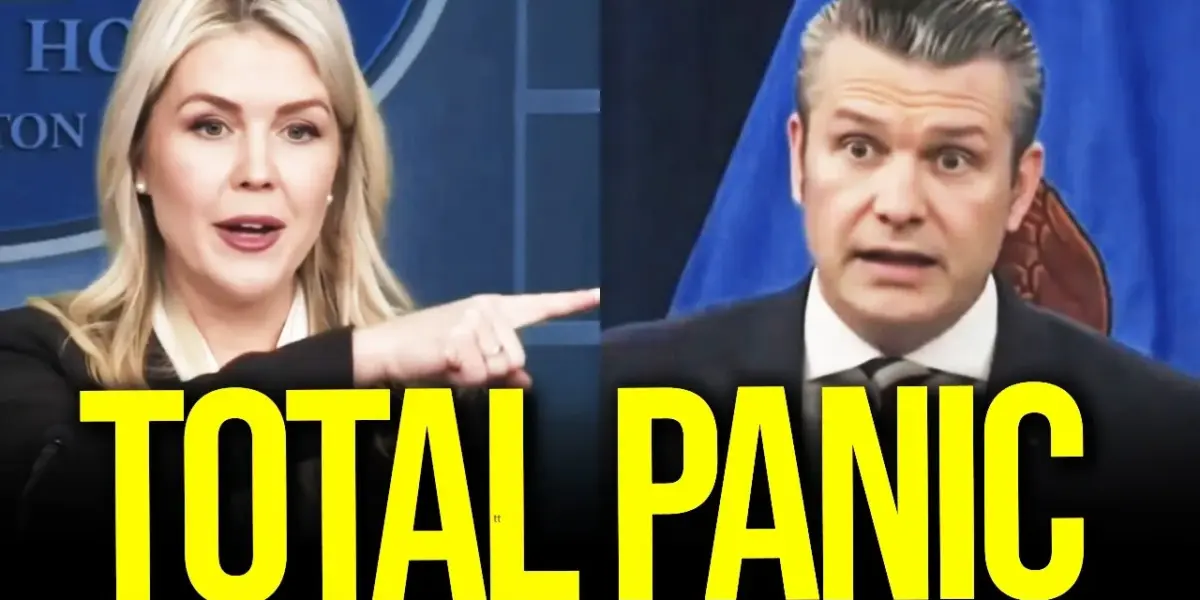
Conflicting Narratives Emerge as Administration Defends Iran Strikes
In the wake of escalating tensions and military actions in the Middle East, the Trump administration has faced significant scrutiny regarding its justification for strikes against Iran. For days, the White House struggled to present a cohesive explanation for the war, the casualties of US service members, and the substantial financial expenditure. This lack of clear communication has been exacerbated by officials contradicting each other, creating an atmosphere of confusion and distrust among the American public and the press.
Pete Hegseth’s Rhetoric: A ‘Psychopathic’ Display of Aggression?
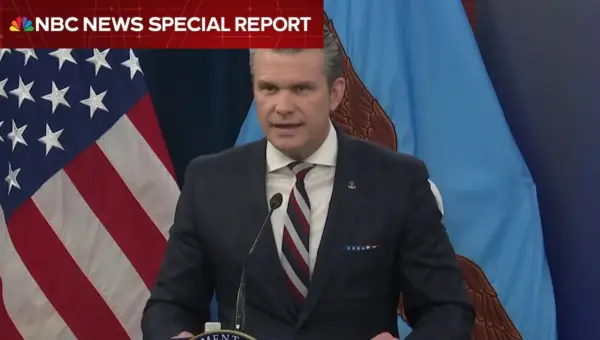
During this period of uncertainty, the pronouncements of officials like Pete Hegseth have drawn particular criticism. Hegseth, in a public address, employed highly aggressive and almost cinematic language to describe the military’s intentions. Phrases such as “ashes will fall,” “death and destruction from the sky all day long,” and “we’re playing for keeps” have been widely perceived as gratuitous and lacking in substantive policy explanation. Critics have labeled this rhetoric as “psychopathic” and likened it to a video game script, questioning whether it was intended as a briefing for the American people or a deranged message to adversaries. The disconnect between this aggressive posturing and the administration’s stated objectives has been stark.
Karine Jean-Pierre’s Defense: Battling ‘Fake News’ and Shifting Justifications
White House Press Secretary Karine Jean-Pierre has also found herself in a combative position, frequently clashing with reporters in the briefing room. Her defenses of the administration’s actions have been met with skepticism, particularly her tendency to dismiss critical reporting as “fake news.” When questioned about the president’s public support for the strikes, Jean-Pierre suggested that the American people are “smart enough to read past many of the fake news headlines.” However, she was pressed on what constitutes “fake news,” with reporters citing specific headlines detailing US troop deaths, civilian casualties in Iran, and negative economic impacts like stock market plunges and rising gas prices. These were presented not as fabrications, but as direct consequences of the administration’s decisions.
Contradictory Intelligence and Shifting Rationales
Adding to the confusion, the administration’s stated reasons for the strikes have shifted. Initially, the narrative centered on an “imminent threat” from Iran. This was followed by suggestions of regime change, only to revert to the threat narrative, this time involving intercontinental ballistic missiles (ICBMs). This latter justification was reportedly undermined by US intelligence, further eroding the credibility of the administration’s explanations. The lack of a consistent and verifiable rationale has fueled accusations that the administration is not being truthful with the public.
The Press as an Adversary: Hegseth’s Grievances
Pete Hegseth’s frustration with the press’s coverage has been palpable. He has argued that the media’s focus on the deaths of US service members and negative consequences makes President Trump look bad. He suggested that the press “only wants to make the president look bad” and that reporting on these tragic events is counterproductive. This perspective was directly challenged by journalists, who argued that reporting the facts, including casualties and economic fallout, is precisely the role of the press, especially when the administration’s actions have such profound human and economic costs.
Jean-Pierre’s Stance on Media Coverage
Karine Jean-Pierre, when confronted by CNN’s Kaitlan Collins about Hegseth’s comments, reiterated the administration’s position that the press should “accurately report on the success of Operation Epic Fury.” She implied that the press was being disingenuous by focusing on casualties rather than the perceived successes against the “rogue Iranian regime.” This led to accusations that the administration was seeking a propaganda arm rather than objective reporting. Jean-Pierre defended Secretary Hegseth’s care for service members, while simultaneously accusing CNN and other outlets of a consistent pattern of using administration statements to undermine the President.
The Shadow of Civilian Casualties: A School Strike Controversy
A particularly disturbing element of the conflict has been the reported strike on a girls’ school in southern Iran, which allegedly resulted in numerous civilian deaths, including children. A map released by the Pentagon, showcasing US strike zones, placed the school directly within a cluster of targeted areas. When questioned about this incident, officials, including Jean-Pierre, stated that the department was investigating and that the US does not target civilians, contrasting this with the “rogue Iranian regime.” However, the lack of a definitive answer and the visual evidence from the Pentagon’s own maps have raised serious questions about the administration’s claims and the accuracy of its targeting.
Regime Change Without a Plan: A Historical Echo
The core of the criticism leveled against the administration’s strategy in Iran revolves around the absence of a clear plan, particularly concerning regime change. Analysts have pointed to historical precedents, such as interventions in Libya and Iraq, where the removal of leaders without a robust follow-up plan led to greater instability and worse outcomes. The administration’s stated objectives, while not explicitly including regime change, have been interpreted as a de facto pursuit of it. When asked directly if achieving these objectives while the Islamic Republic still exists would be acceptable, Jean-Pierre dismissed the question as hypothetical, a response criticized as evasive and indicative of a lack of preparedness for potential outcomes.
Why This Matters
The events surrounding the Iran strikes highlight critical issues of governmental transparency, accountability, and the role of the press in a democracy. The administration’s struggle to provide a clear, consistent narrative about the rationale, execution, and consequences of military action erodes public trust. The aggressive rhetoric employed by some officials, coupled with dismissals of legitimate journalistic inquiry as “fake news,” creates a dangerous environment where critical information is suppressed. Furthermore, the historical parallels of interventions without clear post-conflict plans serve as a stark warning about the potential for unintended and detrimental consequences. The lack of a coherent strategy, particularly concerning regime change, raises profound questions about the long-term implications for regional stability and American foreign policy.
Implications, Trends, and Future Outlook
This situation underscores a broader trend of increasing obfuscation and adversarial relationships between government officials and the press, particularly during times of conflict. The ease with which justifications can be manufactured and disseminated, alongside sophisticated efforts to discredit critical reporting, presents a significant challenge to informed public discourse. The future outlook suggests a continued struggle for transparency, with administrations likely to employ similar tactics of narrative control and media deflection. The public’s ability to discern truth from propaganda will become increasingly vital, necessitating a media landscape that remains committed to rigorous, independent reporting, even in the face of official pressure.
Historical Context and Background
The current tensions with Iran are deeply rooted in decades of complex geopolitical history, including the 1953 coup that overthrew Prime Minister Mohammad Mosaddegh, the subsequent installation of the Shah, the 1979 revolution, and the ongoing ideological and strategic rivalry. Previous US administrations have grappled with Iran, employing various strategies ranging from containment to direct confrontation. The current administration’s approach, characterized by aggressive rhetoric and immediate military action, appears to depart from more measured, diplomatic strategies of the past, yet the underlying challenge of achieving stable outcomes in Iran remains a persistent and unresolved issue in American foreign policy.
Source: Karoline ACCIDENTALLY Screws PETE HEGSETH OVER (YouTube)

Related Articles
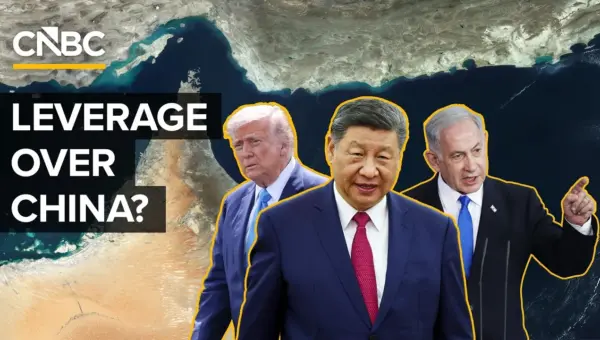
Iran Conflict Threatens 20% of Global Oil, China Faces Energy Squeeze
Escalating tensions around Iran and the Strait of Hormuz threaten 20% of global oil supply, with China facing a significant energy squeeze. Analysts warn of Brent crude exceeding $100 per barrel, impacting global economies and natural gas markets.
US War in Iran Escalates Amidst Domestic Economic Woes
As the war in Iran intensifies, the Trump administration faces mounting domestic economic challenges, including job losses and depleted retirement savings. Officials downplay the conflict's severity while critics highlight the human and financial costs.
US Claims Decisive Victory in Operation Epic Fury Against Iran
Defense Secretary Pete Hegseth announced a decisive victory in "Operation Epic Fury" against Iran, claiming overwhelming success in dominating airspace and crippling naval capabilities within days. The operation was reportedly triggered by intelligence following a call between President Trump and Israeli Prime Minister Netanyahu.