West’s Tech Edge vs. Russia’s Combat Grit
Western technological superiority in air power faces Russia's battle-hardened forces and mobilized economy. While the West excels in precision strikes, Russia leverages combat experience and industrial output. The article also explores the complex role of nuclear deterrence and the urgent need for Western military readiness.


West’s Tech Edge vs. Russia’s Combat Grit
The modern battlefield is increasingly defined by technology, offering a significant advantage to Western forces over Russia. This technological superiority allows for strikes from great distances, often before an adversary is even aware of the threat. This approach prioritizes precision and minimizes direct confrontation, a stark contrast to Russia’s willingness to engage in prolonged, high-casualty battles.
While Western air power, exemplified by aircraft like the F-35 and F-22, boasts advanced systems, Russia’s fighter jets, such as the SU-35, focus on ruggedness and reliability. Russian aircraft are built to withstand harsh conditions and are known for their durability, even if they lack the sophisticated electronic warfare and integrated sensor systems found in Western counterparts. This makes Russian planes dependable on the battlefield but less capable in complex, technology-driven aerial combat scenarios.
Strategic Implications
The West’s advantage lies in its ability to leverage advanced technology. This includes sophisticated radar systems, electronic warfare capabilities, and the integration of data from multiple sources. Aircraft like the F-35 can process vast amounts of information, providing pilots with a comprehensive understanding of the battlespace. This technological edge allows for more effective targeting and defense, enabling strikes from beyond the range of Russian defenses.
Russia’s strength, however, lies in its extensive combat experience and its economy operating on a war footing. The ongoing conflict in Ukraine has provided Russian forces with significant battlefield experience, leading them to adapt their tactics. Furthermore, Russia has mobilized its industrial base to produce weapons and equipment at a scale the West has yet to match. This means Russia can sustain prolonged engagements through sheer quantity and battlefield-hardened troops.
Historical Parallels
The discussion of combat experience echoes historical precedents, such as Germany’s early successes in World War II with Blitzkrieg tactics. Their experienced forces, facing less experienced opponents, achieved rapid victories. Similarly, Russia’s current combat experience, gained through years of conflict, allows them to adapt and press advantages, even when facing technologically superior adversaries.
The concept of a nation’s industrial capacity being crucial to winning wars is also a well-established principle. During World War II, the ability to produce vast quantities of tanks, aircraft, and munitions was a decisive factor. Russia’s current mobilization of its economy to support its war effort reflects this understanding, prioritizing the production of essential military supplies to sustain its forces.
The Nuclear Deterrent and Global Security
The conversation also touched upon the complex issue of nuclear weapons and their role in global security. The Budapest Memorandum, where Russia, the US, and the UK guaranteed Ukraine’s security in exchange for nuclear disarmament, serves as a cautionary tale. Russia’s subsequent invasion highlighted the perceived vulnerability of nations without nuclear deterrents.
This has led to a situation where countries like Iran and North Korea pursue nuclear capabilities, driven by a desire to guarantee their sovereignty. The speaker suggested that in a world where major powers can act unilaterally, nuclear weapons may seem like the only reliable guarantor of national security for smaller nations.
The use of nuclear weapons, however, remains a taboo. The historical context of their use in World War II, to save American lives during the invasion of Japan, was presented as a unique circumstance. The speaker emphasized that such a scenario is not comparable to current geopolitical tensions, particularly concerning Iran. The primary goal remains preventing proliferation, not using such weapons.
Putin’s rhetoric regarding nuclear weapons was framed as a tactic within the broader philosophy of nuclear deterrence. The Cold War era saw constant discussion and understanding of nuclear threats, where the ultimate deterrent was the certainty of mutually assured destruction. The West’s current perceived weakness in this area stems from a lack of recent engagement with such direct nuclear threats.
Readiness and Preparedness
A significant concern raised was the West’s decline in military readiness compared to the Cold War era. During the Cold War, forces were maintained at a high state of readiness, capable of rapid deployment. Today, challenges exist in maintaining consistent operational availability for key assets like aircraft carriers and submarines.
This lack of constant readiness is likened to a fire brigade that is only available a few days a week – ineffective when an emergency strikes. The transition back to a state of readiness requires a shift in military psychology and potentially significant financial investment. The article suggests that the luxury of low defense spending is over, and nations must prioritize preparedness to deter potential adversaries.
The effectiveness of deterrence hinges on an adversary believing that a nation would indeed use its weapons if necessary. This requires clear communication and a credible threat. Russia’s invasion of Ukraine and its subsequent actions have challenged existing international norms and institutions, such as the United Nations, which were designed to prevent large-scale conflicts.
Ultimately, the message is clear: the world has changed, and the era of assuming perpetual peace and relying solely on international law has ended. Nations must acknowledge the presence of global threats and invest in their defense capabilities. The best way to avoid war, the article concludes, is to be prepared for it, ensuring that any potential adversary understands the cost of aggression.
Source: 😱Russian Air Force will LOSE to the West! Putin’s propaganda FALLS APART@WorldatStake24 (YouTube)

Related Articles
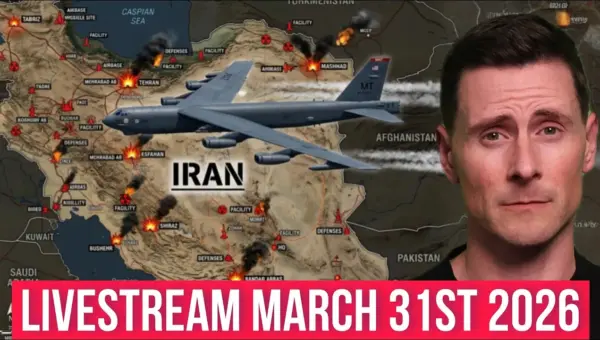
B-52s Strike Iran Ammo Depot in Operation Epic Fury
U.S. B-52 Stratofortress bombers recently flew overland missions into Iran, striking a key ammunition depot in Isfahan. The operation, dubbed 'Epic Fury,' utilized bunker-buster munitions to destroy hardened targets. This significant show of force demonstrates U.S. long-range strike capabilities.

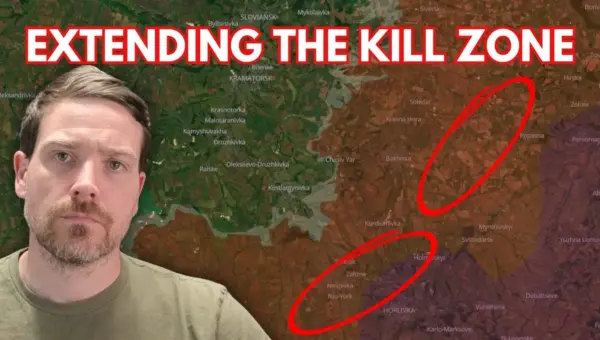
Ukraine’s New Drone Strikes Deep: A Game Changer?
Ukraine's new Blisskovka "Lightning" drone, a modified Russian design, offers extended range and heavy payloads at a lower cost. This innovation allows for deep strikes on enemy supply lines and fortifications, marking a significant development in drone warfare.

Ukraine Strikes Russian Air Defenses, Eyes Energy Ceasefire
Ukraine has struck Russian air defense systems and industrial targets with drones, while signaling a potential "energy ceasefire." The war's impact is widening, with a drone incident in Finland and France cracking down on Russia's "shadow fleet."