West’s “Naive Liberalism” Fuels Global Threats, Analyst Warns
Sunday Times columnist Matthew Syed warns that the West's "naive liberalism" has emboldened adversaries like Iran, Russia, and China. He argues for a "muscular liberalism" that prioritizes strength and realistic self-defense over passive tolerance to protect global stability.

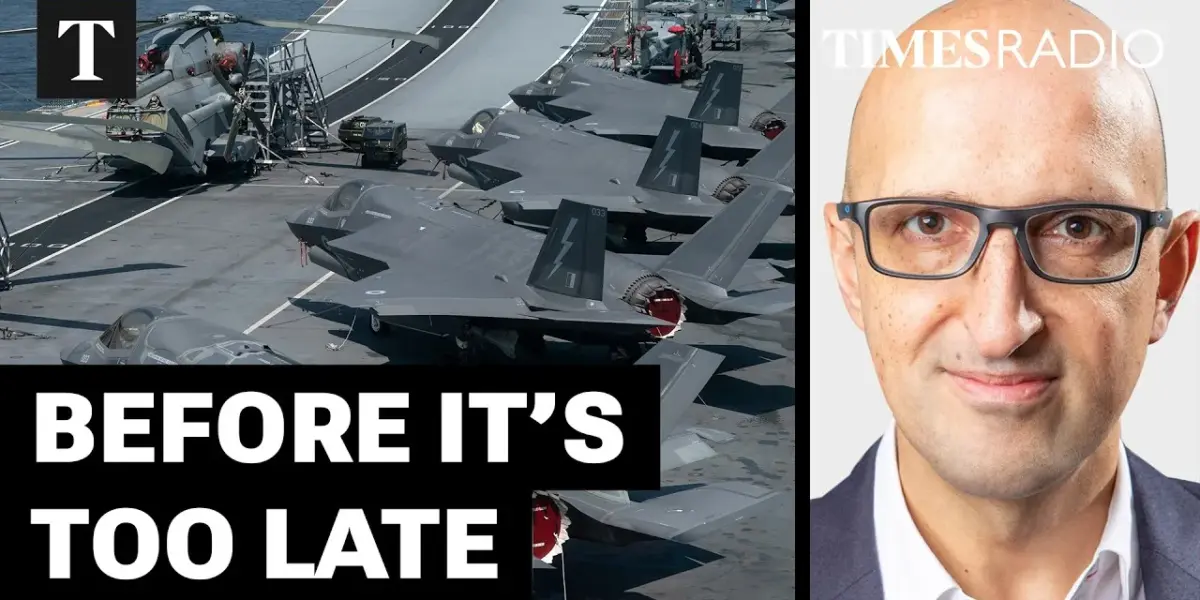
West’s “Naive Liberalism” Fuels Global Threats, Analyst Warns
In a stark assessment of contemporary global politics, Sunday Times columnist Matthew Syed argues that the West’s adherence to a “naive liberalism” has created significant vulnerabilities, emboldening adversaries and undermining international stability. Speaking on a recent broadcast, Syed contended that an overly permissive approach to tolerance and an outdated interpretation of self-defense have allowed malign actors like Iran, Russia, China, and North Korea to challenge the global rules-based order without sufficient consequence.
The Paradox of Tolerance and Its Real-World Consequences
Syed draws a parallel to the interwar period, referencing the philosopher Karl Popper and his seminal work, “The Open Society and Its Enemies.” Popper’s “paradox of tolerance” posits that unlimited tolerance, even for the intolerant, ultimately leads to the destruction of tolerance itself. “If we extend unlimited tolerance even to those who are intolerant then tolerance will be destroyed and the tolerant with it,” Syed explained, quoting Popper’s assertion that when enemies cease using persuasion and resort to force, “fists and pistols,” liberals must be prepared to counter them.
Applying this to contemporary issues, Syed suggested that Western nations have failed to adequately confront threats, particularly from Islamist groups. Domestically, this has manifested in what he described as an overly open-door policy, where a minority of incomers, while not representative of the whole, do not share Western values and can act as “fifth columnists.” Internationally, this naivety has been exploited by states like Iran.
Rethinking “Imminent Threat” in a New Geopolitical Landscape
A critical element of Syed’s argument centers on the concept of an “imminent threat” as it pertains to international law and the justification for military action. He highlighted how a narrow, legalistic interpretation, which often requires an attack to be actively underway (i.e., “when the missiles are flying”), effectively grants adversaries a free hand. This was exemplified in the West’s response to Iran’s actions, including its funding of proxy groups like Hezbollah and the Houthis, its nuclear program, and its alleged masterminding of the October 7th atrocities.
“The regime in Iran has gained the equivalent concept of international law, knowing that the West wouldn’t wish to attack it because it was never quite an imminent threat on a narrow interpretation of that aspect of the UN charter,” Syed stated. He contrasted this with leaders like Putin and Kim Jong-un, who he believes are deterred by the prospect of their own demise. However, he warned that Iranian leaders, driven by religious fundamentalism and a stated desire for martyrdom and annihilation, might not be similarly deterred.
“If we wait until the missiles are flying, you can see that there will never will be incinerated. It will be too late.”
Syed argued that the concept of imminent threat needs a more realistic, less legalistic application. Otherwise, it provides a significant advantage to those seeking to dismantle the existing international order.
The Perils of “Ultra-Progressivism” and the Call for “Muscular Liberalism”
Syed’s critique extends to what he terms “ultra-progressivism” or “hyperliberalism,” associated with leaders and administrations in the West over recent years. He suggested that this approach, characterized by open borders and an overemphasis on perceived inclusivity, has weakened Western societies and economies. While he expressed reservations about the populist “Trumpian corrective,” he believes there is a significant opportunity for a political reset.
He advocated for a form of “muscular liberalism”—a concept he again links to Karl Popper. This is not about abandoning liberal principles but strengthening them. Muscular liberalism, in Syed’s view, involves:
- Recognizing the existence of bad actors and those with malign intentions.
- Ensuring liberalism is strong enough to survive and thrive against its enemies.
- Incubating economic growth and being serious about technological advancements like AI.
- Acknowledging the potential risks associated with open borders and ensuring newcomers share fundamental values.
- Being prepared to defend liberal principles with force when necessary, moving beyond mere persuasion.
“In order for liberalism to survive against its enemies, it must be strong,” Syed asserted. He lamented that core liberal principles, such as the need for robust defense and clear boundaries, have been abandoned in favor of a more passive stance.
Identifying Red Lines and the Need for Strategic Planning
The challenge of identifying precisely when adversaries cross a “red line” and when confrontation becomes necessary is complex, Syed admitted. He acknowledged that there is no simple algorithm. However, he pointed to Iran’s extensive network of terrorist proxies, its enrichment of uranium, and its actions in the region as clear indicators of a growing threat, even if not a traditional, open warfare scenario.
“It was pretty clear that Iran posed an imminent threat,” he stated, while also expressing doubts about the strategy and planning of any potential military response, particularly concerning the aftermath. He cautioned against initiating conflict without a clear plan for what follows, a criticism that could be leveled at various international actors.
Looking Ahead: A Call for Western Resilience
Syed’s analysis serves as a critical examination of Western foreign policy and domestic social cohesion. The argument for “muscular liberalism” suggests a need for a recalibration, one that upholds democratic values while simultaneously possessing the strength and clarity to defend them against those who seek to undermine them. The coming months will likely see continued debate on how Western nations balance tolerance with security, and how they redefine their approach to threats in an increasingly complex and dangerous world.
Source: The West Can’t Wait For Crisis: Why We Need Muscular Liberalism | Matthew Syed (YouTube)

Related Articles

Trump’s Iran Attack: Legal or Illegal War? Experts Weigh In
Experts are questioning the legality of the US-led offensive in Iran, noting that true 'legal gold standard' wars, authorized by UN Security Council resolutions, are exceptionally rare. The conflict's objectives, potential for internal unrest in Iran, and the differing strategies between the US and Israel are under intense scrutiny as the situation develops.


Fox News Urges Tankers to Risk Lives, Sparking Outrage
Fox News host Brian Kilmeade's suggestion that oil tankers should sail through war zones to diminish threats has sparked outrage. Critics argue this encourages mariners to risk their lives for political gains, raising ethical and safety concerns.

Iran Conflict Backfires: Trump’s War Fuels Unrest, Profits
Donald Trump's approach to Iran is reportedly backfiring, fueling public unrest in Tehran and sparking accusations of family members seeking to profit from a new drone company. The conflict's economic impact is evident with disruptions to oil infrastructure, while political rhetoric focuses on internal divisions.