Voyager Probes Endure, Dyson Sphere Dreams Begin
Voyager probes continue their interstellar journey, while the concept of Dyson spheres evolves into a gradual, satellite-based energy harvesting strategy. The Extremely Large Telescope promises groundbreaking discoveries, and the challenges of lunar missions are being addressed through robotic precursors. Life aboard the ISS reveals the unromantic realities of maintaining a space habitat.

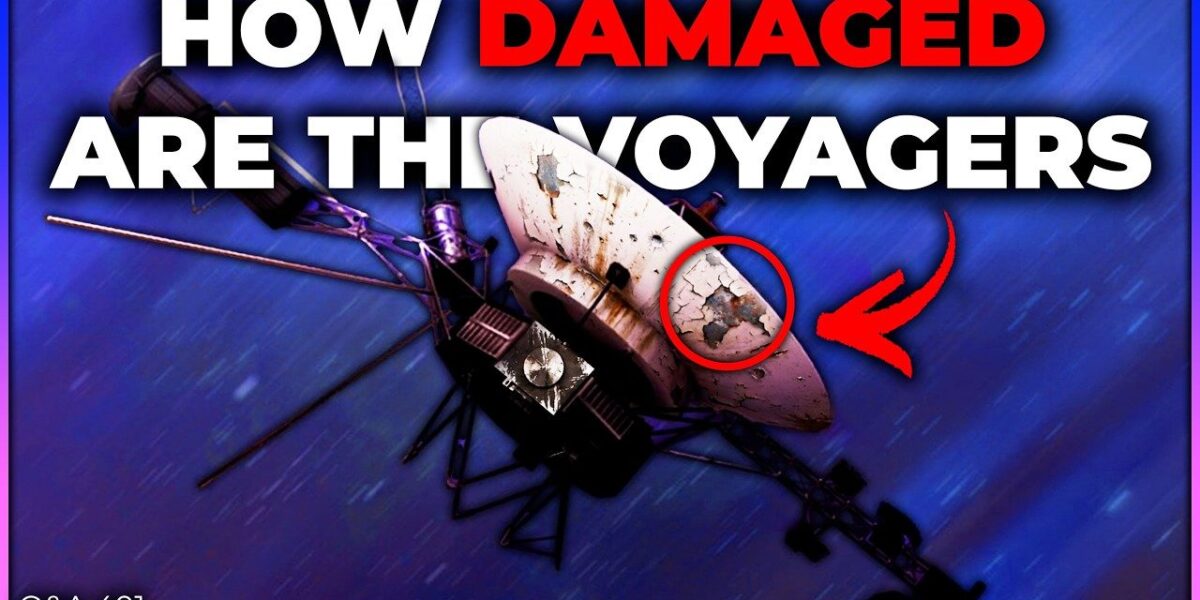
Voyager Probes Endure Decades of Space Travel
The twin Voyager spacecraft, launched in 1977, continue their historic journey into interstellar space, a testament to human engineering and resilience. While we cannot visually inspect their current state, scientists understand that decades of exposure to the harsh environment of space would inevitably lead to wear and tear. Spacecraft in lower Earth orbit, like the International Space Station and the now-retired Space Shuttle, show visible signs of micrometeoroid impacts and debris collisions, resulting in pitting and blemishes on their surfaces. Even the sophisticated James Webb Space Telescope has experienced such impacts. Given their 50-year voyage, the Voyagers have undoubtedly been subjected to countless small impacts and constant solar radiation, which would have likely bleached any external paint. However, the design and materials used are so robust that it’s estimated the golden records they carry could remain legible for a billion years. Their current state, if visible, would show signs of wear, but they remain functional, an extraordinary feat of longevity.
The Dawn of the Dyson Sphere: A Gradual Construction
The concept of a Dyson sphere, a hypothetical megastructure that would completely encompass a star to capture its energy, is often envisioned as a singular, monumental construction project. However, the reality of building such a structure, or at least the initial steps towards it, is far more gradual. The Parker Solar Probe, currently in its final orbit around the Sun, provides valuable data about the Sun’s environment. Upon the depletion of its propellant, the probe will be deliberately exposed to the Sun’s intense radiation to study the ablation of its instruments. This research will inform future spacecraft designed for extreme thermal environments. This proactive approach to understanding and utilizing solar energy aligns with a broader perspective on Dyson sphere construction. Rather than a sudden creation, the process is seen as an ongoing expansion of human activity in space. Every solar-powered satellite launched, regardless of its purpose—scientific research, communication, or future habitation—represents a step towards harvesting the Sun’s energy. Currently, humanity intercepts a minuscule fraction of the Sun’s total energy output. However, as more satellites are deployed, this proportion will increase incrementally over time. This expansion is not about a single, monolithic structure, but rather a distributed network of energy-capturing devices. The idea is that we are already building our Dyson sphere, one satellite at a time, a sustainable and incremental approach to harnessing stellar power.
Powering Space, Not Earth: A New Paradigm
The notion of a Dyson sphere often implies beaming vast amounts of energy back to Earth. However, a more pragmatic and environmentally conscious future may see these structures primarily powering activities within space itself. Sending raw data to sophisticated, energy-intensive processing facilities in orbit, which then return analyzed results to Earth, is one possibility. This approach avoids the energy loss and planetary warming associated with transmitting power across the vast distance from space to our planet. The warming effect of trapped greenhouse gases on Earth is a significant concern, and adding the heat from extraterrestrial power transmission would exacerbate this problem. Therefore, future space-based energy infrastructure is likely to serve in-space needs, potentially enabling inter-satellite power beaming or powering complex orbital operations. While some advanced civilizations might eventually consider dismantling celestial bodies for resources, the preservation of Earth should remain a paramount concern, a crucial ethical consideration in the grand scale of cosmic engineering.
The Extremely Large Telescope: A New Era of Ground-Based Astronomy
Scheduled for completion around 2027-2028, the Extremely Large Telescope (ELT) in Chile represents a monumental leap forward in ground-based optical astronomy. With a primary mirror spanning an unprecedented 39 meters in diameter, it dwarfs existing telescopes, including the 10-meter Gran Telescopio Canarias and the Very Large Telescope array. The ELT’s advanced adaptive optics system, enhanced by a network of lasers creating artificial guide stars, will compensate for atmospheric distortions, effectively granting it the clarity of a space-based observatory. This powerful instrument is expected to revolutionize our understanding of the universe. It holds the potential to directly image Earth-sized exoplanets orbiting Sun-like stars, detect the atmospheric signatures of potentially habitable worlds, and provide unparalleled views of distant galaxies, star-forming regions, and protoplanetary disks. The ELT’s projected cost of approximately 1.5 billion euros is remarkably cost-effective compared to space telescopes like the James Webb Space Telescope, which cost around 10 billion US dollars. This highlights the significant advantages of ground-based observatories. However, the increasing number of satellites in Earth’s orbit poses a growing challenge, potentially dimming the utility of ground-based observatories over time.
Robotic Precursors to Lunar Exploration
The debate surrounding the balance between robotic and human missions to the Moon is crucial for ensuring safety and efficiency. NASA’s Commercial Lunar Payload Services (CLPS) initiative exemplifies the trend towards utilizing commercial companies for delivering scientific payloads to the lunar surface, significantly reducing costs. This approach serves as a vital precursor to human missions like Artemis. The Chinese lunar exploration program, with its successful Chang’e missions, demonstrates a methodical progression from simple landers and rovers to complex sample return missions, including from the far side of the Moon, and now to in-situ resource utilization. These robotic endeavors are essential for testing technologies, identifying potential risks, and preparing the ground for human explorers. The reliance on unproven hardware, such as SpaceX’s Starship for the Artemis program’s human landing system, introduces uncertainty and potential delays. History, marked by tragic accidents like Apollo 1, Challenger, and Columbia, underscores the critical importance of rigorous testing and a cautious approach when human lives are at stake. Any misstep in lunar exploration could cast a long shadow over future endeavors.
Life Aboard the ISS: The Unromantic Reality
The International Space Station (ISS), while a marvel of human achievement, is also a closed environment where life forms, including mold and bacteria, can thrive. The combination of human respiration producing water vapor, the microgravity environment, and the constant warmth creates ideal conditions for microbial growth. Astronauts dedicate a significant portion of their time to maintenance, including cleaning surfaces, monitoring air quality, and combating the persistent issue of mold. This aspect of spaceflight, often overlooked in favor of the more glamorous elements, highlights the constant effort required to maintain a habitable environment. Beyond the routine upkeep, the ISS serves as a unique laboratory for studying how life adapts to space. Organisms exposed to microgravity and increased radiation are exhibiting altered gene expression, offering insights into evolution and potential biotechnological applications, such as the development of novel antibiotics and bacteriophages. Despite these scientific discoveries, the daily reality for astronauts involves a demanding schedule of exercise, cleaning, and equipment maintenance, interspersed with periods of scientific work and personal time, all within a station that likely carries a persistent, musty odor, a stark contrast to the pristine image often associated with space exploration.
Source: State of The Voyagers, Dyson Sphere Construction, ELT Expectations | Q&A 401 (YouTube)

Related Articles
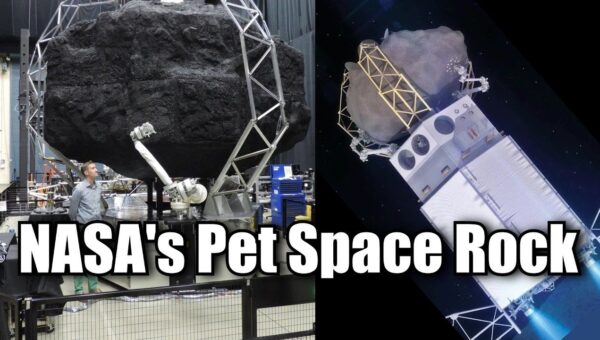
NASA’s Asteroid Mission: From Mars Dream to Lunar Gateway
NASA's ambitious Asteroid Redirect Mission (ARM), designed as a stepping stone to Mars, aimed to capture a small asteroid boulder and tow it to lunar orbit for astronaut testing. Though cancelled, its advanced propulsion and robotic technologies live on in NASA's Lunar Gateway and future deep space exploration plans.
NASA’s Evolving SLS Rocket Hints at New Upper Stage
NASA's Artemis program may be adopting a new upper stage for its Space Launch System (SLS) rocket, potentially utilizing the commercially available Centaur V. An updated infographic reveals design changes and hints at evolving mission strategies, including advanced lunar lander operations.


SpaceX Starship V3 Nears First Flight Amidst Major Artemis Shakeup
SpaceX eyes March for Starship V3's maiden flight as new testing reveals design improvements. Meanwhile, NASA's Artemis program faces delays and strategic shifts, with Artemis III repurposed as a LEO test mission.