Volvo EX90: A Flawed Luxury EV King?
The new Volvo EX90 aims for luxury EV SUV supremacy but falls short due to a high price, disappointing real-world range, and uninspired driving dynamics. While comfortable and practical, it struggles to justify its premium cost against strong competition.

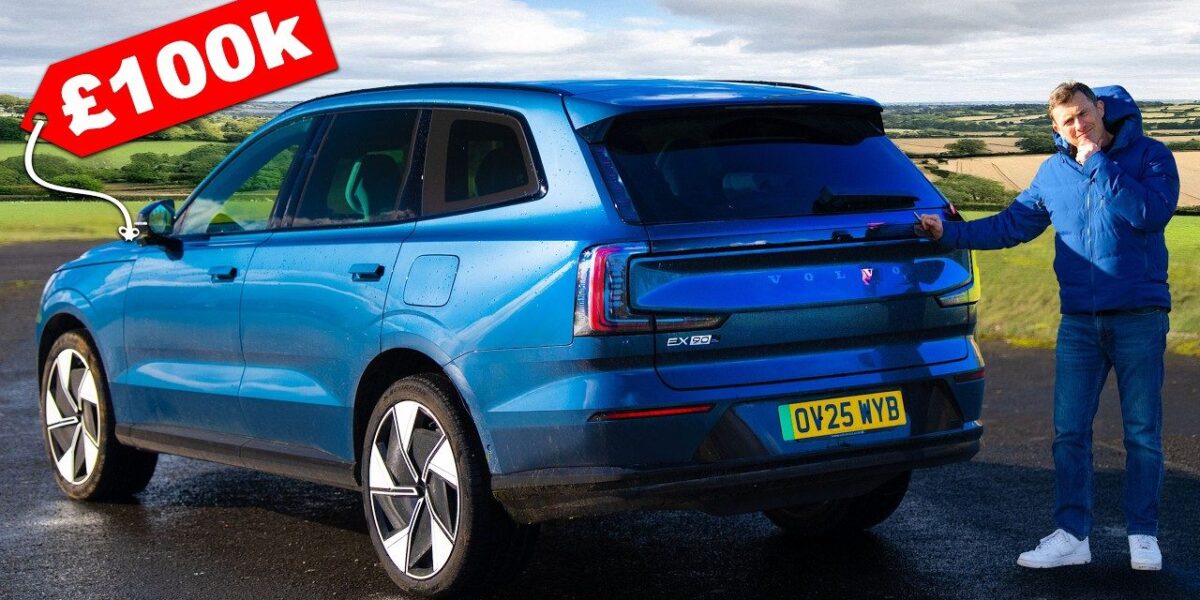
Volvo EX90: A Flawed Luxury EV King?
Volvo has long been a benchmark for safety, comfort, and understated Scandinavian design, often at a more accessible price point than its German rivals. The new EX90, however, aims to redefine luxury electric SUVs. Built on an entirely new platform and boasting a distinct design language, it promises a leap forward. But does it deliver on its lofty ambitions, or has some of the traditional Volvo charm been lost in translation to the electric age?
The EX90 is not simply an electric XC90; it’s a ground-up reimagining. Its exterior eschews the traditional grille for a blanked-off front fascia, reminiscent of the smaller EX30, giving it a modern, albeit somewhat anonymous, appearance. The pixelated headlights and flush door handles further enhance this contemporary aesthetic. Large wheels, starting at 21 inches and going up to 22s on this top-spec model, fill the arches, and the tire’s protective sidewall is a welcome touch for those prone to curb-hugging.
Design and Dimensions: A Question of Proportion
While the EX90 shares design cues with the EX30, its larger footprint presents a challenge. At over five meters long, it’s 8 cm longer than the XC90 and a significant 80 cm longer than the EX30. This extended length, combined with the minimalist styling, doesn’t quite achieve the same visual harmony as its smaller sibling or even the sleeker XC90. The anonymous blue paint on our test car did little to flatter its proportions.
A more divisive design element is the optional LiDAR sensor array, colloquially dubbed the ‘taxi’ by some. This sensor, crucial for the car’s advanced driver-assistance systems, has faced supplier issues and even reports of damaging phone cameras. Volvo’s response? To remove it entirely from EX90s ordered from April onwards. This means current models or those on dealer lots might feature this prominent, and some would say unsightly, addition, impacting the car’s overall aesthetic.
Interior: Scandinavian Minimalism Meets Sustainable Luxury
Inside, the EX90 continues Volvo’s tradition of minimalist luxury. The dashboard is clean and uncluttered, dominated by a large central touchscreen that controls nearly all functions. Physical buttons are largely absent, a design choice that, while modern, may prove frustrating for some. The materials are a definite highlight. The sustainable wood trim is standard across all trims, and the absence of traditional leather is hardly missed, especially with the optional, and highly recommended, ‘wool blend’ seats. Even the faux leather alternative feels premium.
The attention to detail is mostly excellent, from the damped control stalks to the felt-lined storage areas. However, minor blemishes, like the wonky stitching on the dashboard of our test car, detract from the otherwise impeccable build quality. Practicality is also well-considered, with large door bins, a cleverly designed central console with a false floor for storage, and cup holders. The infotainment system, running on Google’s platform, is responsive, with sharp graphics and intuitive menus. Wireless Apple CarPlay and Android Auto are supported, a step up from the XC90, and a cooled wireless phone charging pad is a thoughtful touch.
Performance and Range: Adequate, Not Astonishing
The EX90 offers a range of powertrains, with the dual-motor all-wheel-drive version producing 456 horsepower. Our test car, with 408 horsepower, is claimed to hit 0-60 mph in 5.9 seconds. In reality, it achieved a respectable 5.81 seconds. While this is quick, it doesn’t deliver the immediate, neck-snapping acceleration often expected from an electric SUV. It’s adequate, but for a vehicle costing upwards of £80,000, one might hope for more outright performance.
The real concern lies with range. Volvo claims up to 375 miles for the EX90. However, real-world testing painted a different picture. In mixed driving, the car averaged 4.2 miles per kWh, translating to a realistic range of around 260 miles. After some performance testing and weekend use, this figure dropped to a concerning 5.4 miles per kWh, pushing the real-world range below 200 miles. This is a significant shortfall for a luxury SUV expected to handle long journeys with ease.
Practicality: A Capable Seven-Seater
As a seven-seater, the EX90 excels. The middle row offers generous legroom, headroom, and shoulder room, surpassing the XC90. The flat floor due to its electric architecture maximizes foot space, and individual sliding and reclining seats enhance comfort. While the third row is best suited for children or shorter journeys, it offers acceptable knee room and decent under-thigh support, though headroom is more limited than in some rivals like the Hyundai IONIQ 9. The lack of USB ports in the rearmost row is a notable omission for modern families.
Boot space is also impressive. In seven-seat mode, it offers 324 liters, more than the EX30, and easily swallowed five carry-on suitcases. Folding the third row expands this to 697 liters, and with the second row down, it provides cavernous storage, even outperforming key rivals in our suitcase-fitting test.
Driving Dynamics: Comfortable Cruising, Lacking Engagement
On the open road, the EX90 shines as a long-distance cruiser. It’s exceptionally quiet, with minimal road and wind noise, and the seats are supremely comfortable. The air suspension on the Ultra model effectively smooths out bumps, providing a luxurious ride. However, lower trims without air suspension are reportedly less refined. The steering is vague, and the sheer weight of the 2.7-tonne SUV means it never feels particularly agile. While a ‘firm’ mode sharpens things slightly, it can’t mask the mass. Competitors like the Kia EV9 and Hyundai IONIQ 9, and especially the BMW iX, offer a more engaging driving experience.
Maneuvering in urban environments is surprisingly easy, thanks to excellent visibility, large mirrors, and a surprisingly tight turning circle. The standard surround-view cameras are invaluable, and the one-pedal driving mode is intuitive and effective. However, some control aspects, like the dual-function rear window switches and the sometimes-glitchy infotainment system controlling mirrors, prove frustrating.
Value and Verdict: A Premium Price for a Mixed Bag
The Volvo EX90 starts at a considerable £80,000, with our top-spec Ultra model reaching £98,000. This positions it as a premium offering, but it’s notably more expensive than comparable German rivals like the BMW iX, especially when considering potential savings available on the latter. Historically, Volvos offered better value, but the EX90’s pricing feels ambitious given its shortcomings.
Verdict: The Volvo EX90 is a luxurious, comfortable, and practical seven-seater electric SUV with a strong focus on safety and sustainability. However, its high price, disappointing real-world range, and less engaging driving dynamics compared to key rivals prevent it from claiming the luxury EV crown. While it’s a lovely car in many respects, the range anxiety and premium cost make it a consideration rather than a must-have. Buyers prioritizing comfort and practicality over outright performance and value might find it appealing, but only after careful consideration of its significant drawbacks and the availability of alternative options.
Source: The new KING of Luxury SUVs? (YouTube)

Related Articles

Polestar 4: A Cool EV With A Catch
The Polestar 4 offers a compelling blend of striking design, a luxurious interior, and advanced technology, positioning itself as a stylish alternative in the EV market. While its unique styling and performance are noteworthy, potential buyers should consider its compromises in rear visibility and charging speeds.


eBay’s Secure Purchase: Revolutionizing Car Buying Online
eBay's Secure Purchase program is revolutionizing the car buying experience by offering a fully digital, verified, and protected way to purchase vehicles online. It aims to eliminate the stress and risk associated with traditional car sales.

2026 Toyota Camry: A Hands-Free Hopeful, But Not Quite There
The 2026 Toyota Camry, a hybrid powerhouse, undergoes the demanding Woolly Mammoth Challenge for hands-free driving. While packed with safety features, it falls short of true autonomy, scoring 45 points and highlighting Toyota's conservative yet value-rich approach.