Vera C. Rubin Observatory Unlocks Sky’s Secrets for All
The Vera C. Rubin Observatory's vast data is now publicly accessible, empowering astronomers worldwide to make new discoveries. Innovations in star shades and spacesuits promise to accelerate our exploration of exoplanets and the solar system.

Vera C. Rubin Observatory Data Available to All Astronomers
The Vera C. Rubin Observatory is now actively scanning the night sky, and its vast stream of data is accessible to anyone with the curiosity and tools to explore it. Rather than a centralized authority deciding what to study, the observatory’s mission is to capture images every night. This data is then fed to various data brokers, who filter and organize it for the scientific community and the public.
Each night, the observatory generates an astounding 800,000 observations. These include everything from variable stars and supernovae to asteroids, comets, and potentially even elusive celestial bodies like Planet Nine. This torrent of information is made available through data brokers, allowing astronomers to query specific criteria. For example, a researcher could request all objects brighter than magnitude 15 within the Centaurus constellation between 5 and 6 a.m. The results would include images and data, empowering scientists to conduct their own follow-up observations.
A New Gold Rush for Discovery
This open-access model fosters a dynamic environment for astronomical discovery. There is no single entity dictating research priorities. Instead, it’s an open invitation for astronomers, both professional and amateur, to sift through the data and make their own findings. This means anyone can potentially discover a new supernova, track an asteroid, or perhaps even be the one to identify Planet Nine.
Tools like the data broker Antares, managed by NOIRLab, provide access to this data. Astronomers can use its Application Programming Interface (API) to write code that sends alerts for specific celestial events. This democratizes the process of astronomical research, allowing for a rapid and widespread exploration of the cosmos. Even with small telescopes, astronomers can confirm discoveries made by the Rubin Observatory, turning the process into a modern-day gold rush for celestial treasures.
Exploring the Possibilities of Space Exploration
The Role of Star Shades in Exoplanet Research
The concept of using celestial bodies as natural shields for telescopes has been explored, but a more practical approach involves launching dedicated star shades. These massive, thin structures, potentially 100 meters across, could be positioned in space to block the light from a star. This would allow ground-based telescopes, like the upcoming Extremely Large Telescope, to directly observe planets orbiting that star.
This technology is still in development, with engineering challenges to overcome. However, recent research and grant awards suggest that a star shade could be launched and utilized by Earth-bound observatories before more complex space telescopes, like the Habitable Exoplanet Observatory (HabEx), are deployed with integrated star shades. This offers a promising pathway for directly imaging exoplanets in the near future.
Advancements in Spacesuit Technology
The design of spacesuits is evolving to enhance astronaut mobility and reduce mission preparation time. Traditional spacesuits operate at a lower internal pressure than Earth’s atmosphere to allow for flexibility. Astronauts must then adapt their bodies to this lower pressure, a process similar to deep-sea diving, to avoid decompression sickness, also known as the bends. This often requires astronauts to spend significant time acclimatizing before and after spacewalks.
New designs, like those being developed by Axiom Space for NASA’s Artemis missions, aim to mitigate this. These suits will feature a variable pressure system. Astronauts will enter the suit at normal atmospheric pressure and then gradually decrease it as they prepare for their spacewalk. This allows for immediate egress and reduces the need for lengthy decompression periods. Another innovative concept involves using elastic materials to provide counter-pressure against the skin, creating a more form-fitting and less bulky suit. While challenges remain, particularly at the joints, this approach could lead to more agile and comfortable spacesuits for future lunar and Martian exploration.
Debunking Myths About Comet 3I/ATLAS
The passage of comet 3I/ATLAS, a relatively small object approximately 5 to 10 kilometers in diameter, had a negligible gravitational impact on the solar system. While it did interact with other celestial bodies, the changes to their orbits were on the nanometer scale. The intense speculation surrounding the comet, with some suggesting it was an alien spacecraft, has largely subsided without any evidence to support such claims.
Comet 3I/ATLAS was simply another rocky body traversing the solar system at high speed. Its minimal mass meant it posed no threat and caused no significant orbital anomalies. The fascination with its origins and potential implications highlights the public’s enduring interest in the unknown, but scientific observation confirms it was a natural celestial event.
The Future of Space Exploration and Our Place in It
The ongoing advancements in telescope technology, star shade development, and spacesuit design are pushing the boundaries of human exploration. The accessibility of data from observatories like Vera C. Rubin signifies a shift towards a more collaborative and open scientific community. This democratization of data allows for a broader range of discoveries and a faster pace of understanding the universe.
As we continue to explore the cosmos, these innovations will enable us to search for exoplanets, understand the origins of our solar system, and potentially answer fundamental questions about life beyond Earth. The journey ahead is filled with exciting possibilities, fueled by human curiosity and technological ingenuity.
Source: Best Space Pet, Aftermath of 3I/ATLAS Flyby, Limits on Lagrange Points | Q&A 410 (YouTube)

Related Articles

New Telescope Could Spot Earth-Like Worlds’ Life Signs
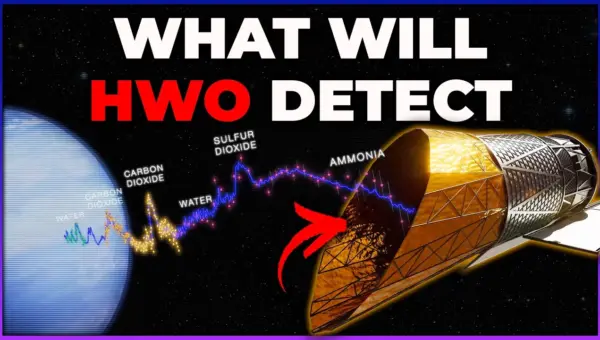
New research suggests the Habitable Worlds Observatory needs to observe wavelengths around 1.52 to 1.68 microns to effectively detect key biosignatures like carbon dioxide, water, and methane on Earth-like exoplanets. This optimal range avoids the need for complex telescope cooling systems.

Moon Blasted by Space Rocks: New Impact Data Revealed
Our Moon is frequently struck by space rocks, creating visible flashes of light. Scientists are tracking these impacts to understand solar system dynamics and plan future human missions. This ongoing cosmic bombardment reveals the Moon's evolving surface.


Objects in Orbit Hint at Pre-Human Intelligence
New scientific papers suggest artificial objects orbited Earth before human satellites, hinting at non-human intelligence. Declassified CIA documents also reveal serious investigation into psychic abilities via Project Stargate. These developments challenge our understanding of history and the universe.