Vera C. Rubin Observatory Begins Sky Survey
The Vera C. Rubin Observatory has officially begun its 10-year sky survey, promising to generate millions of astronomical alerts nightly. Meanwhile, new Webb images reveal Uranus in unprecedented detail, and the Artemis program faces timeline adjustments.

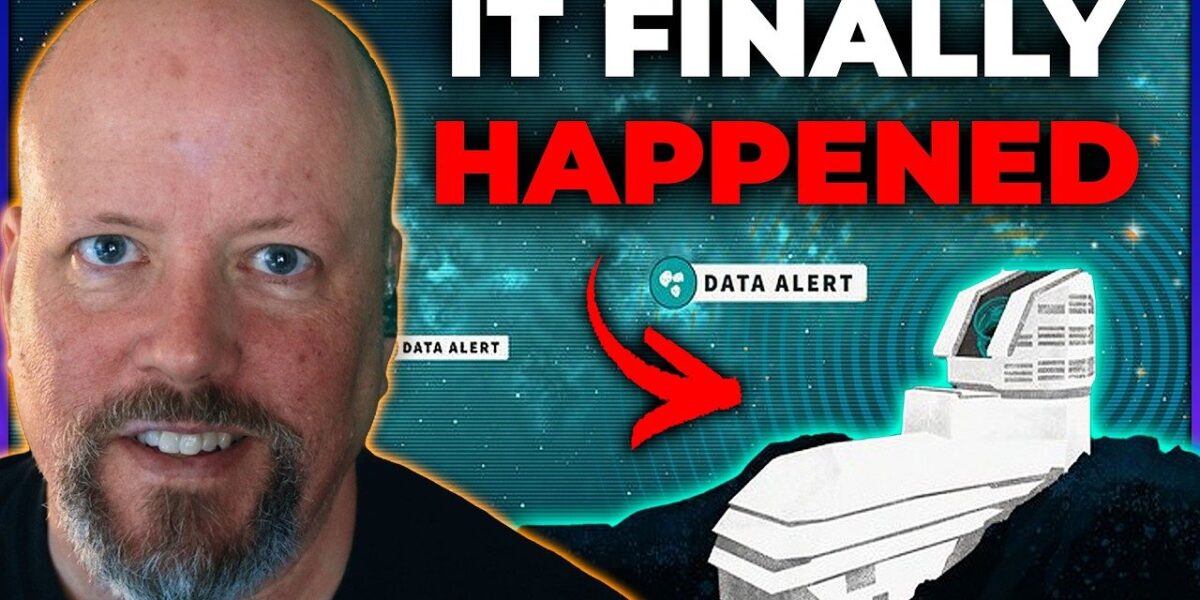
Vera C. Rubin Observatory Ignites the Era of Big Data Astronomy
The world of astronomy is abuzz with the commencement of full-time operations by the Vera C. Rubin Observatory. On February 24th, this groundbreaking facility began its ambitious 10-year mission to image the night sky, capturing new vistas of the cosmos at an unprecedented rate. Each night, Rubin will survey the sky, taking images every 40 seconds and systematically cataloging celestial changes. This constant stream of data promises to revolutionize our understanding of the universe, from the most fleeting cosmic events to the grandest structures.
A Firehose of Discovery
The sheer volume of data generated by the Vera C. Rubin Observatory is staggering. In its very first night of full operations, the observatory issued an astonishing 800,000 alerts, flagging phenomena such as supernovae, active galactic nuclei, transient events, comets, and asteroids. This is just the beginning; as the system becomes fully operational and additional software is integrated, astronomers anticipate this number could surge to 7 million alerts per night. This deluge of information is often referred to as a “fire hose of data,” and the observatory’s design aims to process and distribute these alerts to the astronomical community within approximately two minutes of detection. This rapid turnaround is crucial for capturing transient events, like the precise moments of supernovae, allowing for immediate follow-up observations.
To manage this data flow, Vera C. Rubin has partnered with seven data brokers who will disseminate the information to observatories worldwide. Crucially, these data feeds will also be made public, offering citizen scientists and the general public unprecedented access to real-time astronomical discoveries. This democratic approach to data sharing invites everyone to participate in the excitement of cosmic exploration.
Unveiling Cosmic Mysteries: From Missing Stars to Dark Galaxies
Among the early scientific targets are profound questions about stellar evolution and the nature of dark matter. Recent observations, utilizing archival data from NASA’s NEOWISE spacecraft, suggest astronomers may have witnessed a star directly collapse into a black hole, bypassing the dramatic explosion of a supernova. This phenomenon, dubbed an “un-nova,” occurs when massive stars, tens of times the mass of our Sun, reach iron in their core. If the resulting blast wave from the subsequent collapse is not strong enough to eject the star’s outer layers, it can quietly implodes into a black hole. Astronomers tracked a star in a distant galaxy that appeared to brighten in the infrared before vanishing by 2022, with follow-up observations showing only a faint infrared signature. The Vera C. Rubin Observatory, with its deep and frequent sky surveys, is expected to significantly increase the chances of detecting such rare events.
In another fascinating discovery, astronomers have identified a potential “dark galaxy” by observing a group of globular clusters orbiting what appears to be empty space. Globular clusters are dense collections of stars, often thought to be the remnants of dwarf galaxies whose stellar material has been stripped away. The newly identified galaxy, detected through a faint glow of small red dwarf stars, shows these globular clusters accounting for a remarkable 16% of its total brightness, suggesting a dominant dark matter component. This finding provides a new method for locating these elusive dark matter-dominated galaxies.
Webb’s Stunning Views of Uranus and Beyond
The James Webb Space Telescope (JWST) continues to deliver breathtaking images, this time focusing on the ice giant Uranus. For the first time, Webb has captured a complete rotation of the planet, showcasing its unique axial tilt and providing detailed insights into its atmosphere. The images reveal high and low-altitude clouds, and crucially, auroras in the planet’s atmosphere. Webb’s ability to observe objects within our solar system, not just deep space, highlights its versatility. These observations contribute to our understanding of planetary atmospheres and magnetic fields, even for planets that are tilted on their sides like Uranus.
Beyond our solar system, JWST is also providing stunning imagery of nebulae and galaxies. The Exposed Cranium Nebula, a planetary nebula approximately 5,000 light-years away, has been captured in exquisite detail, revealing the expanding shells of gas and molecules shed by a dying star. This image, alongside others of the Jellyfish Galaxy ESO137-001 and NGC 1637, showcases the power of Webb and Hubble to resolve intricate details of cosmic phenomena, from galactic interactions to the final stages of stellar life.
Artemis Program Updates and the Search for Exomoons
In lunar exploration news, NASA’s Artemis program is undergoing adjustments. The upcoming Artemis II mission, intended to send astronauts around the Moon, has faced delays. Following issues identified during a recent “wet dress rehearsal” involving the Space Launch System (SLS) rocket, the launch has been postponed from its initial February target to April. NASA is prioritizing safety and thoroughness, necessitating the return of the SLS to the Vehicle Assembly Building for repairs.
Furthermore, the timeline for the first human lunar landing has been restructured. Artemis III, originally slated to be the landing mission, will now serve as an Earth-orbit test of lunar landers, including SpaceX’s Starship or Blue Origin’s lander. The first human landing on the Moon is now anticipated with Artemis IV in 2028, following the orbital test in 2027. This revised plan aims to accelerate the overall launch cadence for the Artemis missions.
The search for life beyond Earth also continues, with ongoing efforts to detect exomoons. While thousands of exoplanets have been discovered, confirmed exomoons remain elusive. However, future observatories like the Habitable Worlds Observatory are being designed with the sensitivity to detect Earth-sized exomoons orbiting Jupiter-like planets at distances up to one astronomical unit from their stars, provided the star is within 39 light-years of Earth. The detection method involves observing subtle changes in the light reflected by the planet as its moon orbits and passes behind it.
Looking Ahead
The activation of the Vera C. Rubin Observatory marks a new epoch in astronomical discovery. Its unparalleled data-gathering capabilities, coupled with advancements in telescopes like JWST, promise to unlock secrets of the universe previously hidden from view. From the birth and death of stars to the elusive nature of dark matter and the potential for life on other worlds, the coming years of astronomical research are set to be more exciting and revealing than ever before.
Source: Vera Rubin Is LIVE // NO Landing for Artemis 3 // Peeping Inside Uranus (YouTube)

Related Articles
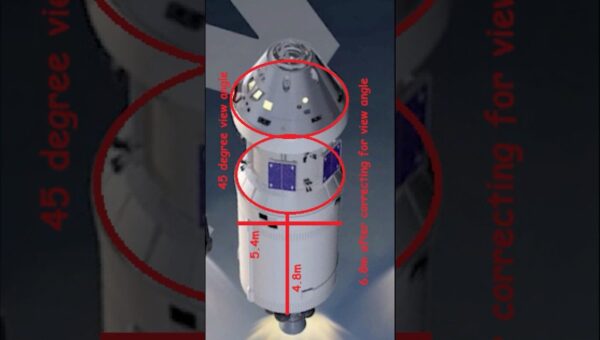
NASA’s Evolving SLS Rocket Hints at New Upper Stage
NASA's Artemis program may be adopting a new upper stage for its Space Launch System (SLS) rocket, potentially utilizing the commercially available Centaur V. An updated infographic reveals design changes and hints at evolving mission strategies, including advanced lunar lander operations.


SpaceX Starship V3 Nears First Flight Amidst Major Artemis Shakeup
SpaceX eyes March for Starship V3's maiden flight as new testing reveals design improvements. Meanwhile, NASA's Artemis program faces delays and strategic shifts, with Artemis III repurposed as a LEO test mission.

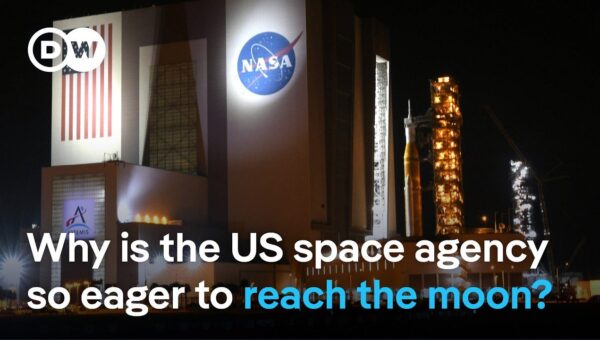
NASA Revises Artemis Moon Landing Goal to 2028
NASA is revising its Artemis program, targeting a 2028 lunar landing amidst a new space race with China. The plan includes preparatory missions in 2027 and focuses on exploring lunar poles for resources. International collaboration remains key, though funding questions persist.