Venezuela’s Uncharted Path: An Unprecedented Amnesty Offers Glimmer of Hope Amidst Decades of Despair
Venezuela's Executive Vice President, Delcy Rodríguez, has announced a sweeping general amnesty for crimes committed since 1999, a move geopolitical strategist Peter Zeihan hails as the most significant positive development in decades. This unprecedented offer, reminiscent of South Africa's post-apartheid transition, aims to provide a 'third way' out of typical authoritarian collapse, though the nation faces immense challenges in achieving genuine truth, reconciliation, and economic rebuilding.

Venezuela’s Uncharted Path: An Unprecedented Amnesty Offers Glimmer of Hope Amidst Decades of Despair
CARACAS, VENEZUELA – In a development that has sent ripples of cautious optimism through a nation long mired in political and economic turmoil, Venezuela’s Executive Vice President, Delcy Rodríguez, has announced a sweeping general amnesty. This extraordinary decree, offering a clean slate for all crimes committed since 1999 – the year Hugo Chávez ascended to power and initiated the country’s profound decline – represents a potentially pivotal moment for a society ravaged by two decades of authoritarian rule, systemic corruption, and humanitarian crisis. While fraught with immense challenges, this move, as noted by geopolitical strategist Peter Zeihan, could signify the most significant positive shift in Venezuela in nearly 30 years, hinting at a rare ‘third way’ out of the typical post-authoritarian quagmire of anarchy or civil war.
The announcement comes at a time when the political landscape in Venezuela is undergoing subtle but significant shifts, particularly following the reported removal of Nicolás Maduro from the immediate political stage. Rodríguez, a prominent figure within the Chavista regime and often seen as a staunch loyalist, is now positioned at the helm, making her offer of a blanket pardon all the more unexpected and, for some, perplexing. The amnesty aims to wipe clean the slate for a period encompassing the entire ‘Bolivarian Revolution’ era, from its populist beginnings under Chávez to its descent into severe repression and economic collapse under Maduro. This period saw Venezuela, once a beacon of prosperity and relative stability in Latin America, transformed into a cautionary tale of resource mismanagement, institutional decay, and mass human suffering.
The Decades of Decline: From Prosperity to Paralysis
To fully grasp the magnitude of Rodríguez’s amnesty, one must understand the depth of Venezuela’s fall. Before the advent of Hugo Chávez, Venezuela was widely recognized as the third most advanced nation in the Western Hemisphere, trailing only the United States and Canada. Its vast oil reserves fueled a vibrant economy, supporting a burgeoning middle class and a relatively robust educational system. However, the trajectory dramatically shifted with Chávez’s rise to power in 1999.
The Chávez Era: The Bolivarian Revolution and Institutional Erosion
Hugo Chávez, a charismatic former paratrooper, promised a ‘Bolivarian Revolution’ aimed at empowering the poor and dismantling the traditional political elite. His early years were marked by ambitious social programs, funded by soaring oil prices, which significantly reduced poverty and improved access to healthcare and education for many. However, this populist agenda came at a steep cost to democratic institutions and economic stability. Chávez systematically consolidated power, rewriting the constitution, packing the Supreme Court, and weakening independent media. The national oil company, Petróleos de Venezuela S.A. (PDVSA), once a highly efficient and professional entity, was gradually politicized and gutted. Its technical expertise was replaced by political loyalty, leading to a precipitous decline in oil production capacity, despite Venezuela possessing the world’s largest proven oil reserves.
The ‘decivilizational spiral,’ as Zeihan describes it, saw a brain drain as skilled professionals, disillusioned by the political climate and economic uncertainty, began to leave the country. Educational attainments, once a point of national pride, started to erode as the quality of public education declined and universities faced increasing pressure and underfunding. Chávez’s confrontational rhetoric, both domestically and internationally, deepened societal divisions, creating a stark dichotomy between his loyal ‘Chavista’ base and the increasingly marginalized opposition.
The Maduro Era: Deepening Crisis and Authoritarian Grip
Upon Chávez’s death in 2013, his handpicked successor, Nicolás Maduro, a former bus driver and foreign minister, inherited a nation already facing significant challenges. Lacking Chávez’s charisma and political acumen, Maduro’s presidency coincided with a dramatic collapse in global oil prices, exposing the fragility of Venezuela’s oil-dependent economy. What followed was an unprecedented economic catastrophe: hyperinflation that rendered the national currency worthless, severe shortages of food, medicine, and basic goods, and a complete breakdown of public services.
Maduro’s response to the escalating crisis was to tighten his authoritarian grip. Political repression intensified, with widespread arrests of opposition figures, extrajudicial killings, and systematic human rights abuses documented by international bodies. Elections were widely condemned as fraudulent, and the country spiraled into international isolation, facing a barrage of sanctions from the United States and other nations. The economic collapse triggered one of the largest mass migrations in modern history, with over seven million Venezuelans fleeing the country, creating a humanitarian crisis across Latin America and beyond. Delcy Rodríguez, as Maduro’s Vice President and a key architect of the regime’s policies, was instrumental in this period, often seen as a hardliner defending the government’s actions against international criticism.
A ‘Third Way’ Out: The Promise and Peril of Amnesty
Authoritarian regimes typically conclude in one of two catastrophic ways. The first involves the death or removal of a key leader without a clear successor, leading to a power vacuum, institutional collapse, and often, widespread anarchy. Examples abound, from the chaos that engulfed Libya after Muammar Gaddafi’s demise to the fragmented states emerging from various post-colonial struggles where strongmen left no viable institutions behind. The second common scenario is the rise of a hardened opposition, leading to protracted and bloody civil war, as seen in Syria or parts of the former Yugoslavia, where deep-seated grievances erupt into widespread conflict. Both outcomes are devastating, characterized by immense human suffering, further destruction of infrastructure, and long-term instability.
The general amnesty proposed by Delcy Rodríguez, if genuine and properly executed, represents a rare ‘third way’ – a deliberate attempt to circumvent these destructive paths by offering a blank slate. Peter Zeihan emphasizes the rarity and difficulty of this approach, noting that very few places have attempted it, and even fewer have succeeded. The core idea is to defuse tensions, prevent retributive justice, and create a foundation for a new beginning, rather than allowing the past to dictate a cycle of violence and revenge.
The South African Precedent: Truth, Reconciliation, and Fragile Democracy
The most compelling historical parallel for Venezuela’s proposed amnesty is South Africa’s transition from apartheid. When the racially segregated apartheid regime fell at the end of the Cold War, South Africa faced an incredibly volatile situation. Decades of systemic oppression, state-sanctioned violence, and armed resistance had created deep wounds and entrenched divisions between the white minority and the black majority. The potential for widespread retaliatory violence and civil war was immense.
In a bold and visionary move, South Africa implemented a similar amnesty program as a crucial first step. Pardons were granted to both white perpetrators of apartheid-era crimes, including torture and extrajudicial killings, and to members of militant black liberation groups who had engaged in acts of violence. This blanket pardon, controversial as it was, served to prevent a witch hunt and allowed all parties to consider a path forward rather than clinging to past grievances.
However, the amnesty was merely the beginning. South Africa’s true innovation lay in its subsequent creation of the Truth and Reconciliation Commission (TRC). Chaired by Archbishop Desmond Tutu, the TRC was not a court of law designed for punishment, but rather a restorative justice mechanism. It provided a platform for both victims and perpetrators to publicly share their experiences and confess their actions. The process was agonizingly raw and often horrific. White security forces detailed their torture techniques and assassinations, while members of groups like the Zulu nationalists recounted their murder brigades. This public reckoning, while deeply jarring and emotionally draining, was vital.
By bringing the truth into the open, the TRC aimed to foster understanding, acknowledge suffering, and lay the groundwork for a shared national narrative. It allowed a degree of healing and, critically, prevented the cycle of retribution that could have torn the nation apart. As Zeihan highlights, while South Africa continues to grapple with myriad challenges – including deep-seated economic inequality, high crime rates, and social tensions – its democratic institutions have endured. The TRC, despite its imperfections and critics, is widely credited with playing a fundamental role in establishing a pluralistic, democratic society where civil war was averted.
Venezuela’s Uphill Battle: Applying the Model
For Venezuela to replicate even a fraction of South Africa’s success, the path ahead will be arduous and fraught with immense difficulties. The scale of human rights abuses under Chávez and Maduro is staggering, encompassing thousands of political prisoners, systematic torture, extrajudicial killings, and the violent suppression of dissent. The mere mention of ‘political prisons now being shut down as part of this asylum program’ by Zeihan underscores the grim reality that needs to be confronted.
Confronting the Past: Truth and Accountability
An amnesty alone, as Zeihan rightly points out, is insufficient. It is merely ‘step one.’ The critical ‘step two’ for Venezuela, mirroring South Africa, must be an open and honest conversation about ‘why it happened, how it happened, what happened, who did what.’ This would necessitate a truth and reconciliation process, where victims can share their stories and perpetrators can confess their roles. Such a process would be ‘awful’ and deeply painful, given the raw wounds of the past two decades. Trust, a scarce commodity in Venezuela, would need to be painstakingly rebuilt between formerly warring factions, between the state and its citizens, and within communities themselves.
Deep Societal Divisions and Leadership Challenges
Venezuela’s society is profoundly polarized between ‘Chavistas’ and the opposition, a division that has been fostered and exploited by the regime for years. For an amnesty and subsequent truth process to succeed, it would require buy-in from all major political actors and segments of society. Can a figure like Delcy Rodríguez, who has been a central and often controversial figure in the Maduro regime, genuinely lead such a transformative process? Her past role as a ‘thug’ and ‘looter,’ as described by Zeihan, raises questions about the sincerity of the offer and her credibility to oversee a truly impartial reconciliation.
The role of the Venezuelan military, a key pillar of support for the Maduro government, would also be critical. Any transition would require their cooperation or at least their neutrality. How would an amnesty affect the military’s command structure and its accountability for past actions?
Rebuilding Institutions and the Economy
Beyond political reconciliation, Venezuela faces the monumental task of rebuilding its shattered institutions. The judiciary, electoral system, independent media, and civil society organizations have all been systematically weakened or co-opted. A true ‘fresh start’ would require a new constitution, a new political system, and robust checks and balances to prevent a return to authoritarianism. This would involve painstaking efforts to restore the rule of law, protect human rights, and ensure transparent governance.
Perhaps the most daunting challenge is the complete reconstruction of Venezuela’s economy. The country’s oil industry, its lifeblood, is in ruins, with production at historic lows. Infrastructure is crumbling, and the social fabric is severely frayed. A new government would need to attract foreign investment, revitalize PDVSA, diversify the economy, and address the immediate humanitarian needs of its population. The international community, including the United States, which has shown interest in Venezuela’s stability and energy resources (with Senator Marco Rubio notably pushing Rodríguez in this direction, according to Zeihan), would likely play a crucial role in providing aid and support for economic recovery, but only if a credible and legitimate transition is underway.
A Glimmer of Cautious Optimism
Despite the immense obstacles, Peter Zeihan’s ‘rare moment of optimism’ is noteworthy. The very fact that a figure like Delcy Rodríguez is proposing such a radical step suggests a recognition within the regime that the old ways are unsustainable. It could indicate a strategic pivot, perhaps driven by internal pressures, international isolation, or the sheer weight of the humanitarian crisis. While the road ahead will undoubtedly be ‘awful’ and fraught with peril, this initial step – the offer of a general amnesty – at least opens the door to a possibility that was unimaginable just a short while ago.
For Venezuela, this is not a guarantee of success, but rather an invitation to embark on an uncharted and perilous journey. It is a fragile glimmer of hope that, if nurtured through genuine commitment to truth, reconciliation, and institutional reform, could finally allow a long-suffering nation to turn the page on its darkest chapter and begin the arduous process of rebuilding a truly pluralistic and democratic society.
Source: Is Venezuela Ready to Move On? || Peter Zeihan (YouTube)

Related Articles

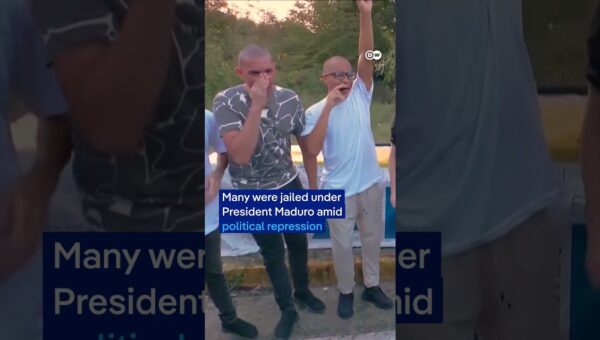
Venezuela Frees Dozens of Political Prisoners Under Amnesty
Venezuela has released over 30 political prisoners from El Rodeo I prison following the implementation of a new amnesty law. Authorities report that approximately 2,200 individuals have benefited from the legislation to date. This move comes amidst ongoing international scrutiny of the nation's human rights record.

Operation Absolute Resolve: Trump’s Venezuela Gambit Unveils the ‘Donroe Doctrine’ and a New Era of Global Power Dynamics
In a dramatic early morning raid, US forces captured Venezuelan President Nicholas Maduro, signaling a radical shift in American foreign policy. Dubbed 'Operation Absolute Resolve,' the swift military action, while tactically successful, has ignited a constitutional crisis, raised profound questions about international law, and unveiled a controversial 'Donroe Doctrine' prioritizing resource extraction over democratic transition. The long-term implications for Venezuela, regional stability, and global order remain deeply uncertain as the US navigates a path fraught with economic skepticism and political quagmires.

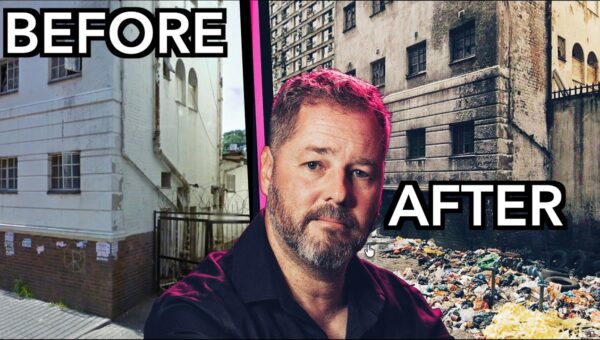
South Africa’s Decline: A Stark Warning on ‘Decolonization’, Corruption, and Communism
A stark visual comparison using Google Maps Street View reveals the dramatic urban decay in South Africa over a decade, attributed by the speaker to 'decolonization,' communism, and corruption. The video serves as a warning about the collapse of infrastructure and services, arguing that radical ideologies undermine societal progress.