Vance’s UFO Theory: Demons, Not Aliens, Raise Concerns
Vice President J. D. Vance has suggested that UFOs are not aliens but demons, sparking debate. This interpretation, rooted in religious beliefs, contrasts with scientific inquiry and raises questions about how we understand the unknown. The discussion highlights the diverse ways people interpret unexplained phenomena.

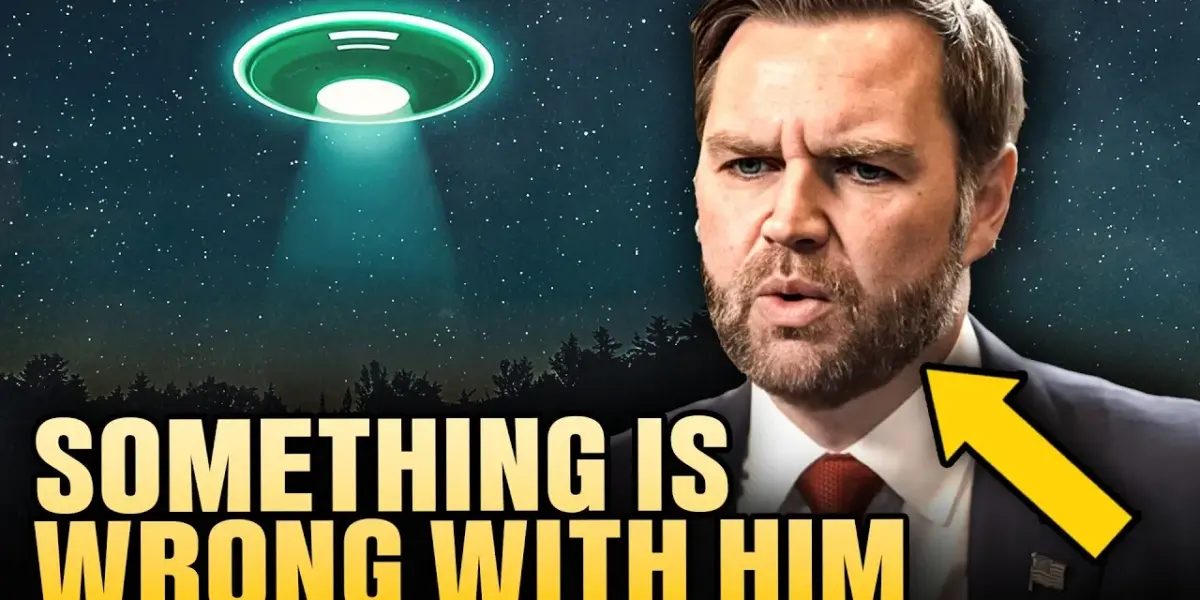
Vance’s UFO Theory: Demons, Not Aliens, Raise Concerns
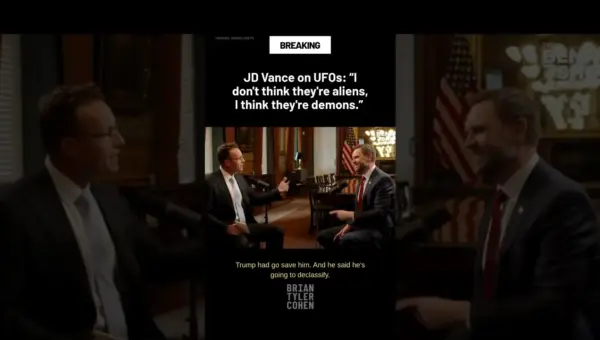
The discussion around unexplained aerial phenomena, or UFOs, has taken a strange turn, with Vice President J. D. Vance offering a unique perspective. During a recent conversation with podcaster Benny Johnson, Vance suggested that these mysterious objects are not visitors from other planets. Instead, he proposed they might be demonic entities.
Vance stated, “I don’t think they’re aliens. I think they’re demons.” He elaborated on this idea, suggesting that “celestial beings who fly around who who do weird things to people” are often mislabeled as aliens. He believes that many world religions, including Christianity, acknowledge the existence of unexplained phenomena and a struggle between good and evil.
“I naturally go when I hear about sort of extra natural phenomenon,” Vance explained, “That’s where I go to to the Christian understanding that there’s a lot of good out there, but there’s also some evil out there. And I think that one of the devil’s great tricks is to convince people he never existed.”
Skepticism and Questions Arise
This viewpoint has naturally drawn skepticism and raised questions. The idea that demons are piloting advanced spacecraft presents a complex picture. If these are supernatural beings with the ability to fly and teleport, why would they need physical vehicles like UFOs?
The transcript humorously questions this notion: “So the devil is running some kind of, you know, Boeing type situation in hell building spacecraft for the demons?” The analogy suggests that if demons have such powers, the need for elaborate technology seems unnecessary. It paints a comical image of Satan overseeing a celestial spacecraft factory.
Furthermore, Vance’s explanation of what these “demons” do – causing “weird things to people” – has been met with confusion. The transcript points out that alleged alien abductions, often cited as evidence, involve people being probed and returned with no visible harm. The question is posed: is this the extent of the fear that conservative Christians like Vance want to instill?
Historical Context of UFO Beliefs
The fascination with UFOs is not new. Since the mid-20th century, reports of unidentified flying objects have captured public imagination. Early sightings, like the Kenneth Arnold sighting in 1947, described strange, disc-like objects flying at high speeds, sparking widespread interest and speculation.
Over the decades, the narrative has evolved. While the idea of extraterrestrial visitors has been a popular theory, other explanations have also emerged. These range from misidentified aircraft and natural phenomena to more esoteric theories, including government conspiracies and, as Vance suggests, supernatural interpretations.
The Roswell incident in 1947 remains one of the most famous UFO events, with various explanations offered over the years, from a crashed alien spacecraft to a weather balloon. These persistent mysteries have fueled ongoing debate and research into the nature of these sightings.
Broader Implications and Political Discourse
Vance’s comments come at a time when discussions about UFOs are becoming more mainstream, with government agencies releasing reports and holding hearings on the topic. This increased attention has led to a wider range of interpretations, from scientific inquiry to more speculative theories.
The transcript suggests that Vance’s otherworldly explanation might be a distraction or a way to frame complex phenomena within a religious worldview. It also links these discussions to broader concerns about the mental acuity of political figures, implying that such unconventional ideas might be a symptom of a larger issue. The author notes, “The whole thing just leads me to believe that Donald Trump is definitely suffering from some sort of cognitive decline, but it also appears to be contagious.”
Why This Matters
The interpretation of UFOs, whether as alien craft, demonic entities, or something else entirely, matters because it reflects how we understand the unknown and how we process information. Vance’s comments, rooted in a specific religious framework, offer a stark contrast to scientific or skeptical approaches.
These interpretations can influence public opinion, policy decisions, and even personal beliefs. When public figures express such views, they can lend a certain legitimacy to them, potentially shaping the broader conversation around unexplained phenomena. It highlights the diverse ways people grapple with mysteries that defy easy explanation.
Future Outlook
As more information about Unidentified Aerial Phenomena (UAP) is declassified and discussed publicly, the range of theories is likely to continue expanding. Whether these phenomena are eventually explained through scientific investigation or remain shrouded in mystery, they will undoubtedly continue to fuel debate and speculation.
The conversation around UFOs touches upon our deepest curiosities about the universe, our place within it, and the nature of reality itself. J. D. Vance’s perspective, while unconventional, is part of this ongoing, multifaceted exploration of the unknown.
Source: JD Vance Is NOT OK (YouTube)

Related Articles

Scientists Urge Open Minds on UFOs Amid Religious Speculation
Physicist Avi Loeb advocates for evidence-based investigation into unidentified aerial phenomena (UAP), urging the public to move beyond religious speculation like 'demons.' He highlights scientific efforts to analyze potential advanced technologies and stresses the importance of open-mindedness in our search for knowledge about the universe.

Vance’s Nuclear Vest Claim Stuns, Raises Alarms
Vice President J.D. Vance's suggestion of an Iranian "nuclear vest" has drawn criticism for its scientific implausibility and vague language. The claim raises concerns about official communication and national security strategy.
Vance Links UFOs to Demons, Not Aliens
Senator JD Vance recently suggested that UFOs might be demonic, not alien, drawing on religious interpretations of unexplained phenomena. This viewpoint contrasts with scientific and governmental investigations, highlighting diverse ways people understand the unknown.