Vance Vanishes as Greene Calls Out GOP’s War Funding Hypocrisy
Marjorie Taylor Greene criticizes Republican funding of foreign wars, contrasting it with domestic needs. Meanwhile, J.D. Vance, a vocal anti-war advocate, faces scrutiny for his conspicuous silence on the Iran conflict.

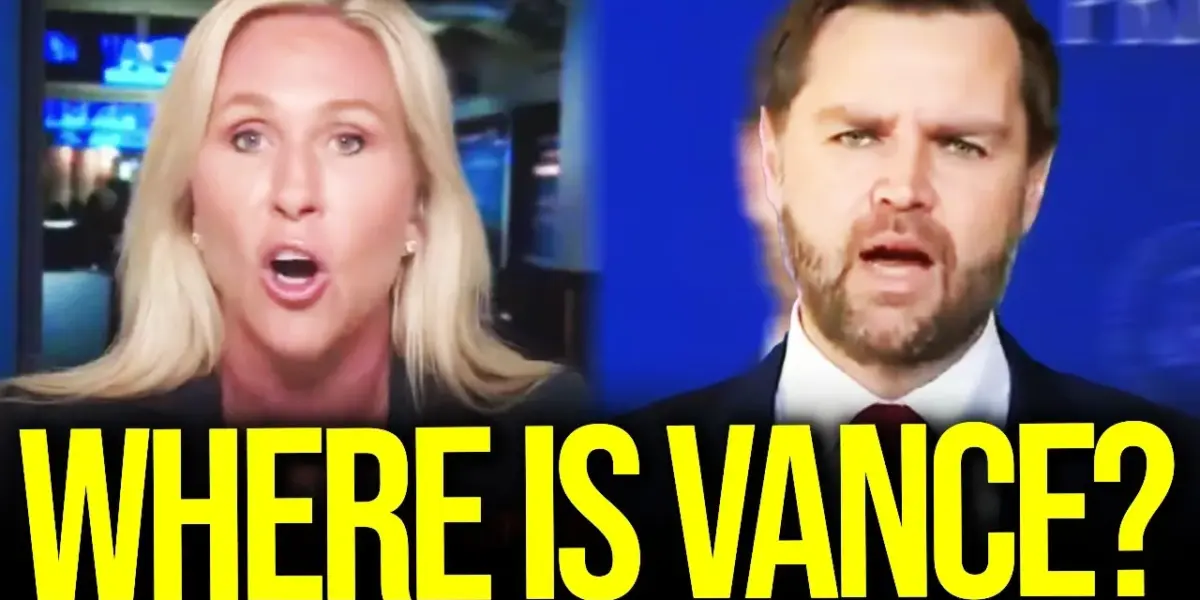
The Shifting Sands of Republican Foreign Policy: Vance’s Silence Amidst Greene’s Scrutiny
In the often tumultuous landscape of American politics, shifts in alliances and public stances can signal deeper currents of ideological change. The recent debate surrounding military action in Iran and the accompanying fiscal debates within the Republican party have brought two prominent figures into sharp contrast: Marjorie Taylor Greene and J.D. Vance. While Greene has vocally criticized the GOP’s approach to funding conflicts abroad, Vance, a vocal critic of interventionism on the campaign trail, has conspicuously retreated from public commentary, a move that has drawn significant attention and scrutiny.
Greene’s Fiery Critique: “America First” or “Neoconservative Love for War”?
Marjorie Taylor Greene, a figure known for her outspoken and often controversial positions, recently appeared on CNN to address the escalating situation with Iran and the broader fiscal priorities of the Republican party. Her central argument was a stark denunciation of what she perceives as a betrayal of the “America First” agenda. Greene highlighted the paradox of Republicans prioritizing funding for overseas conflicts, such as a potential supplemental bill for the war in Iran, while simultaneously struggling to fund domestic priorities like Homeland Security, healthcare, and education.
“We’ve got the Republicans uh in Congress right now. They can’t even fund Homeland Security. Our own Border Patrol, ICE, TSA agents, and others are not even getting paid. But yet here they are told that they’re going to be voting and and they’ll vote for it. Believe me, the they love the war. The neocons love the war,” Greene stated, directly challenging the prevailing narrative within her party. She drew a parallel between the proposed $50 billion or more for a war supplemental and the cost of essential domestic programs, noting that the Affordable Care Act subsidies, which Republicans have opposed, cost a similar amount to provide healthcare for millions of Americans.
Greene’s critique extended to the broader implications of perpetual conflict, echoing concerns about the generational debt incurred by military interventions. “The neocon boomers surrounding Donald Trump are mortgaging my generation’s future for another endless maybe endless but another very expensive Middle Eastern war. We tried this with Iraq. We tried this with Afghanistan. It left us in trillions and trillions of dollars in debt,” she argued. This sentiment underscores a growing generational divide on foreign policy, with younger generations bearing the brunt of economic consequences from prolonged military engagements.
Vance’s Vanishing Act: From Anti-War Hawk to Silent Supporter?
In stark contrast to Greene’s vocal opposition, Senator J.D. Vance has faced accusations of going “radio silent” on the Iran conflict and its implications. Vance, who built a significant portion of his political brand on a platform of anti-interventionism and a rejection of “boomer neocon style” foreign policy, finds himself in a precarious position. His past statements, particularly those critical of “endless wars” and advocating for a focus on domestic issues, now appear to be at odds with the Trump administration’s actions and the broader hawkish sentiment within certain Republican factions.
Medi Hassan, among others, pointed out Vance’s sudden quietude on social media and in public discourse, suggesting it’s a deliberate strategy to avoid being questioned about his perceived hypocrisy. Vance’s campaign trail rhetoric, which emphasized a desire to disengage from foreign conflicts, is now being contrasted with his current role within an administration that appears to be leaning towards a more interventionist stance, potentially influenced by figures like Marco Rubio. This has led to speculation that Vance is being sidelined, or is choosing to remain silent to avoid alienating key figures within the party or former President Trump himself.
“J Vance, who has repeatedly attacked me and other journalists on Twitter as he has so much time on his hands, has gone almost completely dark on here because he doesn’t want to get asked about Iran and how Trump has totally undermined him and made him look like a complete hypocrite on Iran.” – Medi Hassan (paraphrased from transcript)
The Situation Room Divide: A Visual Metaphor for Ideological Rift
The visual of J.D. Vance and Tulsi Gabbard being present in a separate “situation room” during discussions on Iran, distinct from a primary room reportedly including Donald Trump and Marco Rubio, has been interpreted as a potent symbol of an ideological rift. This separation suggests that Vance and Gabbard, who have historically espoused strong anti-interventionist views, may not be in the central decision-making loop or are being deliberately kept at arm’s length.
When questioned about his advice to the President regarding Iran, Vance offered a non-answer, citing the classified nature of the discussions and the need for advisors to speak freely with the President without fear of reprisal. “I hate to disappoint you, but I’m not going to show up here and in front of God and everybody else tell you exactly what I said in that classified room. Partially because I don’t want to go to prison. And partially because I think it’s important for the president of the United States to be able to talk to his adviserss without those advisers running their mouth to the American media,” Vance stated. However, reports from Politico indicate that Vance was indeed a skeptical voice regarding Iran strikes, making his current silence all the more conspicuous.
Why This Matters: The Battle for the Soul of the GOP
The contrasting approaches of Greene and Vance, and the broader silence from figures like Vance, highlight a critical internal struggle within the Republican party. For years, a significant faction of the GOP has advocated for a departure from traditional neoconservative foreign policy, pushing for a more isolationist or non-interventionist stance. Vance, in particular, gained prominence by articulating these views forcefully. His current reticence suggests either a strategic capitulation, a genuine internal conflict, or a deliberate choice to prioritize loyalty to former President Trump over ideological consistency.
Greene’s willingness to publicly challenge the party’s direction, even if it means alienating allies, demonstrates a commitment to her “America First” platform, which prioritizes domestic well-being over foreign entanglements. The financial arguments she presents—the cost of war versus the underfunding of essential services—resonate with a broader public increasingly concerned about economic stability and the national debt.
Implications, Trends, and Future Outlook
The situation underscores a broader trend in American politics: the tension between established foreign policy doctrines and a rising wave of skepticism towards interventionism, particularly among younger voters and a segment of the Republican base. The “America First” movement, while ostensibly unified, appears to be fracturing over the practical application of its principles when faced with geopolitical crises.
For J.D. Vance, this period could define his political future. His ability to reconcile his past rhetoric with his current actions will be crucial. If he continues to remain silent or is perceived as compromising his core beliefs, it could erode his credibility with the anti-war base he courted. Conversely, if the Trump-aligned foreign policy continues to lean towards interventionism, Vance may find himself increasingly marginalized or forced to adapt his stance.
Marjorie Taylor Greene, on the other hand, is solidifying her position as a vocal critic of the Republican establishment’s foreign policy decisions. Her ability to articulate a populist critique of war spending and its impact on ordinary Americans could resonate widely, potentially positioning her as a key voice for a more isolationist wing of the party.
Historical Context: The Echoes of Past Debates
The current debate over interventionism in the Middle East and the Republican party’s internal divisions are not new. They echo the debates that have characterized American foreign policy for decades, particularly the divisions that emerged in the lead-up to and aftermath of the Iraq War. The rise of figures like Pat Buchanan in the 1990s, who advocated for a more restrained foreign policy, and the subsequent anti-war movements during the Bush and Obama administrations, demonstrate a recurring tension between global engagement and domestic focus.
The “boomer neocon” critique, as voiced by Greene, refers to a generation of foreign policy thinkers and politicians who generally favored robust military interventionism and a strong global American presence. The “America First” movement, in its various iterations, has consistently challenged this orthodoxy, arguing for a more inward-looking approach. The current predicament of J.D. Vance, a prominent figure in this newer wave of skepticism, highlights the ongoing struggle to define the Republican party’s identity and its role in the world.
Ultimately, the contrasting performances of Greene and Vance, and the broader silence from figures like Vance on critical foreign policy issues, reveal the complex and evolving nature of the Republican party’s foreign policy vision. The “America First” banner is being interpreted and contested, with significant implications for both domestic policy and America’s standing on the global stage.
Source: Marjorie Leaks THE TRUTH as JD Vance VANISHES (YouTube)

Related Articles
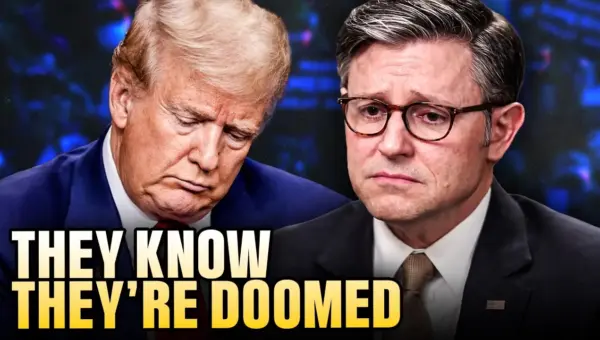
Polls Spell Doom: Republicans Face Voter Backlash
New polling data reveals a sharp decline in public confidence regarding the economic impact of Republican policies, particularly under Donald Trump. A significant majority now feel financially worse off, a trend that is especially pronounced among independent voters. This economic discontent poses a major challenge for the Republican party heading into future elections.

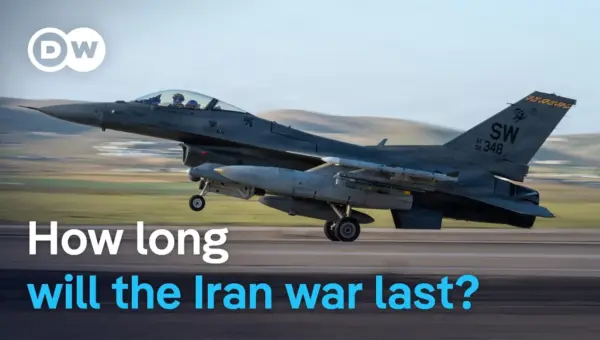
US Official Claims Iran War Could End Soon; Expert Skeptical
Despite US envoy Steve Woff's optimism about imminent talks and a swift end to the conflict with Iran, expert Aaron David Miller expresses significant doubt. Miller argues that a lack of shared urgency and fundamental miscalculations by the US administration make a quick resolution unlikely.
Saudi Arabia Pushes US for Iran War, Report Claims
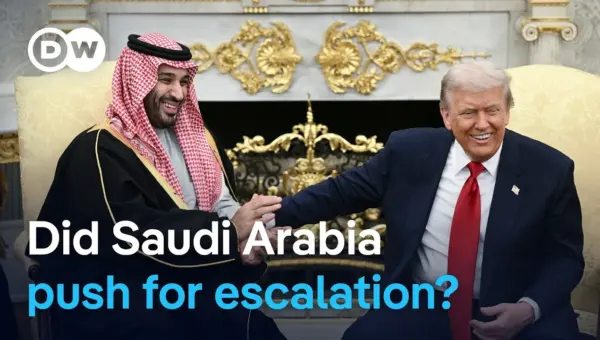
Saudi Arabia's Crown Prince Mohammed bin Salman has reportedly urged the US to escalate military action against Iran, viewing it as an opportunity to reshape the Middle East. While Saudi officials deny the report, the push comes amid increased Iranian attacks on Saudi oil infrastructure. Experts suggest a complex dynamic where Saudi Arabia seeks US intervention while also managing the risks of regional instability.