Vance Links UFOs to Demons, Not Aliens
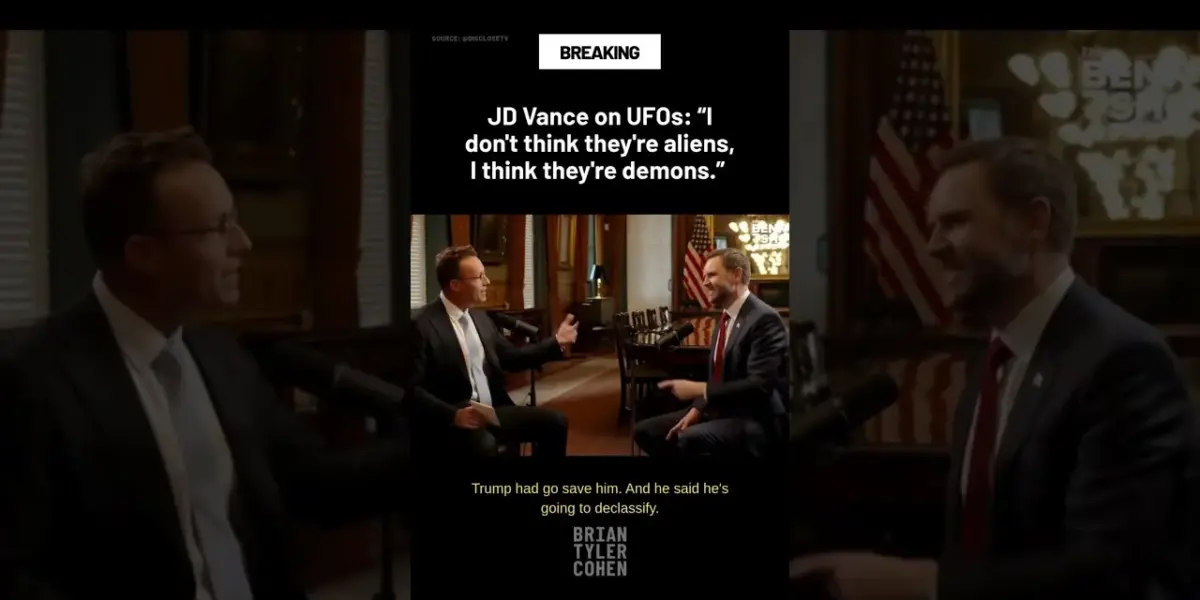
Senator JD Vance recently suggested that UFOs might be demonic, not alien, drawing on religious interpretations of unexplained phenomena. This viewpoint contrasts with scientific and governmental investigations, highlighting diverse ways people understand the unknown.

Vance Links UFOs to Demons, Not Aliens
Senator JD Vance recently shared a surprising take on Unidentified Aerial Phenomena (UAP), commonly known as UFOs. Instead of suggesting extraterrestrial visitors, Vance proposed a more spiritual explanation. He believes these phenomena might be demonic in nature, a concept rooted in religious understanding rather than scientific inquiry. This viewpoint diverges sharply from common public and even some governmental discussions about UAP.
Obama’s Take and Vance’s Rebuttal
The conversation touched upon former President Barack Obama’s own comments regarding aliens. Obama had previously stated that aliens are real but not in the way many imagine, like at Area 51. Vance uses this as a starting point for his argument. He suggests that the human tendency to label unexplained celestial events as ‘aliens’ overlooks older, more traditional explanations found in various world religions.
A Religious Framework for the Unexplained
Vance, who identifies with Christianity, explained his perspective. He argued that many religions acknowledge the existence of powerful, otherworldly beings. These beings, he suggested, can perform actions that are difficult for humans to understand. Vance feels that the modern interpretation often jumps to ‘aliens’ when confronted with such phenomena. He believes this is a misdirection, a trick employed by evil forces.
I think that one of the devil’s great tricks is to convince people we never exist.
This quote encapsulates Vance’s core idea. He posits that the focus on extraterrestrial life distracts from the possibility of supernatural, malevolent entities. For Vance, the unexplained aspects of UAP align more closely with descriptions of spiritual beings found in religious texts. He sees a spiritual battle where the existence of evil is downplayed by focusing on a more scientifically palatable, yet perhaps less accurate, explanation.
Historical Context: Explaining the Unknown
Throughout history, humans have sought to explain the unexplainable. Before modern science, natural disasters, unusual weather, and strange lights in the sky were often attributed to divine intervention or supernatural forces. Concepts of angels, demons, and spirits were common frameworks for understanding the world. The rise of science offered new explanations, but Vance suggests that some phenomena might still fall outside purely scientific understanding. He is essentially bringing an older, faith-based interpretation back into the modern UAP discussion.
Balanced Viewpoints: Science vs. Faith
It’s important to note that Vance’s view is not the only one. Many scientists and researchers approach UAP from an empirical standpoint. They look for physical evidence, testable hypotheses, and conventional explanations like advanced technology, atmospheric phenomena, or misidentified aircraft. The U.S. government itself has been investigating UAP, with reports often focusing on potential national security implications and the need for more data. These official investigations typically do not involve religious interpretations.
However, Vance’s perspective highlights a different way of processing the unknown. It taps into a deep-seated human need for meaning and understanding, especially when faced with events that defy easy explanation. His argument is that religious traditions offer a rich history of grappling with such mysteries, and perhaps these older explanations hold relevance today.
Why This Matters
Senator Vance’s comments matter because they reflect a growing, albeit diverse, conversation about UAP. They show how deeply held beliefs, including religious ones, can shape how individuals interpret complex issues. Vance’s framing of UAP as potentially demonic challenges the purely scientific or technological explanations that often dominate public discourse. It brings a spiritual or theological dimension into a conversation that is increasingly becoming a matter of national security and scientific study. This highlights the different lenses through which people view the world and the unknown.
Implications and Future Outlook
The implications of Vance’s viewpoint are significant for public discourse. If a prominent senator frames UAP in religious terms, it could influence how some segments of the population perceive the issue. It might encourage a re-examination of older spiritual texts for answers. For those who already hold strong religious beliefs, Vance’s explanation might resonate more than scientific theories. Looking ahead, the UAP discussion is likely to remain multi-faceted. It will probably continue to involve scientific investigation, government reporting, and, as Vance demonstrates, personal and religious interpretations. The challenge will be to foster open dialogue that respects different viewpoints while still pursuing evidence-based understanding.
Source: JD Vance on UFOs: "i don't think they're aliens, I think they're demons." (YouTube)

Related Articles
Presidential Gaffes Raise Questions About Leadership
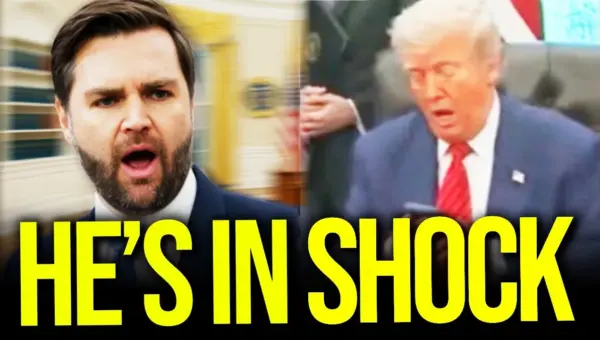
Recent events involving President Trump's public appearances and Senator JD Vance's statements on foreign policy and allegations against Ilhan Omar are raising questions about leadership and political discourse. Reports of the President appearing to doze off in meetings and his own jokes about the 25th Amendment, alongside Vance's disputed claims about the Iran conflict and his exploration of legal remedies against a congresswoman, highlight concerns about competence and due process.
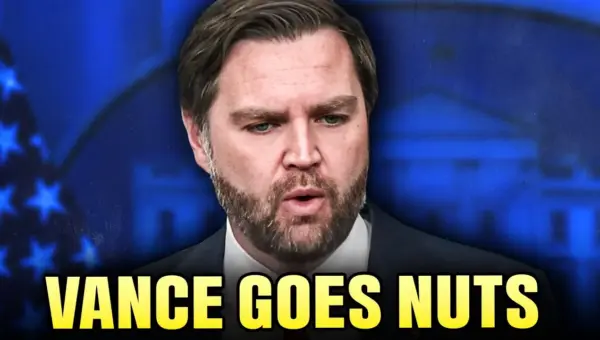
Vance Fuels Fear: Nuclear Vest Claims Echo War-Mongering Tactics
Senator JD Vance's controversial "nuclear vest" claims about Iran are drawing sharp criticism, with many seeing echoes of past fear-mongering tactics used to justify war. The remarks raise questions about scientific feasibility and responsible communication of national security threats.
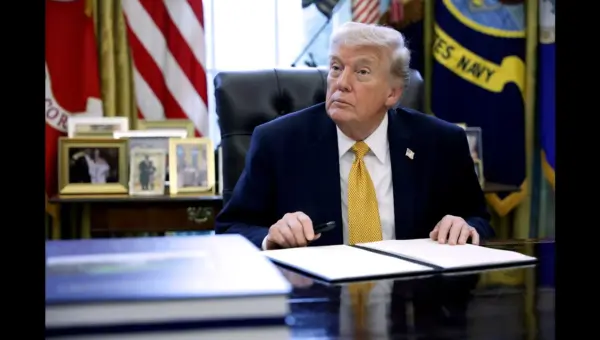
Vance Tackles Federal Fraud: A New War on Waste
Vice President JD Vance has launched a new White House task force to combat fraud in federal benefit programs. The initiative aims to improve verification processes and foster inter-agency cooperation to stop waste and restore public trust. The task force highlights issues in states that allegedly operate on an honor system for benefit distribution.