US Weighs Troop Move Amid Iran Strait Showdown
The U.S. is reportedly considering deploying thousands of airborne troops to the Middle East amid rising tensions with Iran over the Strait of Hormuz. Pakistan has emerged as a key mediator, engaging with both Washington and Tehran as a critical deadline approaches for Iran to reopen the vital shipping lane.

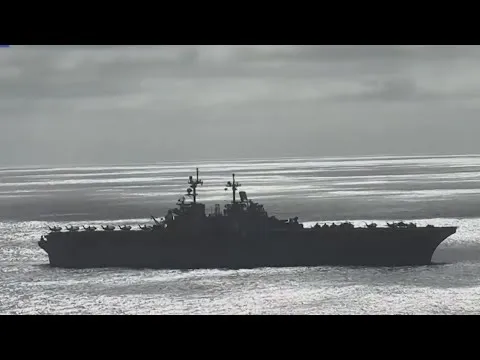
US Considers Airborne Troops for Hormuz Strait Security
The United States is reportedly considering a significant military move in the Middle East. The Trump administration is thinking about sending thousands of troops from the 82nd Airborne Division to the region. These soldiers are known for being able to deploy anywhere in the world quickly. The goal would be to help secure shipping through the Strait of Hormuz. This critical waterway is vital for global oil transport. Some reports suggest the troops could even seize Kharg Island, a key Iranian oil export terminal. This potential deployment comes as President Trump has set a deadline for Iran to reopen the Strait of Hormuz. That deadline is approaching, and the world is watching.
Iran Faces Deadline, Pakistan Steps In
President Trump has given Iran a deadline to reopen the Strait of Hormuz. If Iran does not comply, the U.S. is exploring options. Meanwhile, Pakistan appears to be taking on a role as a mediator. The White House confirmed that President Trump spoke with Pakistan’s Army Chief on Monday. At the same time, Pakistan’s Prime Minister held talks with Iran’s President on the same day. This suggests a diplomatic effort is underway, with Pakistan trying to bridge the gap between the U.S. and Iran.
U.S. Troop Movements and Naval Presence
In addition to the potential deployment of airborne troops, other U.S. forces are already on the move. Around 3,000 U.S. troops from Japan are scheduled to arrive in the Middle East by Friday. This arrival coincides with the expiration of President Trump’s deadline for Iran. The U.S. Navy’s presence in the region is also notable. The aircraft carrier USS Abraham Lincoln is currently in the Middle East. However, the USS Gerald R. Ford, the nation’s largest aircraft carrier, recently arrived in Greece for repairs. A laundry room fire damaged the Ford earlier this month, taking it out of active duty in the region for now. The Ford had been deployed to Europe and the Caribbean before being ordered to the Middle East.
Shifting Alliances and Diplomatic Maneuvers
The situation highlights a complex web of international relations. The U.S. is applying pressure on Iran, primarily through military posturing and deadlines. Iran, in turn, denies any intention of closing the Strait of Hormuz. President Trump has expressed optimism about a potential deal, stating that a resolution might be in sight. This optimism, despite the escalating tensions, points to ongoing, possibly behind-the-scenes, diplomatic efforts. The involvement of Pakistan as a mediator is a significant development. It shows how regional powers can play a role in de-escalating international crises. Pakistan’s strategic position and its relationships with both the U.S. and Iran make it a plausible go-between.
Historical Context: The Strait of Hormuz
The Strait of Hormuz has long been a focal point of geopolitical tension. It is a narrow waterway connecting the Persian Gulf to the open sea. About one-fifth of the world’s total daily oil consumption passes through this strait. Any disruption here can have immediate and severe impacts on global energy markets. Iran has previously threatened to close the strait in response to external pressure. The U.S. and its allies have consistently stated that they would not tolerate such a blockade. This ongoing standoff is rooted in decades of complex U.S.-Iran relations, including past conflicts and sanctions.
Economic Ramifications and Global Impact
The potential closure of the Strait of Hormuz carries immense economic consequences. Global oil prices would likely surge, impacting economies worldwide. Countries heavily reliant on oil imports would face significant challenges. This could lead to inflation and slow down economic growth in many nations. The U.S. military buildup and the consideration of deploying airborne troops are aimed at preventing such an economic crisis. The effectiveness of sanctions against Iran is also tied to the strait’s openness. If Iran can disrupt oil shipments, it could undermine international economic pressure.
Future Scenarios and Outlook
Several outcomes are possible. Iran might reopen the strait under pressure, possibly as part of a broader agreement brokered by mediators like Pakistan. Alternatively, Iran could attempt to disrupt shipping, leading to a more direct confrontation with the U.S. and its allies. This could involve military action to secure the strait. Another scenario is a continued standoff, with tensions high but without a major escalation. The U.S. military’s readiness, exemplified by the 82nd Airborne Division, suggests a preparedness for various contingencies. However, the administration’s expressed hope for a deal indicates a preference for a diplomatic solution.
Source: US reportedly weighing deployment of airborne troops to Middle East | Morning in America (YouTube)

Related Articles
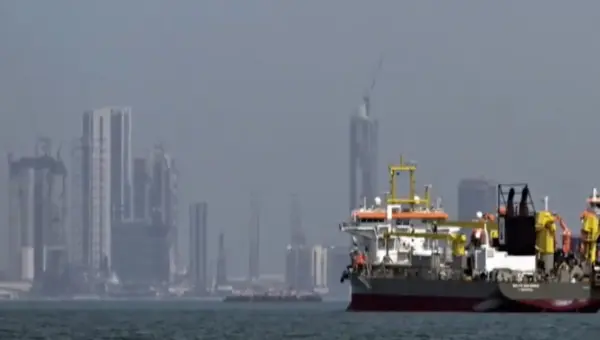
Iran Blocks China Ships, Exposing Beijing’s Weak Grip
Iran's recent decision to block Chinese ships at the Strait of Hormuz is exposing the limits of Beijing's influence in the Middle East. This action is causing delays and cancellations for Chinese manufacturers, turning a perceived geopolitical win into an economic strain.
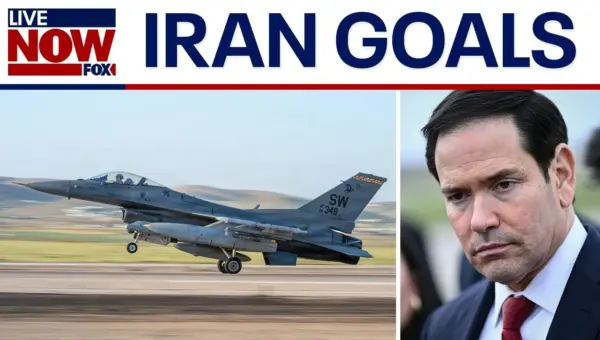
Rubio: US Can Achieve Iran War Goals Without Troops
Senator Marco Rubio outlined a strategy to counter Iran without deploying U.S. ground troops, focusing on weakening the regime and enhancing maritime security. He also criticized Cuba's economic system and expressed concerns about West Bank violence.


Israel Escalates Iran Strikes, Warns of Wider War
Israel has launched significant strikes inside Iran following continued missile fire, warning of further escalation. The conflict risks wider regional instability and economic disruption, especially concerning the Strait of Hormuz.