US Warships Surge Toward Iran, Escalation Fears Mount
The U.S. is increasing military presence in the Persian Gulf, sending thousands of Marines toward Iran. Correspondent Geraldo Rivera warns this is a dangerous escalation, comparing it to the Iraq War. He highlights Iran's growing capabilities, including enriched uranium and ICBMs, and fears a prolonged, unpredictable conflict with significant global consequences.


US Warships Surge Toward Iran, Escalation Fears Mount
The United States is sending more military forces, including thousands of Marines, toward the Persian Gulf. This move signals a significant escalation in the ongoing conflict with Iran. Geraldo Rivera, a correspondent with NewsNation, compares the situation to the early days of the Iraq War. He warns that the current path is one of increasing conflict, not resolution.
Escalation Every Day
Rivera highlights the daily arrival of new ships and aircraft in the region. The deployment of Apache helicopters and the movement of Marines toward the Strait of Hormuz are clear signs of this escalation. He states that every action taken seems to spell out a deeper involvement in the fight. Rivera believes that neither the U.S. nor Iran is prepared to back down. He suggests that Israel will ensure the U.S. maintains its resolve in the face of this challenge.
Iran’s Desperate Stand
Iran, Rivera explains, is fighting for its survival. The U.S. has systematically targeted Iranian leadership, including prominent figures like Qassem Soleimani. These actions have created a deep-seated desire for revenge within Iran. The country feels it has no choice but to resist. Rivera points to Iran’s development of enriched uranium and its testing of intercontinental ballistic missiles (ICBMs) as evidence of its determination and capability.
Missile Threats and Nuclear Concerns
A key concern for Rivera is the amount of enriched uranium Iran possesses. He mentions reports of 140 kilograms of enriched uranium already in the country. Furthermore, Iran has launched two ICBMs in the direction of Diego Garcia, a U.S./U.K. base in the Indian Ocean, located about 2,500 miles away. While one missile may have been intercepted, the fact that Iran has the capability to launch such weapons, possibly with a nuclear payload, is deeply worrying.
Ground Operation Risks
The arrival of over 2,500 Marines on warships is a significant development. Rivera questions the practicality of seizing key Iranian assets like Kharg Island, a major oil refinery. He notes that any attempt to do so would require passage through the Strait of Hormuz, putting U.S. forces directly in Iran’s path. Rivera strongly advises against a ground operation. He believes that the moment U.S. Marines are harmed, it will mark a major escalation. He sees the current situation as the beginning of what could be a long and difficult campaign, especially given Iran’s large population and militarized history.
Economic Warfare and Funding the Conflict
Rivera also touches upon the immense cost of this conflict. He notes that the administration is asking for $200 billion to prosecute this fight. He urges lawmakers to question this request. Rivera believes that Congress has a role to play in preventing further escalation. He fears that the current path is a slippery slope, leading to deeper and more dangerous involvement in the region.
Global Impact
This escalating confrontation between the U.S. and Iran has far-reaching consequences. The Strait of Hormuz is a critical global oil chokepoint. Any disruption there could send oil prices soaring worldwide. The potential for a wider regional war involving other Middle Eastern powers is also a serious concern. The U.S. military buildup, coupled with Iran’s retaliatory capabilities, creates a volatile environment. The international community watches with apprehension as diplomatic solutions seem increasingly distant.
Historical Context
The current tensions echo past conflicts in the Middle East, particularly the Iraq War. Rivera’s comparison highlights a pattern of underestimating an adversary and overestimating the speed of military success. The U.S. has a long history of involvement in the region, dating back to the 1950s. Decades of interventions, shifting alliances, and proxy conflicts have created a complex web of grievances. Iran, since its 1979 revolution, has viewed external powers with deep suspicion, further complicating diplomatic efforts.
Future Scenarios
One likely scenario is a prolonged period of heightened tensions, skirmishes, and economic pressure. Iran may continue to use asymmetric tactics, targeting shipping and regional allies. The U.S. will likely maintain its military presence and pursue sanctions. A more dangerous scenario involves direct military confrontation, potentially triggered by an incident in the Strait of Hormuz or an attack on U.S. forces. This could lead to a wider regional conflict. A less likely, but desirable, scenario would involve renewed diplomatic engagement, perhaps facilitated by international pressure, to de-escalate tensions and address the core issues driving the conflict.
Source: Geraldo Rivera: Neither Trump, Iran will quit to end conflict | NewsNation Prime (YouTube)

Related Articles

G7 Allies Clash Over Iran War Strategy, Urge Focus on Russia
G7 foreign ministers met in Paris, revealing deep divisions over the U.S. war with Iran. European allies urged the U.S. to pressure Russia, linking its actions to the conflict and fearing support for Ukraine will wane.
Iran Blocks China Ships, Exposing Beijing’s Weak Grip
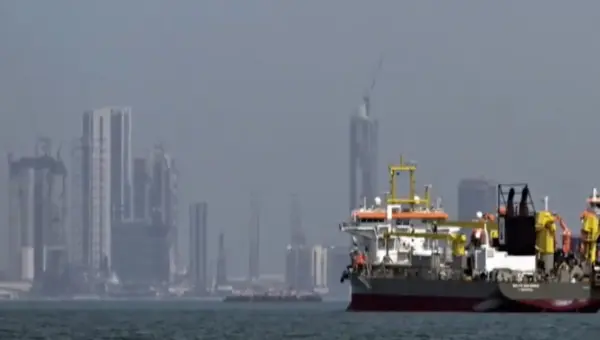
Iran's recent decision to block Chinese ships at the Strait of Hormuz is exposing the limits of Beijing's influence in the Middle East. This action is causing delays and cancellations for Chinese manufacturers, turning a perceived geopolitical win into an economic strain.
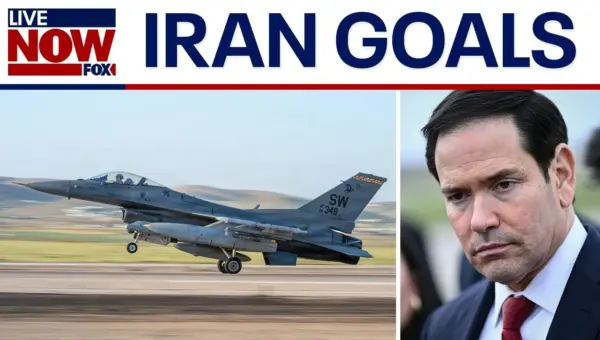
Rubio: US Can Achieve Iran War Goals Without Troops
Senator Marco Rubio outlined a strategy to counter Iran without deploying U.S. ground troops, focusing on weakening the regime and enhancing maritime security. He also criticized Cuba's economic system and expressed concerns about West Bank violence.