US War with Iran: Questions Linger on Justification, Escalation
In the initial days of the war with Iran, U.S. officials faced scrutiny over the justification for military action. While outlining battlefield gains, questions persist about the immediate threat that triggered the conflict and concerns are mounting over the widening scope of the war.


US War with Iran: Questions Linger on Justification, Escalation
In the opening days of the conflict with Iran, U.S. Defense Secretary Pete Hegseth and Chairman of the Joint Chiefs Dan Cain provided an update on the ongoing military campaign. However, the briefing left many with lingering questions regarding the immediate justification for the war and concerns about its widening scope.
Hegseth’s Briefing Draws Scrutiny
Defense Secretary Pete Hegseth’s presentation was described by some observers as a “childish litany of accomplishments” focused on the delivery of “death and destruction and power.” When pressed on the intelligence that led to the initial strikes, Hegseth stated that Iran had “intentions eventually to do bad things.” This explanation failed to satisfy many, as the term “eventual” lacks the immediacy typically required to justify pre-emptive military action, especially without congressional approval.
“There was no answers on what the immediate threat was, which is what a lot of people want to know. Like, what was it that triggered this without going to Congress?” one reporter noted, highlighting the central concern that the administration struggled to articulate a clear and urgent reason for the war.
Joint Chiefs Offer Detailed Assessment
In contrast to Hegseth’s rhetoric, Chairman of the Joint Chiefs Dan Cain offered a more detailed and somber assessment of the campaign, now four days and 103 hours old. He began by expressing gratitude and grief for the American service members who have lost their lives.
Cain outlined several key accomplishments, stating that U.S. forces have:
- Eliminated Iran’s ballistic missile systems.
- Destroyed much of Iran’s navy and air force.
- Are in the process of assuring Iran cannot rebuild its combat power.
He also acknowledged the support from Gulf states, including the United Arab Emirates and Qatar, in pushing back against Iranian retaliation. Cain touched upon U.S. efforts to help Americans evacuate the region but provided few further details.
Doubts Over Nuclear Claims and Strategy
David Rode, senior national security reporter for MSNBC, echoed the sentiment that a clear explanation for the timing of the war was absent. Rode pointed to claims made by Steve Whitkoff regarding Iran’s pursuit of a nuclear weapon. Whitkoff alleged in a Fox News interview that Iranians had bragged about possessing enough enriched uranium for 11 nuclear bombs. However, sources familiar with the negotiations told Rode’s team that this claim is unsubstantiated and that the Iranians stated they were enriching uranium as a continuation of their program after the U.S. withdrawal from the Obama-era nuclear deal.
“It’s a continuation of the administration struggling to explain why they had to do this now,” Rode observed. He further expressed concern about the administration’s strategy, noting that the objectives remain unclear. Rode found the military’s descriptions of the conflict, including comparing it to a football game and talking about “pushing the throttle up,” to be unusually casual for an action as grave as waging war.
“Waging war is one of the most serious things in the American government can do. Six Americans have lost their lives already, and so it’s━he Iranian forces, and maybe they will. And this is a terrible regime, and maybe they will be toppled. But I’m still concerned about the strategy the administration has here, and I still think that the objective is unclear.”
Regional Escalation and American Evacuation Efforts
International reporter Ines de la Quatera provided a ground-level perspective from Israel, where air raid sirens have continued to sound throughout the day. She confirmed reports that Iran’s ballistic missile capabilities have decreased significantly, with localized air superiority established. However, Israel has experienced incoming fire from both Iran and Hezbollah simultaneously, and Israeli forces are continuing strikes against Iran, targeting successors to the Supreme Leader and the council set to elect him.
The death toll in the region is rising, with Iranian state media reporting casualties. Beyond direct military targets, Iran has broadened its attacks to include energy facilities, hotels, residential buildings, and airports, as well as U.S. embassies in Saudi Arabia and Kuwait, and a U.S. consulate in Dubai. These attacks complicate evacuation efforts for Americans in the region.
The State Department is urging Americans to leave Israel, with the embassy stating it cannot assist with evacuations and advising Americans to contact the Israeli Ministry of Tourism for land border crossing information. While Americans in Israel are largely left to their own devices, the State Department is chartering flights for evacuations from Saudi Arabia, Jordan, and the UAE. The Trump administration is facing criticism for its perceived slow efforts in facilitating these evacuations.
NATO Involvement and Widening Conflict
The conflict’s scope appears to be widening, with reports of an Israeli fighter jet shooting down a member of the Iranian opposition and, critically, NATO air defenses shooting down an Iranian ballistic missile heading towards Turkey, a NATO country. This incident represents a significant escalation, potentially drawing the alliance into the conflict, though European support for the operation is reportedly lacking.
“So there’s certainly this, despite the confidence expressed there at the podium we just heard, this war seems to only be widening,” de la Quatera stated. The impact on global markets is also a critical concern, with oil prices and stock markets reacting to the instability in the Gulf. While the U.S. has proposed escorting oil tankers, the effectiveness of drones in asymmetric warfare remains a significant threat, as demonstrated by a drone attack that killed American service members.
“Drones could be, you know, put on target to try to hit oil tankers, and they’re hard to knock out all of them, they do get through. So I agree. I don’t think this is over. I think they are depleting a lot of their weapons, but I think they’re finding ways to get missiles through. That’s the Turkey example that you mentioned is startling. IT WAS SHOT DOWN, IT’S IN A WAY THAT IRAN HAS NOW TAKEN ON NATO. THEY COULD, AS AN ALLIANCE, FIGHT BACK. I DON’T THINK THAT WILL HAPPEN AT THIS POINT BECAUSE THE EUROPEANS DON’T SUPPORT THIS operation. But this is continuing apace. It’s not slowing down,” de la Quatera concluded.
Looking Ahead
As the conflict with Iran continues to unfold, the primary focus will be on whether the administration can provide a clearer strategic objective and a more compelling justification for the ongoing military actions. The international community will be watching closely to see if the conflict further escalates, potentially drawing in NATO, and how the U.S. manages the complex task of protecting its citizens and interests in an increasingly volatile region. The economic ramifications, particularly concerning oil supply and global markets, will also remain a key indicator of the war’s broader impact.
Source: ‘Childish litany’: Mika questions Hegseth’s Iran briefing, says he offered no explanation for why (YouTube)

Related Articles

Middle East Conflict Sparks Highest Oil Prices in Two Years
Heightened conflict in the Middle East has propelled oil prices to a two-year high, impacting consumers globally. From Germany's double-digit fuel cost increases to renewed debates on energy policy in the US, the surge is reshaping economic landscapes and forcing nations to confront energy security.
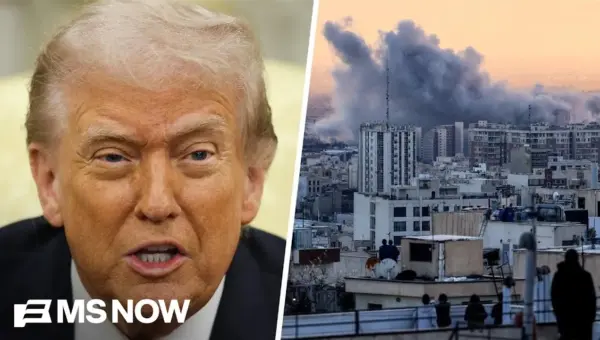
Senator Slams Trump’s ‘Immoral’ Iran War Stance
Senator Chris Van Hollen sharply criticized the Trump administration's rationale for military action against Iran, calling the president "immoral" and accusing the White House of fabricating justifications. He drew parallels to the Iraq War and questioned the escalating costs and unclear objectives of the conflict.


Iran Defends Itself Amidst U.S. Aggression, Denies Nuclear Bomb Claims
Iran's Deputy Foreign Minister, Majid Takht Ravanchi, stated that Iran is defending itself against an "imposed war of aggression" by the U.S. and Israel, refuting claims of nuclear bomb ambitions and direct communication with Washington amidst the conflict. He highlighted civilian casualties and the targeting of non-military assets by aggressors.