US War with Iran: Defining Victory Amid Shifting Objectives
The U.S. has launched significant strikes against Iran, raising questions about the conflict's objectives and the definition of victory. Experts like Admiral James "Sandy" Winnefeld analyze the unprecedented scale of the operation, the challenges of defining 'winning,' and the evolving nature of warfare, particularly the role of drones and the strain on munitions.

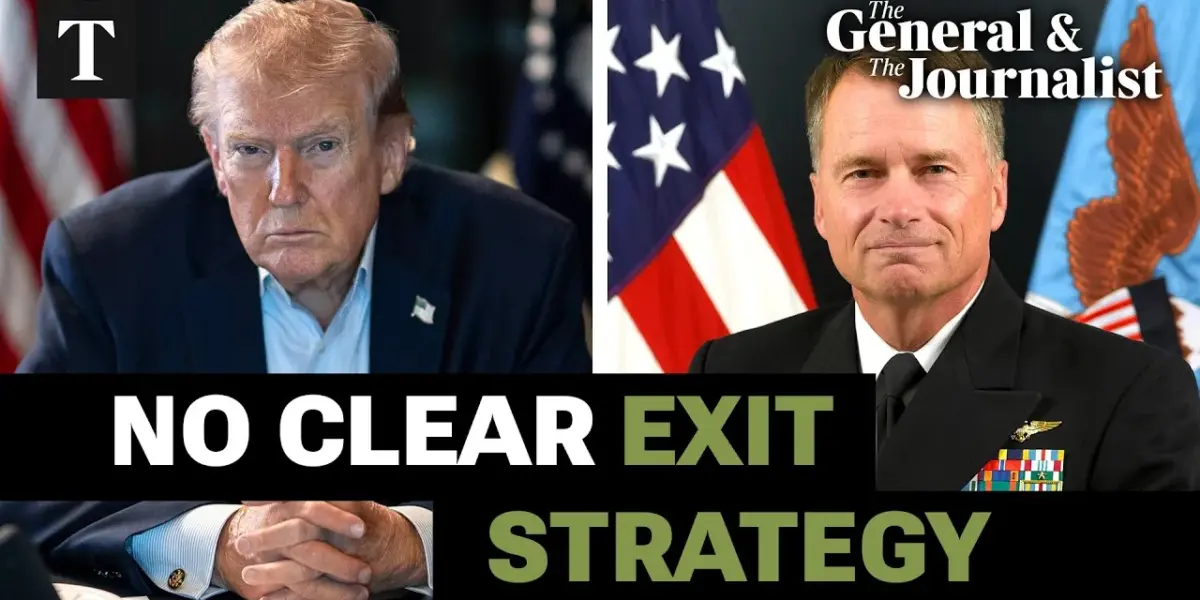
US Strikes Iran: A New Era of Warfare?
In a significant escalation of regional tensions, the United States has launched a series of precision strikes against Iran, targeting key leadership and military infrastructure. The operation, which began early Saturday morning with a “decapitation strike” aimed at eliminating top Iranian officials, has raised critical questions about the conflict’s objectives, the definition of victory, and the evolving nature of modern warfare. The rationale behind the U.S. military action has appeared to shift, leaving analysts and the public seeking clarity on the ultimate goals. President Trump has previously stated that the actions are a response to “mass terror” perpetrated by the Iranian regime, citing its funding and training of militias across the Middle East. However, other explanations from administration officials have ranged from dismantling Iran’s air defense and offensive capabilities to curbing its nuclear program.
Unprecedented Scale and Ambition
The military execution of the initial strikes has been described as unprecedented in its scale and ambition. Retired Admiral James “Sandy” Winnefeld, former Vice Chairman of the Joint Chiefs of Staff, shared his insights on the operation’s complexity and effectiveness. “I don’t know that we’ve ever done it on this scale,” Winnefeld remarked, comparing it to the Second Gulf War but highlighting the concentrated number of targets struck in the first day as a key differentiator. The operation reportedly involved significant coordination, or at least “deconfliction,” between U.S. and Israeli assets to ensure operational success in shared airspace. A notable aspect of the strikes was the reported use of a modified version of Iranian “Shahed” drones, a move Winnefeld described as “fascinating to hear,” whether it was a cynical tactic or a necessary adaptation.
The Elusive Definition of ‘Winning’
A central theme emerging from the analysis is the difficulty in defining what constitutes a “win” in this conflict. Winnefeld emphasized the critical importance of military operations being tethered to clear policy objectives, quoting Winston Churchill: “it’s always dangerous for soldiers, sailors, or airmen to play at politics.” He noted the divergence in stated objectives, from regime change to neutralizing specific military capabilities. This ambiguity, Winnefeld suggested, might be a reason for the limited coalition support beyond Israel, as potential partners grapple with the legal basis and actual objectives of the operation.
“There have been a variety of explanations for this operation, ranging from the president himself saying this is about regime change to others such as the secretary of war… saying, you know, this is about taking down their air defense, their offensive capability, their nuclear program, and the like.”
Admiral James “Sandy” Winnefeld
Powell’s Doctrine and Modern Warfare
The discussion also delved into the relevance of Colin Powell’s doctrine, which posits that military force should be a last resort, used only with clear objectives, an exit strategy, and public support, employing overwhelming force. Winnefeld noted that elements of this doctrine are still in play, stressing the difficulty of a war where one nation is in “total war” and the other is not. He pointed out the current conflict’s unilateral nature, the significant expenditure of resources (“treasure”), and the potential violation of international law as concerning factors. The mechanics of the air campaign were also dissected, with Winnefeld outlining phases that likely involved prioritizing critical targets, neutralizing air defenses, and then moving to sustainment operations against secondary targets like ballistic missile sites.
The Drone Dilemma and Magazine Depth
The increasing role of drones, particularly in swarms, was highlighted as a new feature of warfare, with implications for air defense strategies. Winnefeld explained that air defense is often a “point defense” system, meaning it’s difficult to protect an entire country. The use of drones against less conventional targets, like urban areas, presents a challenge for traditional defense postures. Furthermore, concerns about “magazine depth” – the readiness and quantity of munitions – were raised. The cost of shooting down inexpensive Iranian drones with expensive U.S. missiles, such as $4 million missiles against $20,000 drones, could lead to rapid depletion of critical assets like Patriot missiles.
Iran’s Resilience and Survival Strategy
Despite the initial U.S. strikes, Iran’s foreign minister suggested a strategy of resilience, emphasizing their decades of studying military defeats and developing a “decentralized mosaic defense.” Winnefeld acknowledged that attacking a country of 90 million people solely from the air is a difficult undertaking, especially if the regime’s primary objective is survival. He contrasted the U.S. concept of regime change through elections with the potentially fatal consequences for leaders in Iran, Russia, or China, suggesting this survival imperative drives Iran’s determination.
The Path Forward: Uncertainty and Risk
The article concludes by circling back to the fundamental question of how the war will end. With shifting objectives and the high cost of sustained military operations, the path to a clear victory remains uncertain. The potential for Iran to impose costs on the region and global economy by threatening the Strait of Hormuz presents a formidable challenge. As the conflict unfolds, the international community will be watching closely to see if clearer objectives emerge and how the United States can navigate the complex geopolitical and military landscape to achieve a sustainable resolution.
Source: How Does America Win A War With Iran? (YouTube)

Related Articles
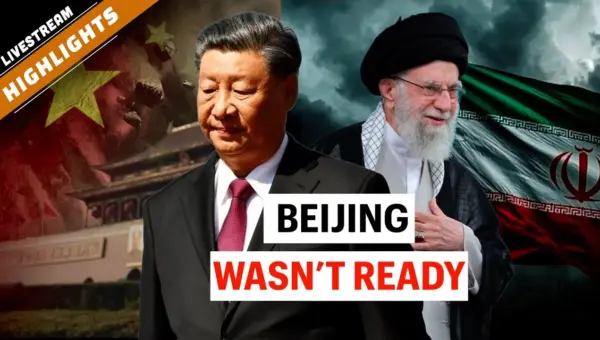
Iran Strike Exposes China’s Deepest Fears: Regime Survival
The targeted strike in Iran has exposed deep-seated fears within China's leadership, triggering anxieties about regime survival, strategic miscalculations, and the precariousness of succession. Beijing is now grappling with the implications of a volatile geopolitical landscape and its potential impact on domestic stability.


Germany’s Ramstein Base: Key US Hub in Iran Tensions
Ramstein Air Base in Germany serves as a crucial US military hub for operations in the Middle East. Despite its strategic importance and increased activity amid tensions with Iran, local communities largely embrace the American presence. Germany maintains a policy of cooperation while addressing security concerns and diplomatic implications.
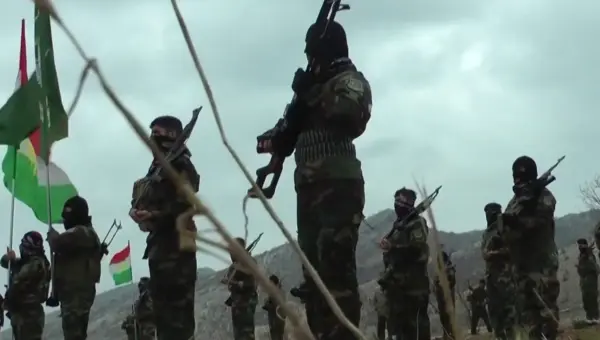
US Courts Kurdish Fighters for Potential Iran Ground Operation
The United States is reportedly in talks with Kurdish leaders to arm forces within Iran, potentially leveraging a historical relationship for a ground operation against the regime. Despite internal divisions among Kurdish groups, this strategic move could reshape regional dynamics.