US War Machine Gears Up for Iran Conflict
The U.S. is requesting $200 billion to fund an escalating war with Iran, following Israeli strikes on Iranian energy infrastructure. Analysts suggest a strategic partnership between the U.S. and Israel, aimed at crippling Iran's financial capabilities. Meanwhile, domestic security concerns rise with unidentified drones detected over U.S. soil, adding to the complex geopolitical landscape.


US War Machine Gears Up for Iran Conflict
The United States appears to be preparing for a prolonged and costly conflict with Iran, with the Pentagon requesting an additional $200 billion to fund the ongoing war. This massive funding request highlights the seriousness of the escalating tensions in the Middle East and raises questions about the war’s objectives and duration.
Israel Strikes Iranian Energy Infrastructure
The conflict escalated when Israel struck Iran’s South Pars gas field, a critical energy hub that supplies 70% of Iran’s energy. In response, Iran attacked Qatar’s main gas production site. These actions have sent shockwaves through global energy markets, with oil prices expected to remain high.
President’s Strong Words and Contradictory Actions
President Trump reacted strongly to Israel’s actions, stating on Truth Social that the United States had no prior knowledge of the attack. He warned Israel against further attacks, threatening to retaliate with overwhelming force if Iran attacked again. However, despite these strong words, Iran continued its attacks on Saudi Arabia and the UAE, indicating that the conflict is far from over.
The $200 Billion Question
The request for $200 billion in war funding has raised eyebrows, especially since only $20 billion has been spent so far. Secretary of War Pete Hegseth explained that the large sum is needed to rebuild the U.S. defense industrial base and ensure sufficient capacity to deter other adversaries. This suggests the administration is planning for a larger, more sustained conflict, not just a short-term engagement in Iran.
Surprise as a Strategic Tool?
When asked why allies like Japan were not warned about the war, President Trump cited the importance of surprise, drawing a parallel to the Pearl Harbor attack. This strategy of surprise, while potentially effective in the short term, has raised concerns among allies about transparency and coordination in U.S. foreign policy.
Expert Analysis: Strategic Partnerships and Long-Term Goals
Geopolitical analysts suggest that the U.S. and Israel are strategic partners, with Israel’s targeting of Iranian energy infrastructure aimed at cutting off funding for proxy groups. This move is seen as a way to cripple Iran’s ability to project power and support its regional allies. The war is viewed by some as a necessity, given Iran’s actions in the Gulf and its attempts to disrupt global trade routes.
Concerns Over Escalation and Civilian Impact
While the targeting of Iran’s oil infrastructure aims to weaken the regime, it also raises concerns about the impact on the Iranian people and global energy markets. The Strait of Hormuz, a vital shipping lane, remains a point of tension, with potential for further disruption.
The Threat of Drones and Domestic Security
Beyond the direct conflict, the U.S. faces a new threat from drones. Unidentified drones have been detected over sensitive locations in Washington D.C., including Fort McNair Army Base, where senior U.S. officials reside. While the origin of these drones remains unknown, experts warn of the potential for commercial off-the-shelf drones being used by nefarious actors, posing a significant domestic security challenge.
Economic and Political Ramifications at Home
The war’s escalating costs and the resulting rise in gas prices are expected to have a significant impact on the U.S. economy and domestic politics. With gas prices already up 32% since the war began, the $200 billion funding request could fuel public discontent and influence upcoming elections. The debate over how this money could be used for domestic programs, such as childcare and healthcare, highlights the stark choices facing the administration and the electorate.
Future Scenarios
Several future scenarios are possible. The U.S. could pursue a strategy of attrition, aiming to degrade Iran’s military capabilities to a point where it can no longer project power. Alternatively, diplomatic efforts could intensify, leading to a negotiated settlement. However, given the current trajectory, a prolonged conflict with significant economic and geopolitical consequences appears more likely. The ongoing drone threat adds another layer of complexity, potentially impacting both military operations and domestic security.
Source: $200B War, Are Drones Targeting U.S. Leaders? Was Student Death Accidental? | CUOMO Full Show 3/19 (YouTube)

Related Articles

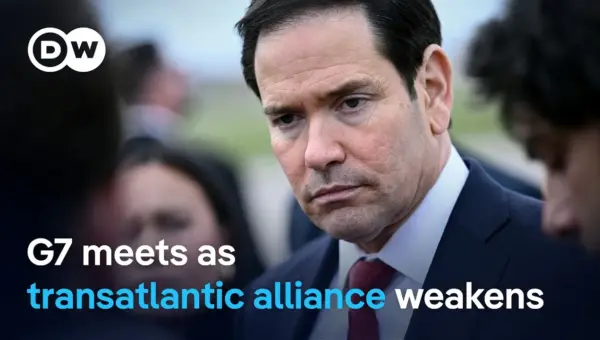
G7 Allies Clash Over Iran War Strategy, Urge Focus on Russia
G7 foreign ministers met in Paris, revealing deep divisions over the U.S. war with Iran. European allies urged the U.S. to pressure Russia, linking its actions to the conflict and fearing support for Ukraine will wane.

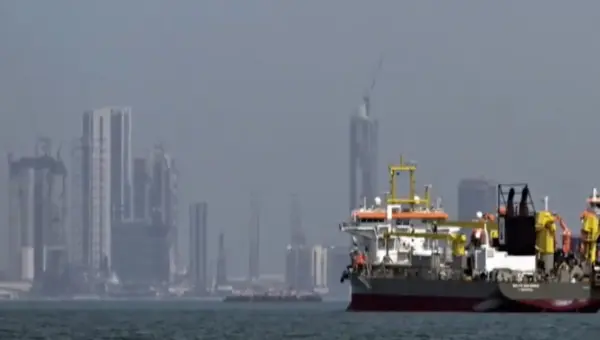
Iran Blocks China Ships, Exposing Beijing’s Weak Grip
Iran's recent decision to block Chinese ships at the Strait of Hormuz is exposing the limits of Beijing's influence in the Middle East. This action is causing delays and cancellations for Chinese manufacturers, turning a perceived geopolitical win into an economic strain.
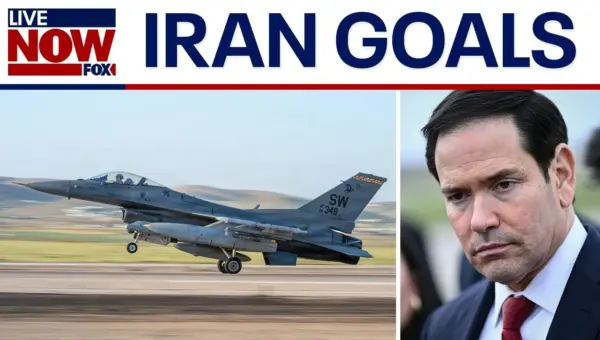
Rubio: US Can Achieve Iran War Goals Without Troops
Senator Marco Rubio outlined a strategy to counter Iran without deploying U.S. ground troops, focusing on weakening the regime and enhancing maritime security. He also criticized Cuba's economic system and expressed concerns about West Bank violence.