US War Justifications Shift Amidst Escalating Iran Conflict
U.S. justifications for military action against Iran have shifted amidst escalating conflict, drawing criticism and confusion. Reports from Israel detail intense attacks and civilian casualties, while conflicting statements from U.S. officials raise questions about the war's objectives and end state.

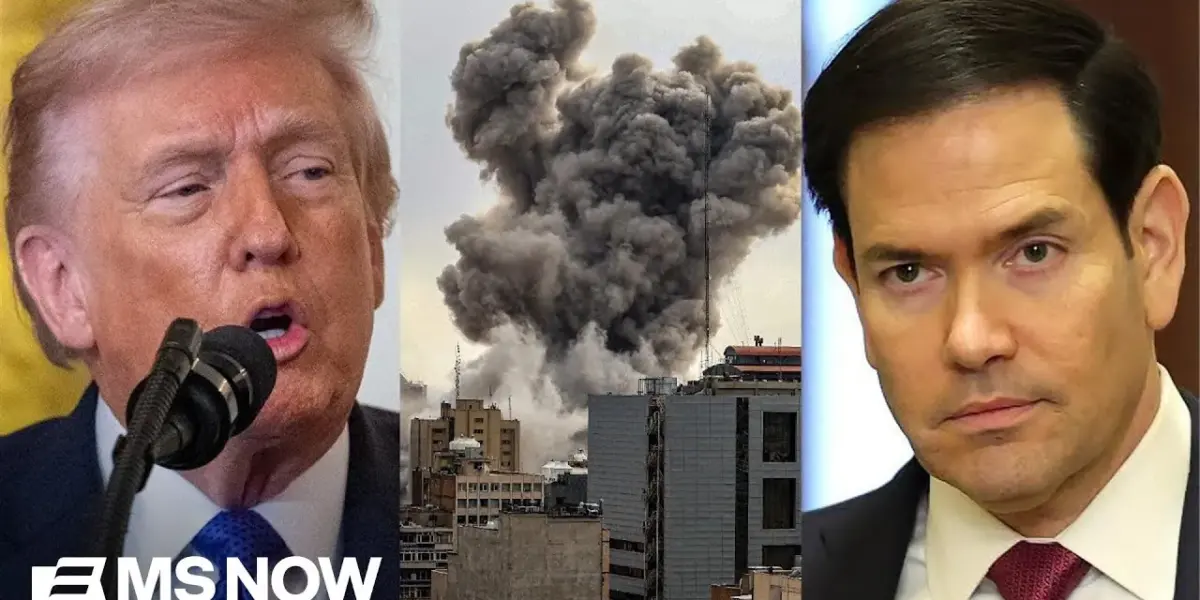
US War Justifications Shift Amidst Escalating Iran Conflict
TEL AVIV, ISRAEL – The United States government is facing mounting questions and criticism over shifting justifications for its military actions against Iran, as the conflict dramatically expands across the Middle East. Reports from the ground in Israel paint a grim picture of escalating violence, with Iranian ballistic missiles striking civilian areas and military installations alike. Amidst this widening regional war, U.S. officials have offered a series of conflicting explanations for the initiation and objectives of the military campaign, leaving allies and observers questioning the administration’s strategy and end goals.
Israel Under Intense Attack, Civilian Infrastructure Hit
Inez de la Quatera, reporting from outside Jerusalem, described a scene of devastation after an Iranian missile struck a synagogue, leaving virtually nothing of the building intact. Surrounding structures were also impacted, with residents sifting through rubble for personal belongings. The powerful Iranian ballistic missiles, described as far more sophisticated than the rockets previously fired by Hamas, have prompted increased precautions across Israel. Major medical facilities, such as the Shiba Medical Complex near Tel Aviv, have moved operations underground to ensure the safety of patients and staff during air raid sirens.
The conflict has resulted in significant casualties on all sides. In the attack near Jerusalem, nine people were killed. Since the commencement of hostilities, Israel has reported 13 fatalities. The death toll in Iran has climbed to over 787, according to the Iranian Red Crescent. Tragically, six U.S. service members have been killed in the conflict, some succumbing to injuries sustained during initial strikes in Kuwait, where they were operating from a makeshift, unprotected operations center.
Conflicting Rationales Emerge for U.S. Military Action
The U.S. military has engaged Iran with a wide array of assets, including fighter jets, stealth bombers, Patriot systems, and suicide drones, hitting numerous targets within the first 48 hours of the campaign, according to CENTCOM. However, the rationale behind the U.S. involvement has been inconsistent. Initially, the administration suggested preemptive action was necessary to prevent higher U.S. casualties if Iran retaliated against American forces following anticipated Israeli strikes.
New York Times chief White House correspondent Peter Baker highlighted the striking nature of this justification, noting that it differed from statements made over the weekend when the president first launched the attack. “We’ve seen a number of conflicting statements from the administration about what it is they’re trying to accomplish,” Baker stated. “Is it regime change? We’ve seen both sides of that. We’ve seen Yes. And we’ve seen it doesn’t really matter. It’s up to the Iranians to do that.”
Adding to the confusion, Senator Marco Rubio offered a different primary goal: to take out Iran’s short-range missile capability. This contrasted with President Trump’s earlier assertion that the campaign was primarily focused on Iran’s long-range threat and its development of weapons capable of striking the U.S.
“If the White House can’t even clearly explain what started this war, how can they be clear about how it ends? What does success even look like?”
– Barbara Starr, Pentagon Correspondent
Questions of Strategy and End State Loom Large
Veteran Pentagon correspondent Barbara Starr emphasized the difficulty of achieving victory in military operations without a clear end state. “It’s very easy to get in, very tough to get out of them unless you have a clear end state,” Starr explained. She questioned whether the goal was for Iran to capitulate entirely to the U.S. and Israel, deeming such an outcome unlikely.
Compounding the lack of clarity, lawmakers have reported receiving zero evidence of an imminent threat from Iran, and the administration did not seek congressional authorization for the war. Two U.S. officials corroborated these claims with NBC News. “It’s hard to be credible if you can’t keep your story straight, right? If you cannot have a consistent message,” Baker remarked on the administration’s communication strategy.
Starr offered an alternative perspective on the timing of the U.S. action, suggesting it might be an opportunistic move driven by Iran’s perceived weakness following previous strikes, rather than an imminent threat. “It was an opportunistic time in the United States and Israel could go in and finish the job as they saw it without much risk to American forces,” she posited.
Regional Implications and Future Outlook
The conflict’s expansion is evident in the targeting of U.S. embassies across the region, including in Riyadh and Kuwait. U.S. officials have advised Americans to leave the Middle East and warned against traveling to the region, with the embassy in Israel stating it cannot assist with evacuations. This widening scope raises concerns about a broader regional conflagration.
As the U.S. administration struggles to present a coherent narrative for its military engagement, the fundamental questions of the war’s objectives and the definition of success remain unanswered. The lack of clear communication and strategic consistency risks eroding credibility and prolonging a conflict with devastating human and geopolitical consequences. The coming days and weeks will be critical in discerning whether a clear strategy emerges or if the region is drawn further into an escalating quagmire.
Source: Trump admin 'can't keep their story straight' on reason for war with Iran: Journalist (YouTube)

Related Articles
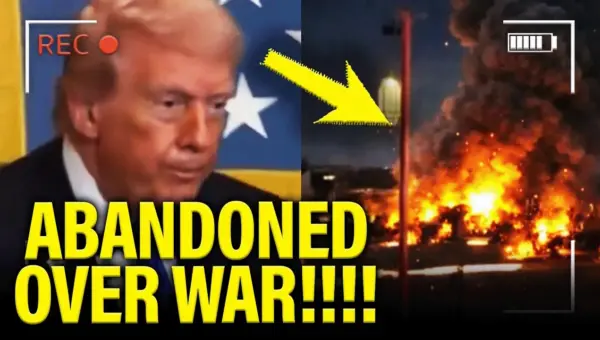
MAGA’s Shifting Sands: War in Iran Exposes Deep Divides
Prominent MAGA figures and influencers are reportedly expressing significant dissent towards Donald Trump's administration over its actions concerning Iran. This internal fracturing suggests a potential crisis of faith within the movement, driven by a perceived betrayal of core principles like non-interventionism.
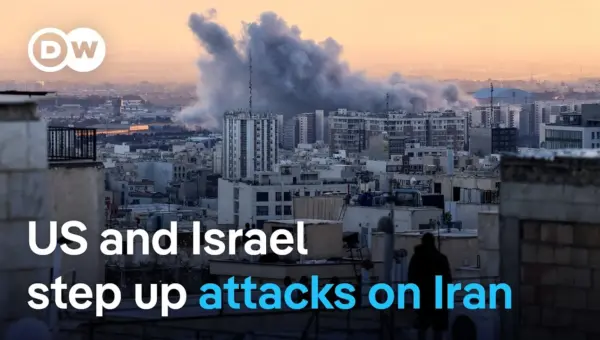
Iran War Escalates: Wider Regional Conflict Looms
The war involving Iran, Israel, and the U.S. shows no signs of slowing, with recent escalations including widespread drone and missile attacks across the Gulf and the involvement of Hezbollah in Lebanon. Experts warn of a growing risk of a wider regional conflict, potential Iranian state collapse, and significant global economic and security repercussions.

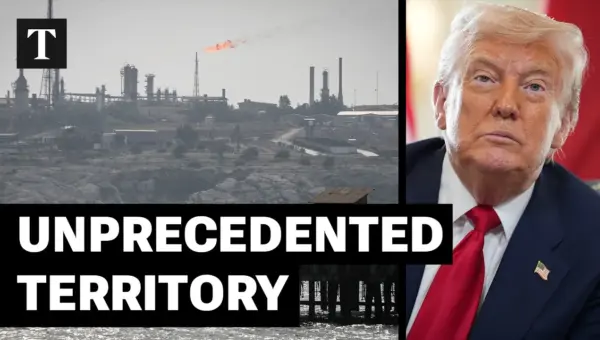
US Seeks Unprecedented Iranian Goal Amidst Oil Politics
Historian A.N. Wilson examines the long-standing U.S. objective of transforming Iran into a compliant, oil-rich ally, a goal with no historical precedent. The discussion delves into how global oil interests have consistently driven Western policy in the Middle East, tracing a path from the 1953 coup to contemporary geopolitical challenges.