US Urges Israel to Scale Back Lebanon Strikes Amid Ceasefire Tensions
A fragile U.S.-Iran ceasefire is tested as Israel launches new strikes in Lebanon, infuriating Iran. President Trump urged Israeli restraint, while the Strait of Hormuz remains a point of contention. Meanwhile, Lebanon faces a growing humanitarian crisis amidst escalating violence.


Fragile Ceasefire Tested by Israeli Strikes in Lebanon
A fragile ceasefire between the United States and Iran is facing significant strain following a new wave of Israeli attacks in the region. Iranian officials have expressed outrage over the strikes, leading Tehran to reassert its control over the Strait of Hormuz. This morning, Israel launched further attacks in Beirut as part of its ongoing campaign against the Iran-backed Hezbollah. These actions follow bombardments yesterday that, according to Lebanese officials, resulted in over 250 deaths, including nearly 100 in Beirut.
Iran claims Israel’s actions are a clear violation of its ceasefire agreement with the U.S. However, the Trump administration insists that Lebanon was not included in any such deal. “I think the Iranians thought that the ceasefire included Lebanon, and it just didn’t,” stated a senior administration official. “We never made that promise. We never indicated that was going to be the case. What we said is that the ceasefire would be focused on Iran, and the ceasefire would be focused on America’s allies, both Israel and the Gulf Arab states.” The official emphasized that Lebanon is not part of the ceasefire relayed to all involved parties, though discussions are expected to continue between the President and Prime Minister Netanyahu.
President Trump Intervenes, Urges Restraint
Despite the administration’s official stance, President Trump personally urged Israeli Prime Minister Benjamin Netanyahu to scale back Israel’s strikes on Lebanon. This intervention aimed to ensure the success of upcoming negotiations with Iran. President Trump told NBC News that he spoke with Netanyahu, who he said would “lowkey it.” “I just think we sort of have to be a little more lowkey,” the President remarked.
Following this, Prime Minister Netanyahu stated that Israel is seeking direct negotiations with Lebanon as soon as possible. President Trump expressed optimism about reaching agreements, noting his assessment that Iran has been “conquered and they have no military.”
Strait of Hormuz Remains Contested
Despite claims of Iran’s weakened military status, Tehran continues to exert authority over the Strait of Hormuz. The White House stated Iran agreed to reopen the vital waterway, but Iran maintains it remains closed following Israeli strikes, leading to a virtual standstill in marine traffic. Analysts report that only five vessels passed through the Strait today, a stark contrast to the usual figure of over 100.
Iran’s Supreme Leader issued a statement indicating a new phase in the management of the Strait, praying for a decisive victory through negotiations or on the battlefield. It is noteworthy that the Supreme Leader has not been seen or heard from since the war began, reportedly after being injured in initial strikes.
NATO Relations and International Concerns
The conversation also touched upon President Trump’s relationship with NATO. White House correspondent Garrett Haake described a meeting between the President and the NATO Secretary General as “challenging,” noting the unusual lack of a joint press appearance. Haake suggested that the President’s long-standing criticisms of NATO indicate he was likely unsatisfied with the discussion, potentially leading to further frustration or action.
Israeli Perspective on Lebanon Operations
Ofir Falk, Chief Foreign Policy Advisor to Israeli Prime Minister Benjamin Netanyahu, stated that Israel has no ceasefire with Hezbollah and continues to strike their targets forcefully. He explained that yesterday’s hit was the most significant against Hezbollah since a previous operation, resulting in hundreds of Hezbollah terrorists being eliminated. Falk emphasized that Israel must degrade Hezbollah’s capabilities to prevent a genocidal terrorist organization from remaining on its border, drawing parallels to the situation with Hamas in Gaza.
Regarding the U.S. call for de-escalation, Falk asserted complete agreement between Prime Minister Netanyahu and President Trump, despite differing public statements. He stated Israel takes into consideration the World Health Organization’s concerns about hospital evacuations in Beirut but stressed that Hezbollah uses civilians as human shields. Falk also outlined Israel’s goal in negotiations with Lebanon: to dismantle Hezbollah and reach a peace agreement, which he believes is a mutual interest for the Lebanese people.
Humanitarian Crisis in Beirut
The violence has led to a dire humanitarian situation in Lebanon, with over a million people displaced in the last five weeks. Chef Hélène Hamadjian, leading World Central Kitchen’s operations in Beirut, described the past few days as a nightmare. She detailed heavy bombings in densely populated areas, widespread destruction, and overwhelmed hospitals. “Yesterday was, you know, everybody was waiting a ceasefire, but instead we had an unexpected, a huge bombing everywhere,” Hamadjian said.
Hamadjian highlighted the critical need for basic necessities in shelters, such as toilets and showers, warning of potential epidemics due to poor hygiene. World Central Kitchen has been distributing hot meals, having provided over a million so far, but the need continues to grow, with approximately 17% of the population facing acute food insecurity. “The need is extremely high. We’re Central Kitchen is cooking and distributing hot meals, and we are really we’re growing and we’re cooking a lot and a lot every day, more and more,” she stated.
Market Reactions and Oil Prices
On Wall Street, markets opened in the red but bounced back, largely due to commentary about Israel opening conversations with Lebanon. Brian Cheung, NBC News Business Correspondent, noted that while markets are more optimistic about the ceasefire holding, volatility remains a key theme. “The overall story today isn’t really different than it was prior to the announcement of the ceasefire, which is that the volatility in these markets,” Cheung explained.
Crude oil prices settled around $98 per barrel, indicating a shift in market thinking about the ceasefire, up from $92-$93 the previous day. However, prices remain significantly above pre-war levels of $60-$70. Analysts suggest that even with the Strait of Hormuz reopening, damage to oil-producing facilities could keep oil costs elevated in the medium term, impacting global economies and consumer budgets.
Looking Ahead
As negotiations loom, the focus remains on whether the fragile ceasefire will hold and if de-escalation efforts will succeed. The ongoing humanitarian crisis in Lebanon and the complex geopolitical dynamics involving Iran, Israel, and the United States will continue to shape the region’s future. The international community watches closely to see if diplomatic channels can overcome the immediate military pressures and lead to lasting stability.
Source: Meet the Press NOW — April 9 (YouTube)

Related Articles
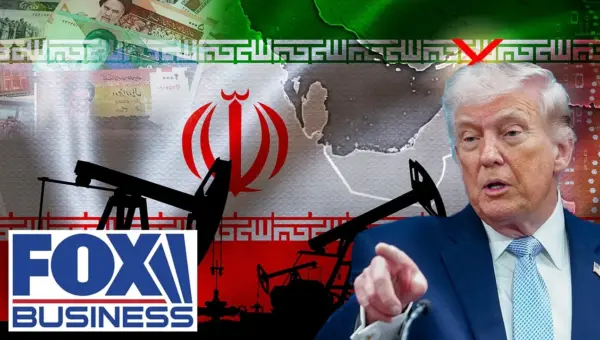
Trump Criticizes Iran as Oil Deal Hits Snags
President Trump has criticized Iran's handling of oil shipments through the Strait of Hormuz, adding uncertainty to a fragile deal. Despite geopolitical tensions, markets have shown resilience, but concerns linger over potential inflation and economic growth.

Oil Prices Surge 30% Amid Iran Ceasefire Uncertainty
Oil prices have surged over 30% as a fragile ceasefire between the U.S. and Iran fails to calm markets. Disruptions in the Strait of Hormuz and reduced Saudi production are driving up costs for energy, shipping, and potentially inflation, with significant economic consequences expected.
Iran Demands Full Control Over Strait of Hormuz
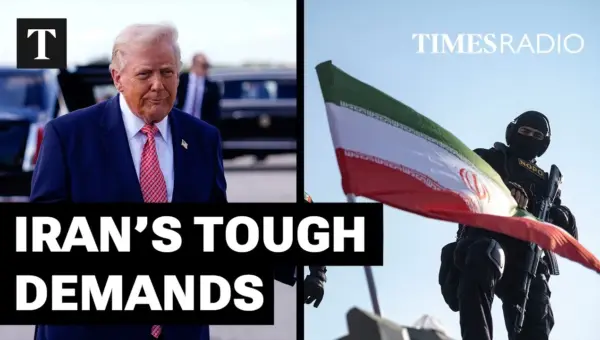
Iran is pushing for maximum control over the Strait of Hormuz, presenting a maximalist demand in ongoing negotiations. Deep disagreements persist between key global players, particularly concerning Iran's nuclear ambitions and the stability of a potential ceasefire. The clarity and unity of negotiating teams remain uncertain, adding further complexity to the delicate geopolitical situation.