US Unleashes Massive Bunker Buster on Iran’s Clerical Heart
The US has reportedly unleashed a massive bunker-buster bomb on Iran's holy city of Quam, signaling a significant escalation in Operation Epic Fury. As Iran doubles down on disrupting shipping, the US demonstrates its technological superiority and strategic resolve, aiming to cripple the regime's leadership and military capabilities.

US Escalates Confrontation with Iran, Striking Deep into Regime’s Core
In a dramatic escalation of the ongoing conflict, the United States, in conjunction with Gulf States and Israel, has reportedly launched a series of strikes against Iran, codenamed ‘Operation Epic Fury.’ The conflict, now in its 13th day as of March 12th, centers on Iran’s continued efforts to disrupt maritime traffic, particularly in the Strait of Hormuz. These actions have prompted a robust response, including the potential deployment of advanced weaponry against key Iranian leadership and military infrastructure.
The Quam Strike: A Symbolic and Strategic Blow
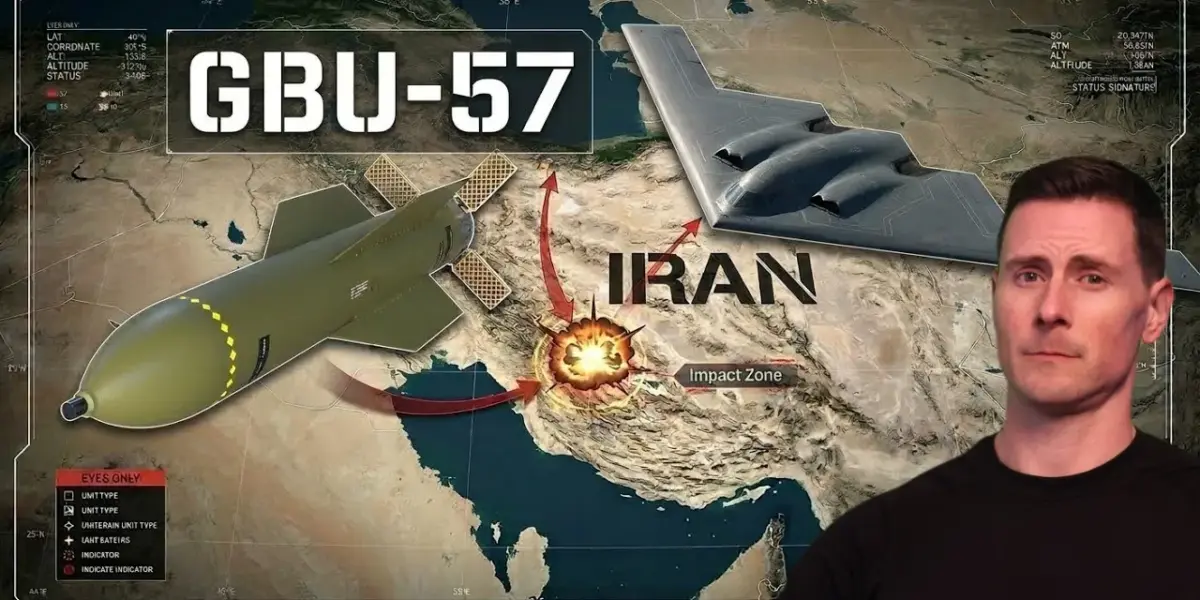
The most significant development highlighted is a massive explosion that illuminated Quam, a city considered the clerical heartland of Iran’s Islamic regime. The sheer scale of the resulting mushroom cloud has led to speculation about the use of a GBU-57 Massive Ordnance Penetrator (MOP) bomb. This colossal 30,000-pound weapon is designed to penetrate up to 200 feet of concrete or granite, suggesting a deliberate targeting of deep underground bunkers or hardened command centers.
While the use of the GBU-57 has not been officially confirmed, the visual evidence strongly supports its deployment. The strike in Quam, a city housing significant Islamic Revolutionary Guard Corps (IRGC) leadership sites and potentially nuclear facilities, carries immense symbolic weight. It directly challenges the regime’s narrative of sanctity and invincibility, hitting at the very centers of its power structures, which the source notes are often intertwined with religious sites and house the IRGC’s leadership.
Iran’s Defiance and Asymmetric Warfare
Despite the severity of the strikes, Iran’s regime has responded with defiant rhetoric. IRGC spokespersons have vowed that attacks on holy cities will only strengthen their resolve, promising retaliation in kind. The new Ayatollah, reportedly operating from a bunker and rumored to be injured, has echoed his father’s hardline stance, threatening to open new fronts against the US and its allies.
Iran has simultaneously intensified its asymmetric warfare tactics. Reports indicate the use of undersea drones, such as the Azdar UUV, to target oil tankers and other vessels in the Strait of Hormuz. These stealthy, torpedo-shaped drones are difficult to detect and can pose a significant threat to maritime commerce. Beyond naval disruptions, Iran has also been launching missile and drone attacks on Gulf countries, with Bahrain and Saudi Arabia reporting attempts to strike energy infrastructure and desalination plants. Furthermore, credible threats have emerged regarding the potential use of Shahed-136 drones, launched from disguised cargo ships off the coast of California, targeting civilian or military infrastructure.
Coordinated International Effort and Technological Superiority
The current conflict underscores a high degree of cooperation between the US, Gulf States, and Israel. Evidence of this includes intercepted communications, such as an exchange between an Israeli pilot and a US KC-135 Stratotanker, highlighting joint air operations and aerial refueling crucial for sustained missions. The US military’s display of technological superiority is evident in its ability to conduct precision strikes against deeply buried targets and to degrade Iran’s military capabilities methodically.
US CENTCOM has released footage showcasing strikes against Iranian ballistic missiles, aircraft, and naval assets. The strategy appears to focus on achieving ‘functional kills’ (F-kill) or ‘mobility kills’ (M-kill) rather than outright destruction, effectively neutralizing Iran’s ability to project power and resupply its forces. The targeting of Iran’s air force, including older models like F-14s, F-4s, and F-5s, and now its transport aircraft, severely hampers its logistical capabilities.
Strategic Implications and Future Outlook
The US strategy, characterized as ‘coercive air power,’ aims to degrade Iran’s ability to threaten shipping, strike its leadership centers, and exploit its internal succession chaos. The precision strikes, potentially involving B-2 Spirit stealth bombers delivering GBU-57 MOPs, demonstrate a commitment to minimizing risk to US crews while maximizing impact on hardened targets. This approach suggests a desire to avoid a full-scale ground invasion, opting instead for targeted, high-impact operations.
The threat of Iranian drone attacks on California, while possibly exaggerated for propaganda purposes, highlights the potential for a wider regional conflict. However, the US military’s robust presence, particularly in naval assets and advanced anti-drone capabilities like F-18s equipped with APKWS rockets, suggests a strong defense posture. The FBI’s warning and proactive measures indicate an awareness of and preparedness for such asymmetric threats.
The conflict appears to be entering a new phase, focusing on persistent intelligence, surveillance, and reconnaissance (ISR), alongside potential high-value strikes. The extended delay by satellite imagery provider Planet Labs in releasing Middle Eastern imagery further underscores the sensitivity and the effort to deny Iran any intelligence advantage.
Why This Matters
This confrontation signifies a critical juncture in regional security. The US military’s demonstrated technological and operational superiority, coupled with its strategic targeting, aims to break Iran’s defiance and compel a de-escalation. The use of weapons like the GBU-57, if confirmed, signals a significant escalation in the intensity and precision of US military action. It also highlights the dual nature of the conflict: a physical war of attrition against Iran’s military capabilities and a psychological war aimed at demoralizing the regime and its leadership. The ongoing maritime disruptions and the threat of attacks on distant shores underscore the volatile nature of the current geopolitical landscape and the potential for wider ramifications, including impacts on global energy markets and international security.
Historical Context and Background
The current tensions build upon decades of strained relations between the US and Iran, stemming from the 1979 Iranian Revolution and the subsequent hostage crisis. While diplomatic efforts have ebbed and flowed, military confrontations and proxy conflicts have been a recurring feature. Iran’s pursuit of nuclear capabilities and its support for regional proxy groups have been persistent concerns for the US and its allies. The recent conflict appears to be a direct response to Iran’s escalating actions in the Strait of Hormuz, a vital chokepoint for global oil trade, which has historically been a flashpoint for military posturing and conflict.
Implications, Trends, and Future Outlook
The trend suggests a continued US strategy of applying maximum pressure on Iran’s military and leadership infrastructure, aiming to bleed its capabilities and compel a strategic shift. The regime’s doubling down on hardline rhetoric and asymmetric tactics indicates a potential for more desperate and unpredictable actions. The future outlook hinges on Iran’s capacity to sustain its disruptive operations under intense military pressure and the US’s ability to maintain its technological edge and strategic patience. The potential for miscalculation remains high, with the threat of drone attacks on California representing a significant escalation scenario that could draw further, more direct responses.
Source: You Won't Believe What the U.S. Military Just UNLEASHED On Iran (YouTube)

Related Articles


U.S. Iran Tensions Rise Amid Shifting Alliances
Rising tensions between the U.S. and Iran are creating a volatile geopolitical situation. With conflicting signals on de-escalation and potential shifts in alliances like NATO and U.S.-Israel relations, the path forward remains uncertain. The global economy and regional stability hang in the balance.

Trump Halts Iran Strikes Amid Stalled Diplomacy
President Trump announced a pause on planned strikes against Iran, citing productive talks, though Iran denies negotiations occurred. Reports also suggest a potential U.S. ground operation on Iran's Hark Island. The situation raises concerns about international support for Ukraine and potential shifts in U.S. foreign policy.

Iran’s Missile Threat Reduced by 90%, Analyst Says
An analyst reports that Operation Epic Fury has degraded Iran's missile launchers by 90%, despite challenges in targeting hidden sites. The conflict's duration and media coverage are also discussed, with implications for global energy markets and investor confidence.